
Sipa/Frederick Murphy/CDC/AP

By Jordan King
Reporter
0
Share
Newsweek is a Trust Project member
See more of our trusted coverage when you search.Prefer Newsweek on Googleto see more of our trusted coverage when you search.
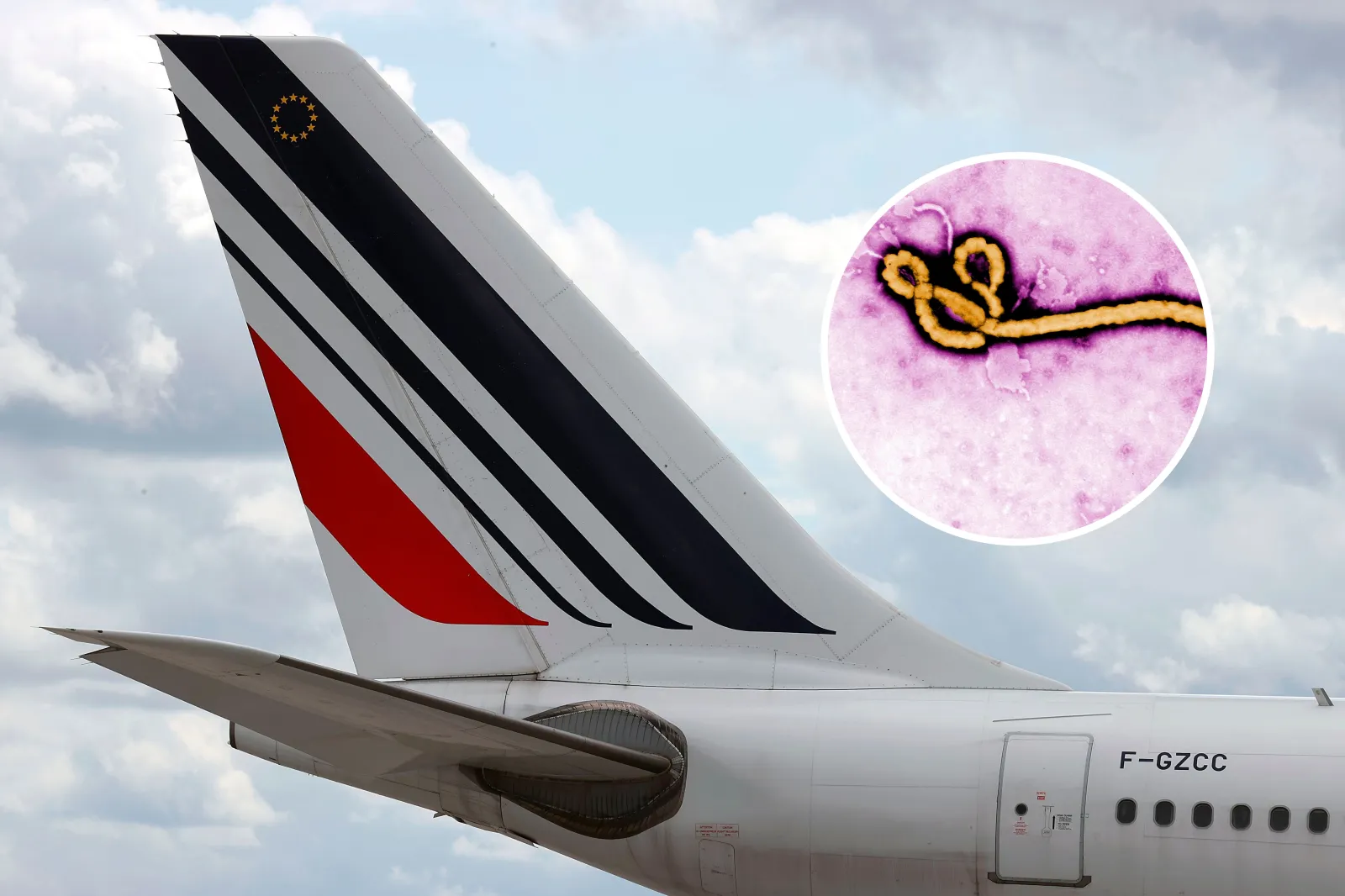
A flight headed for Detroit was diverted to Canada over concerns that a passenger may have been exposed to Ebola.
The Air France flight departed Charles de Gaulle Airport in Paris on Wednesday "in error" with a passenger from the Democratic Republic of Congo (DRC), the U.S. Customs and Border Protection (CBP) said.
"Due to entry restrictions put in place to reduce the risk of the Ebola virus, the passenger should not have boarded the plane," the CBP told the Detroit Free Press.
Read More on News
The flight was diverted to Montreal after the CBP "took decisive action and prohibited the flight carrying that traveler from landing at Detroit Metropolitan Wayne County Airport."
The passenger disembarked at Pierre Elliott Trudeau International Airport, where he was assessed by the quarantine officer and determined asymptomatic, the Public Health Agency of Canada's Mark Johnson said, according to the Canadian Broadcasting Corporation. They then flew back to Paris while the Air France plane then continued on to Detroit.
...
Non-U.S. passport holders from the DRC, South Sudan and Uganda are currently under a 30-day travel ban that started on May 18, three days after an outbreak of Ebola caused by the Bundibugyo virus was confirmed in northeastern DRC. Uganda has also reported imported cases from the DRC.
While South Sudan has not reported confirmed cases in the current outbreak, it is considered high-risk, the U.S. Department of Homeland Security (DHS) said.
"In order to assist in preventing or limiting the introduction and spread of this communicable disease into the United States, the Departments of Homeland Security and Health and Human Services, including CDC, and other agencies charged with protecting the homeland and the American public, are currently implementing enhanced public health measures at one U.S. airport that receives the largest number of travelers originating from the DRC, Uganda and South Sudan," the department said.
It comes as DHS is expected to implement new restrictions on travelers coming to the U.S. from countries at the center of the Ebola outbreak, according to CBS News.
All flights carrying passengers who have been in the DRC, South Sudan or Uganda in the past 21 days will be required to land at Washington-Dulles International Airport, according to a draft DHS rule set to be issued on Thursday.
Ebola Outbreak Public Emergency
The World Health Organization (WHO) declared the Ebola outbreak a "public health emergency of international concern" earlier this month, an issue President Donald Trump said he is "concerned" about in response to a Newsweek question at a Monday press conference at the White House.
As of Wednesday, there are no confirmed cases of Ebola in the U.S., according to the Centers for Disease Control and Prevention (CDC), which said the "overall risk to the American public and travelers remains low."
An American physician, Dr. Peter Stafford, serving in eastern Congo with the Christian medical nonprofit Serge, contracted the rare Bundibugyo strain of Ebola while treating patients at Nyankunde Hospital near the city of Bunia.
He has been transported to Germany for treatment and care, the CDC said. Germany was chosen because the flight there was shorter that to the U.S. and because Germany has experience treating Ebola patients.
As of Tuesday, the DRC and Uganda have reported 536 suspected cases, 105 probable cases, 34 confirmed cases, and 134 suspected deaths.

...
How Did the Ebola Outbreak Start?
At the beginning of this month, healthcare workers at a hospital in Bunia Health Zone in northeastern DRC started becoming severely ill, according to the CDC.
Initially samples tested negative for Ebola virus but, by May 15, eight out of 13 samples came out positive with five inconclusive. The illnesses were identified as Bundibugyo virus—one of the four orthoebolaviruses that cause Ebola disease in people.
There is no vaccine for Bundibugyo virus—treatment is limited to supportive care.
Bundibugyo outbreaks cause death in around 30 percent of the people who contract the virus, according to the DHS.
During the largest Ebola outbreak in West Africa, between 2014 and 2016, more than 11,000 people died.
The latest outbreak is the 17th of Ebola in DRC since 1976, after the most recent one in December last year.
"These epidemics demonstrated the potential for Ebola disease to become an international crisis in the absence of early intervention," the DHS said. "Further, Ebola disease can have substantial medical, public health, and economic consequences if it spreads to densely populated areas."
"As such, Ebola disease may present a threat to U.S. health security given the unpredictable nature of outbreaks and the interconnectedness of countries through global travel," it added.
What To Know About Ebola
Ebola disease, caused by a group of viruses known as orthoebolaviruses, is a severe and "often fatal disease" that affects humans and primates. The disease is transmitted through direct contact with bodily fluids—usually from an infected sick or dead person and rarely from contact with an infected animal.

Bundibugyo virus, discovered in 2007, has been associated with two large outbreaks in the past—in DRC in 2012 and on the border of DRC and Uganda in 2007.
People who contract Ebola experience symptoms of fever, aches, pains and fatigue, known as initial "dry symptoms." As they become sicker, they typically progress to "wet symptoms," which include diarrhea, vomiting and unexplained bleeding.
Symptoms begin to show around eight to 10 days after exposure, on average, the CDC says.
The only U.S. Food and Drug Administration (FDA)-approved treatments for Ebola are for Orthoebolavirus zairense species.
Supportive care, used for other species, including the Bundibugyo virus, includes giving patients fluids and electrolytes, medicine to support blood pressure, reduce vomiting and diarrhea and to manage fever and pain and treatment for any infections that occur.
Update 05/21/26, 06:41 a.m. ET: This article has been updated with more information and an additional image.
View 0 Comments
Submit Correction
View Editorial & AI Guidelines