...

By Hugh Cameron
Reporter
0
Share
Newsweek is a Trust Project member
See more of our trusted coverage when you search.Prefer Newsweek on Googleto see more of our trusted coverage when you search.
The current levels of economic uncertainty gripping the U.S. are comparable to those seen during major downturns, according to one of the nation's top economists.
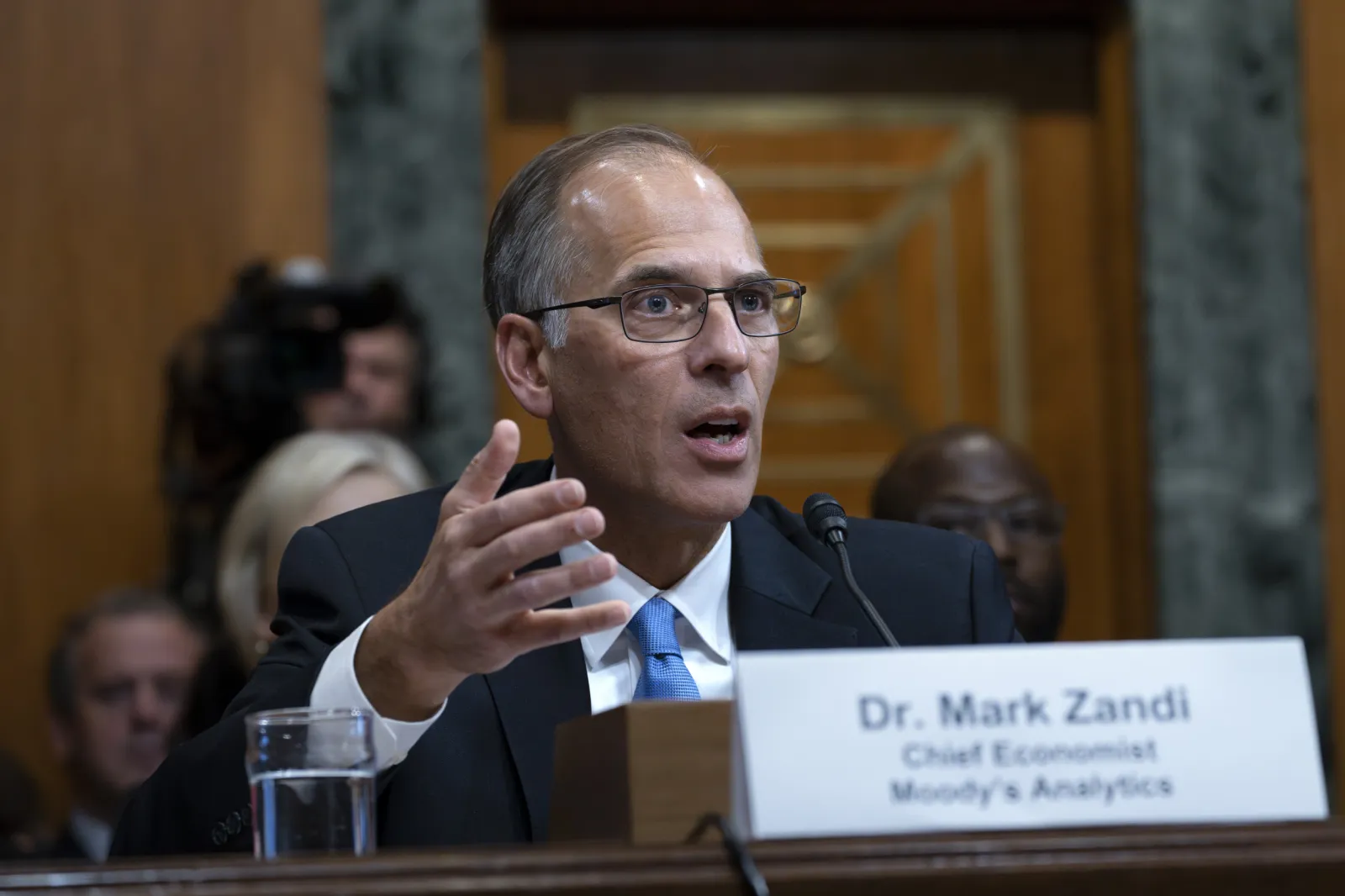
"I've been a professional economist for 35 years, and there's few other times in that 35 years where the uncertainty is as thick as it is today," Moody's Chief Economist Mark Zandi told CNN on Thursday. "Maybe 9/11, the global financial crisis, the pandemic."
Why It Matters
Zandi has issued several similar warnings in recent weeks, primarily because of the anticipated impacts of the expanding list of nations and products that have been targeted by President Donald Trump's tariff agenda. These fears have been echoed by others, and have contributed to increased volatility in the U.S. stock market.
Read More on News
As well as concerns being voiced by economists and financial institutions, several indicators are pointing to an imminent economic downturn. Weakening consumer confidence, for instance, already appears to have translated into Americans cutting back on their spending in anticipation of a recession.
...
What To Know
Zandi's latest statement came in response to Trump announcing on Wednesday that a 25 percent tariff will be placed on all imported cars, as well as certain automobile parts, beginning April 3.
According to the White House, these new duties will amend the "critical threat to national security" posed by a reliance on foreign-sourced cars and car parts, while generating "over $100 billion" in annual revenue.
Zandi, however, said that the tariffs will result in "higher prices and fewer jobs," telling CNN that they will raise average car prices by between $5,000 and $10,000.
As well as dissuading manufacturers from setting up factories in the U.S. because of uncertainty over revocations or increases to the tariffs, he added that the move is likely to draw retaliation from America's trading partners.
Several countries have already hinted that they may impose countermeasures.
On Thursday, Canadian Prime Minister Mark Carney called the auto tariffs a "direct attack," and promised to devise an appropriate response, such as the imposition of "retaliatory tariffs" on U.S. goods.
France's Minister of Economics and Finance Éric Lombard called Trump's announcement "very bad news," and said that the "only solution" would be for the European Union to increase customs tariffs on U.S. products. Germany's Economy Minister Robert Habeck, similarly, urged the EU to issue a "firm response" to the new duties.
What People Are Saying
Shawn Fain, President of the United Auto Workers Union, said: "We applaud the Trump administration for stepping up to end the free trade disaster that has devastated working-class communities for decades. Ending the race to the bottom in the auto industry starts with fixing our broken trade deals, and the Trump administration has made history with today's actions.
"With these tariffs, thousands of good-paying blue collar auto jobs could be brought back to working-class communities across the United States within a matter of months, simply by adding additional shifts or lines in a number of underutilized auto plants."
Moody's Chief Economist Mark Zandi, in response to the UAW president's statement, told CNN: "I just don't see it. I really don't. Put yourself in the position of a CEO of a major global manufacturer and you're looking at this and you're thinking, 'should I build a vehicle factory in the United States?'…To build a factory takes years. You can't build it for next month, next quarter. This is something that takes two, three, four years, and then you're building it to last for years after that, maybe even decades. And what's the tariff going to be tomorrow? What's the tariff going to be six months from now? What's the tariff going to be a year from now? What's the tariff going to be five years from now? Because all of this is done under executive order. It's not in the legislation. This can be changed in a stroke of a pen. So that CEO is going to say, 'I'm not going to invest, I'm just going to sit on my hands.'"
What Happens Next?
According to the White House, tariffs on automobile imports are set to take effect on April 3, while duties on imported automotive parts will be implemented "no later than May 3."
View 0 Comments
Submit Correction
View Editorial & AI Guidelines