10
Loading video...


By Giulia Carbonaro and Anna Skinner
0
Share
Newsweek is a Trust Project member
See more of our trusted coverage when you search.Prefer Newsweek on Googleto see more of our trusted coverage when you search.
The Food and Drug Administration (FDA) has upgraded an egg recall issued last month to “Class I,” its highest risk level, as it warns the public that consuming the products could cause “serious adverse health consequences or death.”
The recall of 1,589,577 dozen white shell eggs and brown cage-free shell eggs was initially issued by Midwest Poultry Services in late July, which warned that they may be contaminated with Salmonella Enteritidis, a dangerous bacterium.
According to the company, the eggs were produced and distributed from farms in Texas between June 6 and July 3 and have sell-by or best-by dates between July 20, 2026, and August 17, 2026. The recalled egg cartons have either the code P-1950 or 0840962 and Julian Dates between 157-184.
Read More on News
Customers who may have purchased the affected eggs are advised to throw them out or return them, and wash items and surfaces that may have touched the recalled products using hot soapy water or a dishwasher.
There have been 98 illnesses and 26 hospitalizations across 17 states linked to the current egg outbreak, according to data from the U.S. Centers for Disease Control and Prevention (CDC).
Newsweek reached out to the FDA for information by email on Friday morning.
Salmonella Egg Recall: Map Shows Where Recalled Eggs Were Sold
According to the FDA, the recalled white shell eggs and brown cage-free eggs were distributed to retailers and food-service customers in Texas, Oklahoma and Louisiana, and sold at Kroger stores in Texas and Louisiana, as well as Brookshire Grocery locations in Texas, Oklahoma, Arkansas, Louisiana, New Mexico and Mississippi. The FDA and CDC are investigating the multistate outbreak.
Related Story
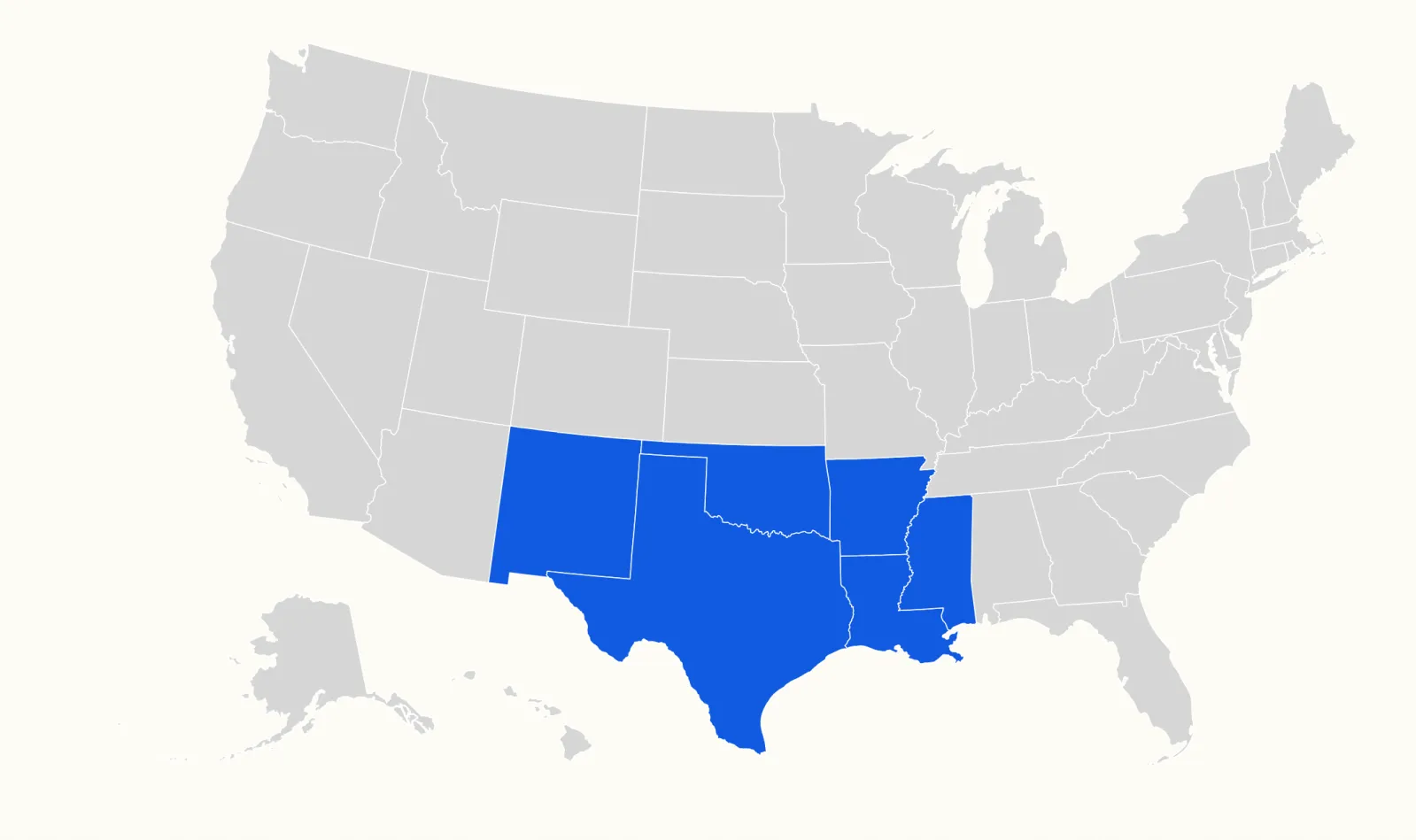
Map Shows Where Millions of Eggs Recalled Over Salmonella Concerns

...
What Are the Risks?
Salmonella can be particularly dangerous in young children, frail or elderly people, and others with weakened immune systems. While most people who get infected get better without treatment within a week, this group can experience more severe symptoms that require medical treatment or hospitalization.
Healthy people who get infected, possibly after eating contaminated food and drinking or having contact with contaminated water, show symptoms within eight to 72 hours after exposure, including diarrhea, fever, and stomach cramps. Most would naturally get better after four or seven days.
The CDC recommends those who might have consumed the recalled eggs to contact their healthcare provider “right away” if they have any of these symptoms:
- Diarrhea and a fever higher than 102°F;
- Diarrhea for more than 2 days that is not improving;
- Bloody diarrhea;
- So much vomiting that you cannot keep liquids down;
- Signs of dehydration, such as not peeing much; dry mouth and throat; feeling dizzy when standing up.
Where Have Eggs-Related Salmonella Infections Been Reported?
There have been 98 cases of eggs-related salmonella infections reported so far in 17 states, though the CDC warns that the outbreak may not be limited to the states with known illnesses, and the true number of sick people is likely much higher than the number reported.
The states where infections have been reported include:
- California
- Colorado
- Illinois
- Michigan
- Missouri
- Mississippi
- North Carolina
- Nevada
- New York
- Oklahoma
- South Carolina
- West Virginia
- Georgia
- New Mexico
- Arizona
- Louisiana
- Texas
Egg Prices Are Down—But a Supply Drop Could Threaten Trump’s Success
When it comes to eggs, it seems like Americans can hardly catch a break.
A raging bird flu epidemic which forced the culling of millions of poultry across the country sent egg prices skyrocketing during the Biden administration, with the national average retail price for a dozen Grade A large eggs peaking at $4.82 in January 2023.
The issue quickly became a totemic one for Joe Biden, whom voters soured on after consumer prices rose 21.5 percent during his presidency, pushing frustrated voters toward the Republican Party.
In his 2024 presidential campaign, Donald Trump repeatedly blamed Biden for high prices, including those of eggs, and promised to lower the cost of living for all Americans.

...
But egg prices actually rose during his first year back at the White House, peaking in the spring at an average of $6.23-$6.85 per dozen for white large shell eggs as the bird flu continued affecting supply.
Trump blamed the previous administration for the higher prices, saying that Biden “let the egg prices get out of control” and his government was now paying for that “inflation nightmare.”
Since then, even as inflation and the cost of living have increased since the start of the Iran war in late February, egg prices have finally come down and are now down 30 percent since Trump took office last year, according to NBC News estimates.
Other key food costs, however, have increased. Average orange juice prices are up 22.6 percent from last year, ground beef prices are up 19.3 percent, and sandwich bread prices are up 4.3 percent.
A sizable egg recall, however, could send egg prices back up by lowering supply.
The Jalapeño-Related Salmonella Outbreak
The FDA’s upgrade comes amidst another outbreak of salmonella linked to fresh jalapeños grown in Mexico that has caused 345 reported infections and 36 hospitalizations across 27 states since late July, according to the CDC. No deaths have been reported so far.
Taylor Farms, which found itself at the center of the recent cyclospora outbreak, Chipotle, QDOBA, and Whole Foods all had to issue voluntary recalls of dozens of products containing jalapeños at risk of being contaminated this month, including salsas, guacamoles, and other dips.
The U.S. Department of Agriculture’s (USDA) Food Safety and Inspection Service (FSIS) has also issued a public health alert for meat and poultry products containing FDA-regulated jalapeños that may be contaminated with salmonella.
Contact Newsweek editors for this story: John Fitzpatrick and Anthony Murray.
View 0 Comments
Submit Correction
View Editorial & AI Guidelines