...

By Hugh Cameron
Reporter
0
Share
Newsweek is a Trust Project member
See more of our trusted coverage when you search.Prefer Newsweek on Googleto see more of our trusted coverage when you search.
Prices continue to rise at an accelerated rate in 2026, driven by fuel increases as well as broader pressures on Americans’ pocketbooks, the latest inflation report from the Department of Labor shows.
According to the Bureau of Labor Statistics (BLS), consumer prices rose by 0.5 percent in May, slowed from 0.6 percent in April, while annual inflation accelerated to 4.2 percent from 3.8 percent in April, both in line with consensus forecasts. It marks the fastest year-over-year pace since April 2023—as well as through both of President Donald Trump’s terms—and means inflation is now more than double the Federal Reserve’s long-term target of 2 percent.
As well as headline inflation, core inflation, which strips out the more volatile energy and food categories, reached 0.2 percent on a monthly basis last month, down from 0.4 percent in April, and rose to 2.9 percent from 2.8 percent annually. This compares to the 0.3 percent and 2.9 percent, respectively, that was forecast by analysts.
Read More on News
Why This Report Matters
With inflation on the rise and job gains once again proving robust in last week’s employment report, analysts believe Wednesday's figures all but guarantee that the Federal Reserve—now under the chairmanship of Trump nominee Kevin Warsh—will keep interest rates steady at its upcoming meeting this month.
“Following last week’s stronger-than-expected jobs report, investors have become increasingly concerned that inflation may remain too persistent for the Fed to maintain a neutral stance,” Daniela Hathorn, senior market analyst at Capital.com, wrote prior to the release.
“The labor market continues to show resilience, reducing the urgency for policymakers to support growth and instead shifting attention back toward inflation control. As a result, expectations for a rate hike later this year have risen sharply.”
And the report will also put further pressure on the administration, which has been seeking to downplay affordability concerns ahead of this year’s midterm elections but finds itself increasingly bearing the brunt of voter frustration over rising prices.
What Was Revealed in Wednesday’s Report?
The increase was once again driven by spiking fuel costs, the BLS said, with the energy index rising 3.9 percent in May and 23.5 percent over the past 12 months. This accounted for more than 60 percent of all monthly increases in May, according to the agency.
Within this category, gasoline is up 41 percent over the past year, with fuel oil—used for heating homes and buildings—having risen 59 percent.
Though they have begun to drop in recent weeks, data from GasBuddy shows that pump prices are still nearly 40 percent higher than where they were before the Iran war broke out on February 28. According to researchers at Brown University’s Watson School of International and Public Affairs, the rising price of diesel and gasoline has resulted in an additional $56 billion burden on U.S. consumers over these 14 weeks, equivalent to around $430 per American household.
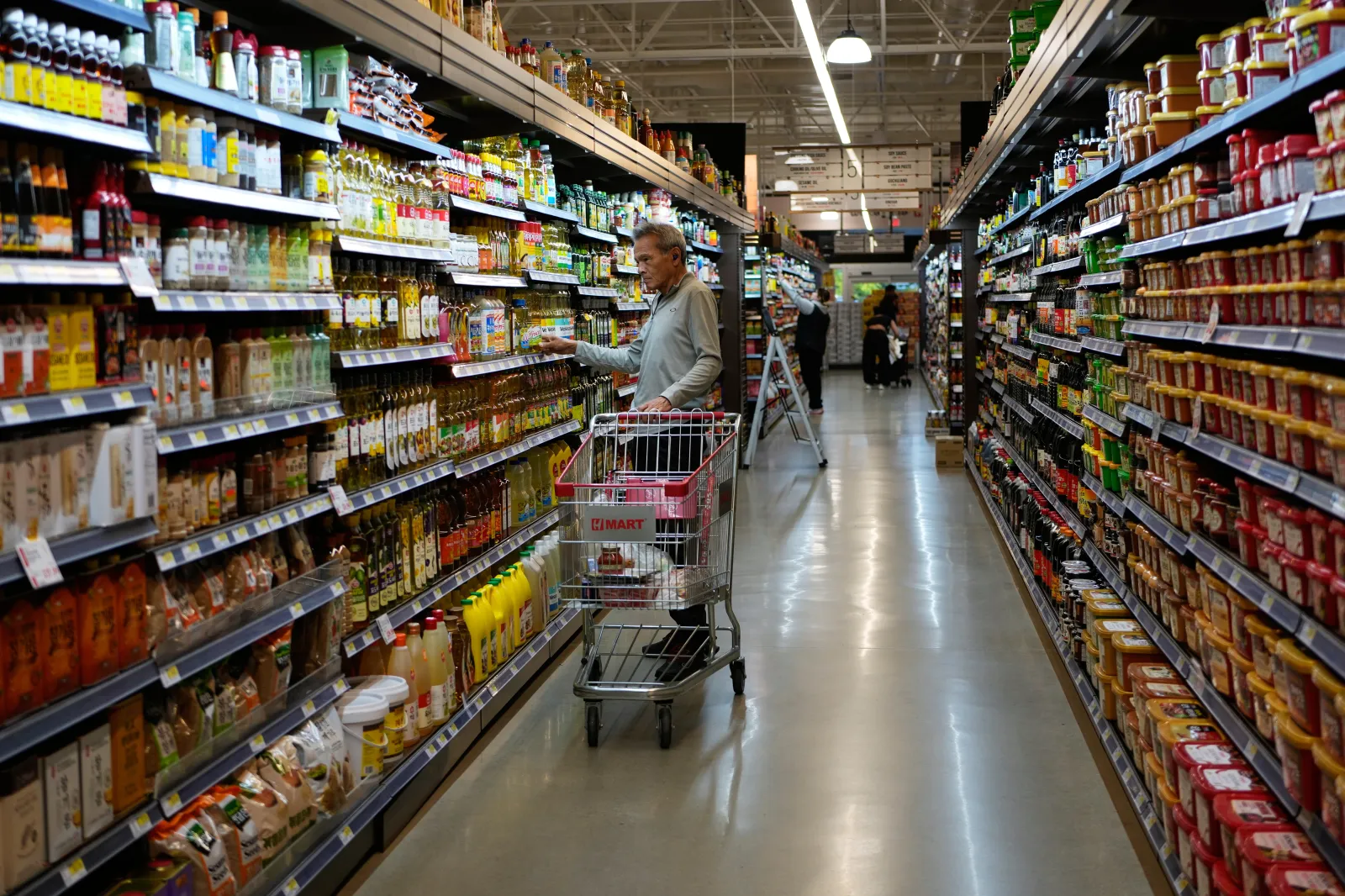
Beyond energy, the food at home category—the amount paid for groceries—rose 0.1 percent in May and is up 2.7 percent annually, with the shelter index—essentially the cost of occupying a home—rising 0.3 percent in May and 3.4 percent over the past 12 months.
Prices for several food groups have climbed significantly since last May, BLS data shows, including tomatoes (+32 percent) and beef (+13 percent), though eggs are down 35 percent. Beef supplies are now under further pressure thanks to a number of confirmed cases of New World screwworm in the U.S., raising concerns that prices could begin rising again over the next few weeks and months.
...
Despite headline inflation reaching its fastest pace in more than three years, some have interpreted the report as evidence that price pressures could be more confined to energy than previously feared.
“Although energy continued to push headline inflation higher, the softer-than-expected core reading suggests underlying inflation pressures remain more contained than many had feared,” Arielle Ingrassia, an investment specialist at the wealth management firm Evelyn Partners, wrote in a press note following Wednesday’s report.
“At the same time, the report still showed only modest evidence of broader second-round inflation effects,” she added.
But analysts are in broad agreement that the report will influence the Federal Reserve’s calculus as it weighs further rate cuts—as the president has repeatedly called for.
“We built the country by doing great and having rates low. What they do is when they raise interest rates, they try and kill success. I don’t want to kill success. We should actually lower interest rates,” Trump said in a recent interview with NBC’s Meet the Press.
However, Trump added that he did not want to “have a big influence” over former Fed Chair Jerome Powell’s recently sworn-in replacement.
“The Fed’s next move may need to be a hike, and not a cut as many had expected coming into this year,” Chris Zaccarelli, chief investment officer for Northlight Asset Management said on Wednesday morning.
“It’s very possible that things wrap up in the Middle East and shipping gets back to normal over the course of the rest of the year, in which case we can see inflation come down over time and the Fed could hold off raising rates, but if things stay as they are currently, then all bets are off.”
According to the CME FedWatch tool, which gauges the odds of central bank decisions based on interest-rate futures prices, there is now a 96 percent chance that the Federal Open Market Committee will keep its target range steady at the mid-June meeting. For subsequent meetings, however, the odds of a rate hike have inched up in recent days.
View 0 Comments
Submit Correction
View Editorial & AI Guidelines