10
Loading video...

By H. Alan Scott
Senior Editor
0
Share
Newsweek is a Trust Project member
See more of our trusted coverage when you search.Prefer Newsweek on Googleto see more of our trusted coverage when you search.
To a certain group of people, particularly those active on social media, when a new true crime documentary drops, it's a very good day. That's because it offers a new topic to deep dive on, to obsess over, to discuss the twists and turns of a case. Well, HBO just gave us a new documentary to go crazy over, and it's called A Killer Story. (And yes, this writer is one of those people in that particular group of people on the internet.)
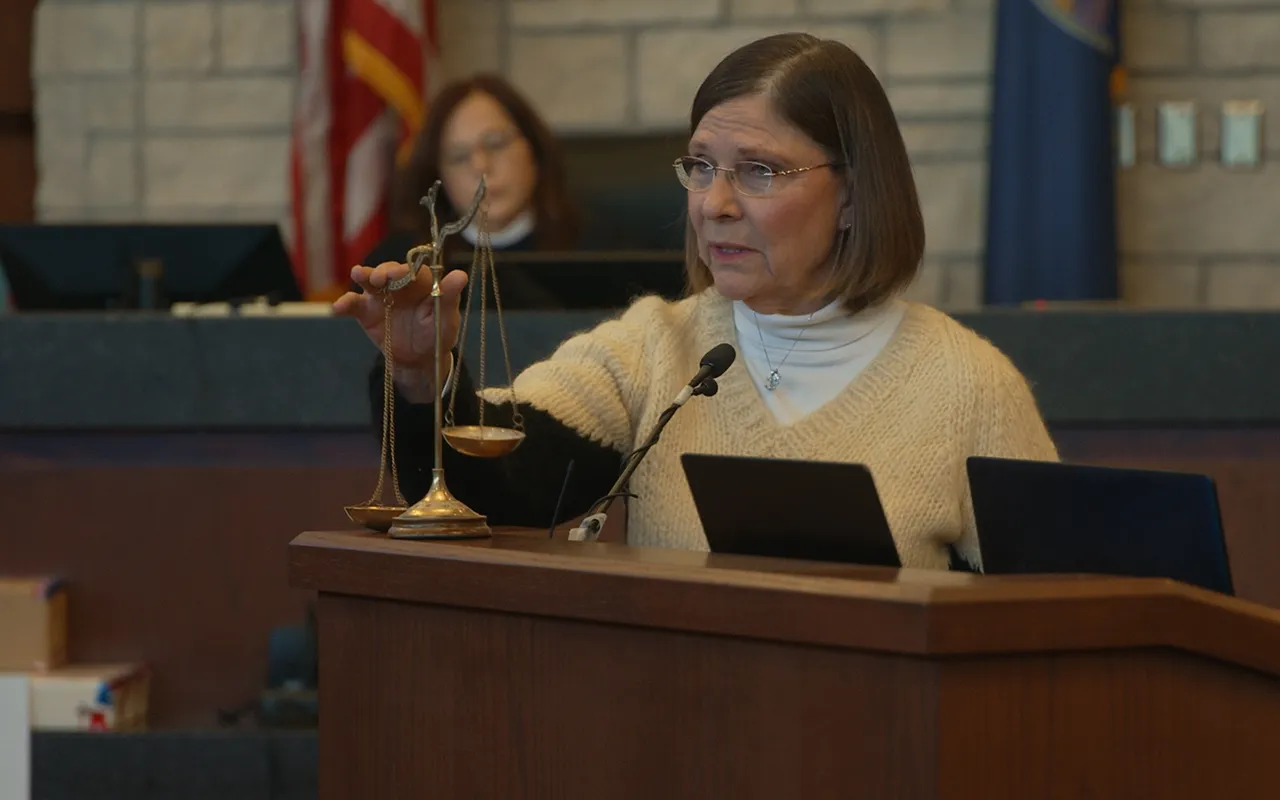
A limited documentary series directed by Matthew Galkin, A Killer Story follows investigative journalist Joe Sexton as he looks into the case of convicted murderer Dana Chandler, who was found guilty of murdering her ex-husband, Mike Sisco, and his girlfriend, Karen Harkness, in 2002 in Topeka, Kansas. The lack of evidence in her conviction is what piqued Sexton's interest, but it was also the work two citizen sleuths put into investigating the case that guided much of his reporting. Their work, and the dysfunction of the original prosecution, helped Chandler win a new trial, then another.
...
Read More on Entertainment
Sexton is candid about how reluctant he was to take the case seriously at first. "It took another three thousand emails to get me off my ass," he tells Newsweek’s Parting Shot Podcast of Eileen Umbehr, the citizen sleuth behind the tip who sent Sexton thousands of emails about the case.
The journey this story takes is what makes it so compelling, and Sexton anchors its head-scratching realities. "I think Eileen has now invested so many hours and so many years in creating her own theories and certainties that I think it would be too painful for her to actually concede that she might have been wrong," he says.
Ultimately, this documentary is more than just a story about Chandler's innocence or guilt. It's also about Umbehr, the citizen sleuth who stood by Chandler until almost the end. (It's complicated. You're going to have to watch the series to understand.)
Sexton spoke with Newsweek about A Killer Story. Below is an edited and condensed transcript of the conversation. Listen to or watch the full chat on the Parting Shot podcast.

...
How did you even open the email? There are so many emails I miss. How did you open yours?
There's an embarrassing story behind it. One of the worst things that can happen in a newsroom is to have the editor in chief forward you an email. I was at ProPublica at the time, and my editor loved opening these things and assigning credibility to the nutcases as well as the true whistleblowers. I opened it, and it was Eileen. I gave it the back of my hand, Googled the case, quickly became persuaded Dana Chandler was guilty and wrote her back to say we wished her the best. It was only her incredible persistence, and the material she kept sending me, that made me finally give in.
When you decided to dig into this a little deeper, one of the things I found fascinating was the moment it stopped being about the citizen sleuths' work and became something you believed in yourself. Was it Chandler’s retrial?
Right. It's a rare thing for state murder convictions to be overturned. This was overturned by a unanimous Kansas Supreme Court, nine to zero, so it's not a close call. I've spent decades reading about wrongful convictions, court papers and appellate decisions, and I had rarely read a reversal where the prosecutor was as eviscerated as she [Jacqie Spradling] was by that court. They found she'd lied to the jury and manufactured evidence, essentially a frame job. If the court had real courage, they would have vacated the conviction altogether instead of sending it back. Instead a new prosecutor [Charles Kitt] got full discretion to decide whether he could still persuade twelve people beyond a reasonable doubt that she was guilty. He went forward and lost. It was a hung jury, seven to five.
When you're dealing with sources who've done so much of the legwork for you, like Eileen and her husband Keen, who are true crime fanatics to the tenth degree, how do you navigate their obvious bias while still getting them to help you tell the story?
I think it's to their credit, whether they're right or wrong and whether they're crazy or virtuous, they never flinched when I came at them with questions about their own agenda. There's a moment where I basically say, you criticized the police for being tunnel-visioned on Dana Chandler, aren't you at risk of doing the exact same thing by believing the son-in-law, Jeff Sutton [married to the daughter of victim Karen Harkness], is the more logical candidate? They'd hung so many of their hopes on the idea that a hair burned into one of the shell casings would come back as his that they bought an Uzi to test their own theory of how it could have landed on his forearm. When that came back a bust, they said maybe it was the wrong hair, but they never told me I was being too tough.
My last question, and I ask this because we already know Dana is sitting in prison, but you pose this question yourself in the series. If Dana did it, how the hell did she do it?
At the end of the third trial, a group of us ran a thought exercise. Let's stipulate she did it, out of anger, jealousy and vengeance, and walk me through how. How does she come by the gun, especially if it's some weapon of war? How does she get bullets that are Israeli-made and typically fired from an Uzi? If she was a mastermind, why would she use a credit card to buy two five-gallon gas tanks, which leaves evidence, instead of paying cash? How does she know exactly which house to go to, given she has a narrow window to drive five hundred and forty miles, get the job done and drive five hundred and forty miles back so it looks like she never left Denver? How does she know they'd be at the casino instead of home? And how does she fire a dozen bullets with that kind of accuracy for a woman no one can say ever fired a gun before, let alone owned one that size?
Listen to the full conversation with Joe Sexton about A Killer Story on Newsweek’s Parting Shot Podcast.
View 0 Comments
Submit Correction
View Editorial & AI Guidelines