...

By Lydia Patrick
Life & Trends Reporter
0
Share
Newsweek is a Trust Project member
See more of our trusted coverage when you search.Prefer Newsweek on Googleto see more of our trusted coverage when you search.
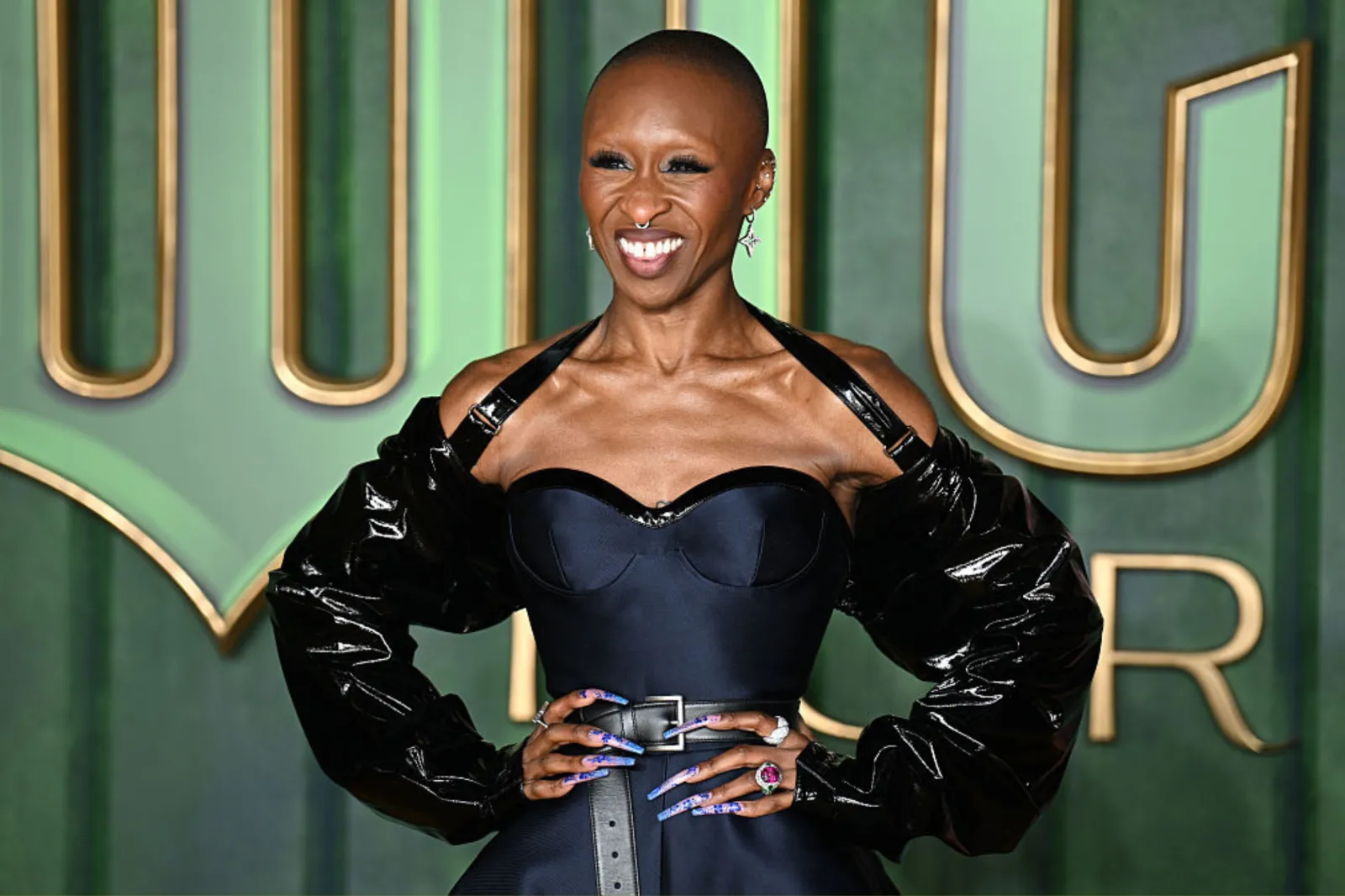
A short red-carpet clip has ignited widespread outrage online after a reporter repeatedly described actor Cynthia Erivo as "tough" and "strong" in an uncomfortable exchange, prompting a wider conversation about misogynoir—misogyny against Black women—and microaggressions.
During the interview, the presenter pressed Erivo on being tough, returning to the label even as the actor pushed back. The pair had been discussing Erivo's impressive stunt work during Wicked: For Good where her character, Elphaba, flies on a broomstick.
"When did you know you were tough? You're tough," he asked.
Read More on Entertainment
"Am I?" she replied. "I mean, I think I'm strong."
"Tough and strong," the presenter said.
Erivo gently reframed the moment: "I think I'm strong, I think I'm vulnerable, I think I'm a myriad of things."
Still, the interviewer continued: "A protector too. You're tough. You're tough. You're tough; a tough person. You're strong."
Erivo responded with grace: "Well, I'm strong but I think I can also be protected, too. I think we can be both. I think it's OK for us to be strong, protected and protective." Newsweek reached out to Cynthia Erivo's publicists for comment via email.
...
A Meme That Went Too Far
The interview followed a recent viral moment where Erivo shielded her Wicked co-star Ariana Grande after a fan rushed at her on a red carpet. Though the incident was brief, internet users quickly turned Erivo into a meme—many of which leaned on masculinizing tropes.
The jokes—often performed by men—cast Erivo as physically dominant or hypermasculine, despite her being of similar stature to Grande. What many saw as a touching moment of instinctive friendship became a spectacle that played directly into stereotypes historically used to dehumanize Black women.
A Content Creator Speaks Out
Morin Abraham, 29, a Toronto-based film content creator known as The Film Diva (@thefilmdiva), posted her reaction on Instagram, amassing over 840,000 views—and even a like from Ariana Grande herself.
Abraham told Newsweek: "After the most-recent red-carpet interview with Cynthia Erivo, people are starting to pick up on the fact that misogynoir exists and that there is a narrative being painted and reflects a long standing pattern in how Black women are framed in public life.
"There was no reason for the interviewer to label Erivo as ‘tough’, ‘strong’ or a ‘protector.’ Cynthia gave a great response, explaining how she is and can be both protective and protected."
In her video, Abraham said that, while some parody sketches were harmless, many crossed a line—targeting Erivo with "underlying tones" that made her uncomfortable.
Abraham questioned why the jokes frequently came from men, why Erivo was being masculinized, and why audiences were responding with overwhelming enthusiasm.
Abraham said the sheer volume of engagement on these harsher videos left her uneasy, wondering whether she was "too woke," before concluding she likely wasn’t.
Expert Insight: How Misogynoir Operates in Media
Zanetta Miller is owner of Niche PR Boutique, whose previous academic research focused on media representations of Black women—particularly within hip-hop culture. She is currently completing a dissertation on female leaders and gender dynamics in organizational spaces. Miller told Newsweek that the Erivo incident reflects well-documented patterns.
"Black women, like those in organizational workspaces and media, are uniquely targeted with stereotyped and biased tropes or controlling images that bleed into online spaces of discourse. As a result, Black women are shaped by these narratives online and must fight against them to maintain their unique identity," Miller said.
She added that misogynoir often appears through the criticism and policing of Black women’s communication, including tone. Confidence may be reframed as attitude; leadership as aggression. Miller noted that Black women face stereotypes tied both to sexism and racism—a dual-burden that American author bell hooks described as "double jeopardy."
She highlighted harmful, enduring tropes identified by Patricia Hill Collins, including: the Mammy (caretaker); Welfare Queen (a lazy woman exploiting social systems); Matriarch (strong Black woman); Jezebel (hypersexualized caricature); and Sapphire (angry Black woman). These are images that have long shaped media portrayals of Black women and influenced how audiences interpret their behavior.
Miller added that digital spaces amplify these biases; she said that online discourse filters reality through cultural narratives. For Black women, this often means their identities are obscured by preexisting stereotypes, making it harder for them to be seen in their full humanity.
Regarding Erivo specifically, Miller said dark-skinned Black women routinely experience disproportionate backlash due to colorism, especially when occupying highly visible cultural roles. By contrast, she noted, white women like Grande are often met with empathy without the racialized scrutiny.
To prevent further harm, Miller said that Hollywood and media culture must dismantle white and male-centered narratives that limit Black women’s representation, integrate Black feminist scholarship—such as the writings of Collins and hooks—into media training, and hire Black women into leadership roles where they can help reshape industry norms.
Public Reaction
Abraham emphasized why the language used in the interview matters: "To those on the outside, these labels may sound positive, but they often operate as constraints denying Black women the full emotional range routinely granted to others.
"When a presenter repeatedly leans on these tropes, it reinforces a narrative that Black women are inherently resilient and therefore unworthy of softness, nuance, or care, which is not true."
The conversation has drawn responses from major figures.
International pop star SZA wrote: "Ir not bugging and no one is too woke! It’s CLASSIC Misogynoir! NOTHING ELSE!!! can’t believe it’s openly a thing in 2025. everyone’s gonna have cognitive dissonance 2 years later like 'remember when everyone attacked Cynthia for being black bald and nurturing?…that was crazy'..it could jus[t] stop now lol [laugh out loud]."
Fans also voiced their frustration: "They won't ask man these questions," said Aaron.
Another wrote: "Like ha ha it's sooo funny that Ariana got grabbed by a stranger which triggered her PTSD and Cynthia stepped in to protect her. Why are people bullying them for having a close friendship? Why are people masculinizing Cynthia just for being a good friend to Ari?"
"Yeah I agree 100%!! these ‘jokes’ are getting out of hand now," posted Sydney.
"Everywhere you go, there are people desperate to make headlines or escape failure, but here you can clearly see Cynthia's true nature, and we love her," added Edward.
View 0 Comments
Submit Correction
View Editorial & AI Guidelines