...

By Devin Robertson
Social Media Coordinator
0
Share
Newsweek is a Trust Project member
See more of our trusted coverage when you search.Prefer Newsweek on Googleto see more of our trusted coverage when you search.
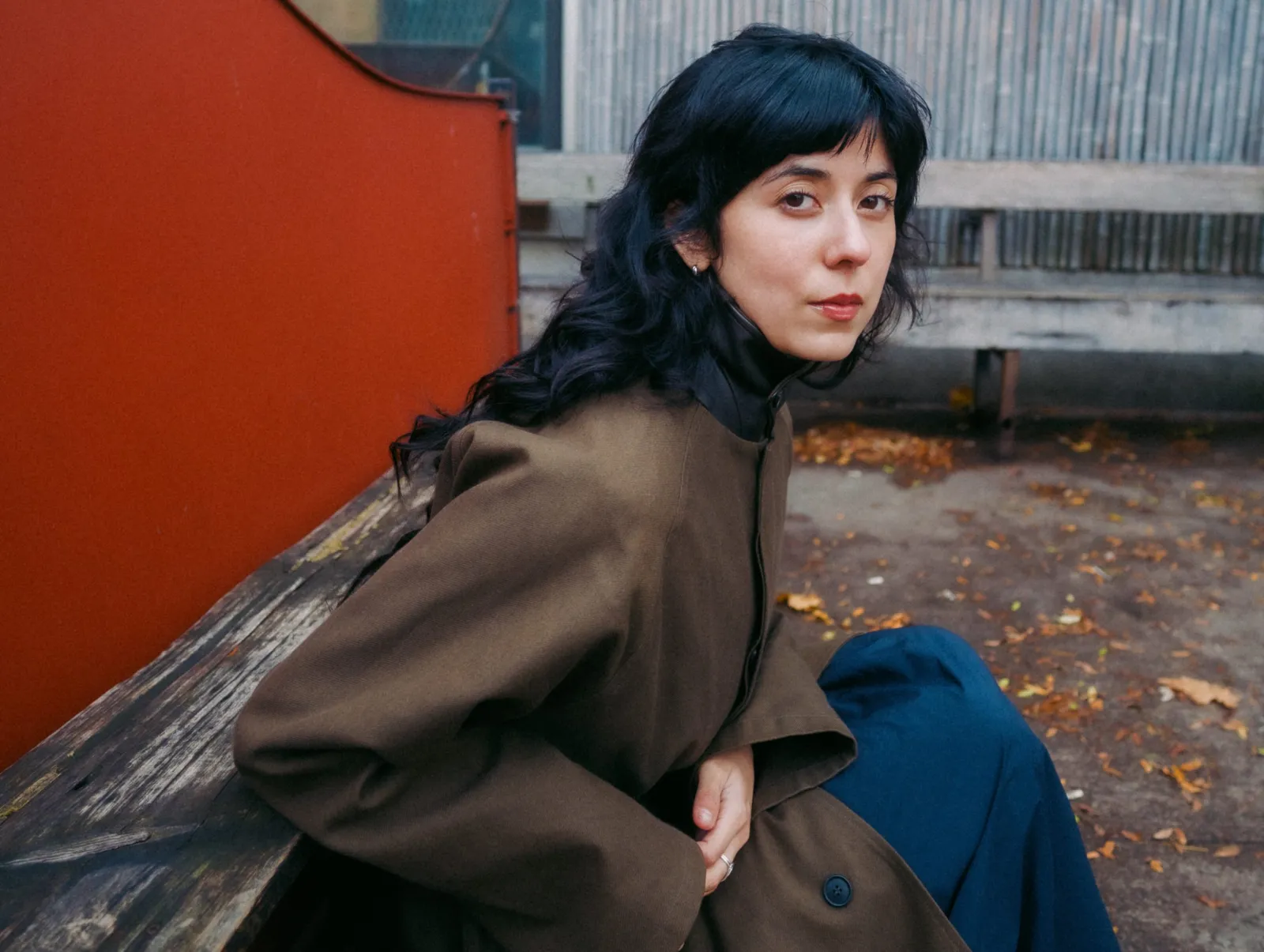
“It really feels like feeling very naked in front of people. This has been such a vulnerable piece of work.” Honduran-Canadian singer‑songwriter Daniela Andrade is stepping into a new phase with her latest project. From early YouTube performances recorded in her bedroom to the textured arrangements of her later projects, she’s consistently built worlds out of softness and reflection. On her new album, Oda, Andrade opens a new chapter—one shaped by vulnerability, cultural memory and a deepened relationship with language.
Music in the Home
Andrade’s connection to music was rooted long before she ever imagined a career. “I grew up in a really musical household,” she recalls in an interview with Newsweek. Her father, a choir director, taught her and her siblings to harmonize at a young age. The vocals came first, but the guitar expanded her musical horizons when she was 11. “My dad taught me my first three chords, and I just kind of ran with that.”
Read More on Entertainment
Those three chords would eventually spark her YouTube endeavors, where she now has nearly 2 million subscribers. That massive audience started with humble beginnings; her earliest YouTube videos were created for self‑improvement rather than an audience. Andrade says she recorded herself to study and review fingerpicking patterns or vocal techniques. Eventually, she made one of the videos public, sparking her public music journey. “It just kind of started this whole journey into YouTube and music out of something I was doing for fun in my bedroom,” the songstress reflected.
Shaping a Sound
Soul, R&B, and folk influences are woven through Oda, reflecting Andrade’s musical roots and the depth of her listening. She credits her middle‑school choir teacher for introducing her to gospel music and artists like Kirk Franklin. Andrade adds that Lauryn Hill’s The Miseducation of Lauryn Hill was another awakening sonically. “Something Lauryn was communicating on that record just stayed with me.”
The late D’Angelo’s Voodoo also guided her throughout the album‑making process. Andrade explains she was inspired by “the way those vocals are layered and the attention to detail,” as well as the emotional clarity he brought to the microphone.
Her cultural upbringing, however, is just as central to the album’s identity. “My mother really tried to keep Honduran culture very present through language, and then my father kept it very present through music,” she said. “He was the one playing a lot of Latin songs, singing them on the guitar and showing me things that he loved.”
Together, those musical and cultural inspirations coalesced, forging Andrade’s signature sound. “I feel like these two parts really merged. It feels like an amalgamation of all these different aspects of me on this record.”
Returning to Her Honduran Roots
Writing in Spanish opened unexpected doors. “Something really unlocked for me [on Tamale],” she says of her first songs in Spanish. Many of her childhood memories, tied to the language, involved family gatherings, celebrations, and closeness, so writing in Spanish led her into deeper emotional pockets than she expected. “There's this whole other side of me that wasn't really expressing other emotions that I had inside, artistically, lyrically in Spanish.”
Her mother played a pivotal role in preserving that connection. “When you come home, we speak Spanish,” she told Daniela growing up. That foundation and connection to her mother tongue laid the groundwork for Andrade’s passion for her heritage. “It ties me to my culture and helps me understand where my parents come from and the legacy they’re leaving behind.”
For Andrade, her relationship with language sets the tone and shapes the music. “When I think in English and speak in English, it feels more organized. But when I speak Spanish, it feels very rounded and soft.” In the process of crafting Oda, often the first lyrics that surfaced while writing came in Spanish because it fit the “rhythm or shape of the chords,” according to the Canadian singer.
...
Building the Words
Beyond music, Andrade writes regularly on her Substack, which mirrors the introspective nature of her songwriting. “I love the process of writing because it feels like an observational moment with yourself,” she says. English lends itself to analysis for her, while Spanish often emerges as poetry.
For Oda, Andrade developed a Monday ritual centered on collecting words. Throughout the week, she saved words that struck her. On Mondays, she printed or wrote them out, cut them and arranged them physically. “I’d start moving them around on the kitchen counter with my coffee,” she says. Certain words became anchors for new songs.
“fantasmagoria” is the clearest example of how a single word shaped the entire production, according to the multi-hyphenate producer and singer. Andrade learned that the term described a "shifting collection of images," and she wanted to reflect that visually and sonically. “I wanted to create a song where the production also reflects what the word makes me think of,” she explained.
A Mother’s Touch
Andrade’s mother serves as a driving force throughout the album, appearing on skits and helping to weave the overarching narrative. “My mom plays such a key role in helping me process my feelings throughout this record,” Andrade explains. Upon entering her late 20s, she began "reexamining her values, identity and childhood," which sparked long, personal conversations between them.
“I felt like I got to know not just my mom, but also learned things about how I grew up through a different lens,” the singer reflected. Some of those conversations shaped the album and eventually became part of it. “It started to become the tapestry of the project,” she says. “I needed to leave it this way.”
An Open Invitation
As personal as Oda is, Andrade says the album is also an invitation. “I really approached it as a conversation,” she says. She hopes that listeners reflect on their own relationships—and take conversation seriously as an act of connection. “It takes many conversations with ourselves and with others to reach a point of understanding.”
Approaching that conversation with earnestness is at the core of Oda. “To take part in the art of conversation and to not be fearful of stepping into that space with an open heart.” After a brief hiatus, Andrade is fearlessly reemerging, bearing her heart and culture with pride.
“I feel proud of this record. I feel ready for the world to receive it.”
Listen to 'Oda' here.
View 0 Comments
Submit Correction
View Editorial & AI Guidelines