...

By Aayu Sharma
0
Share
Newsweek is a Trust Project member
See more of our trusted coverage when you search.Prefer Newsweek on Googleto see more of our trusted coverage when you search.
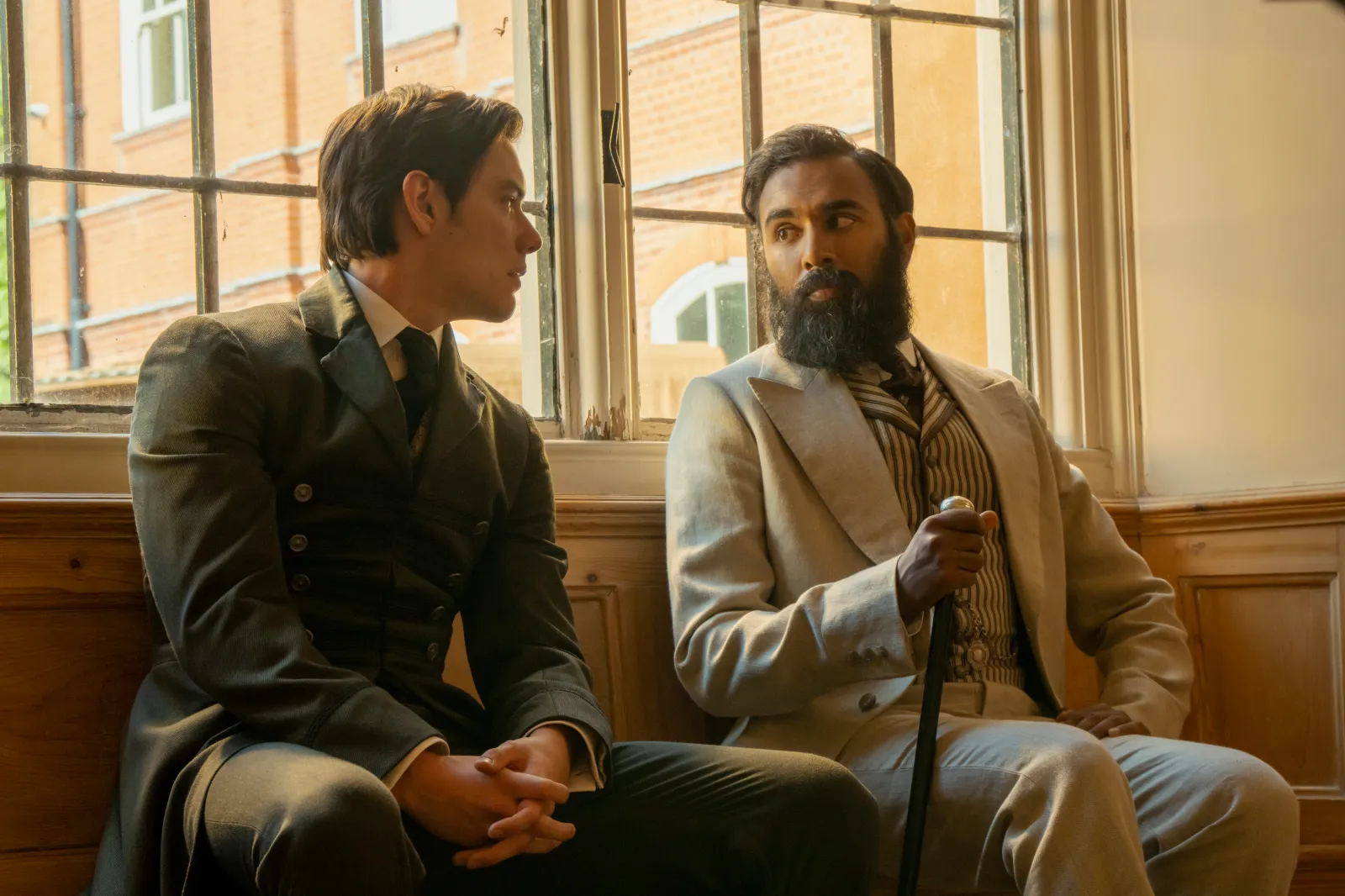
There have been only a few literary characters as iconic as Dr. Watson. For more than a century, he has been portrayed as the most trusted companion of Sherlock Holmes. Moreover, he is the only person in the world who grounds the greatest detective in the world of fiction. However, in the Netflix movie "Enola Holmes 3," the character takes on a refreshing new identity and gives viewers a chance to see a new side of this legendary character. After making a brief but memorable debut in "Enola Holmes 2" in 2022, actor Himesh Patel returns four years later with a much larger role, stepping into the heart of the mystery.
In the third installment of the film franchise, Enola finds herself in a stressful position when she learns that her brother, Sherlock, has been kidnapped. With the help of Dr. Watson, Enola embarks on a dangerous journey to find her brother and unravel some really dark secrets. In an exclusive conversation with Newsweek, Patel discusses how he approached reimagining one of literature's most iconic characters without losing sight of Arthur Conan Doyle's original creation. Moreover, he opened up about working with Oscar-winning filmmaker Christopher Nolan on "The Odyssey" and the surprising intimacy behind one of the year's biggest productions.
...
Read More on Movies
Newsweek: Your version of Watson enters the story carrying over a century of audience expectations, but the Enola Holmes universe isn't interested in simply recreating the familiar Sherlock mythology. How did you find the balance between honoring the Watson people think they know and creating a version who feels like he's discovering himself alongside this younger generation of detectives?
Himesh Patel: I did a lot of research by reading the original source material, including the books, and learning more about the period in which they're set. A lot of that came from the conversations I had when I first took on the role a few years ago, especially about the themes we wanted to explore in this third movie. From those discussions, it became clear that we were going to do something very unique with this version of Watson. He was never going to be the Watson we'd seen before in many ways, and that really excited me.
Newsweek: One of the most interesting aspects of Arthur Conan Doyle's Watson is that he isn't simply Sherlock's chronicler—he's also the person who quietly humanizes him. In a franchise where Enola constantly challenges Sherlock emotionally, where do you think Watson fits into that equation? Does he become another emotional anchor, or does he disrupt the dynamic in an entirely different way?
Himesh: I think he is another emotional anchor, but in a different way. He, I suppose, doesn't necessarily have the same intense closeness that Enola and Sherlock share. You know, they're siblings, so they'll always have that fiery sibling relationship, mainly because they're so similar in so many ways. Whereas Watson sits slightly apart, making him an emotional anchor for both of them, but in a way that allows him to use the advantage, I suppose, of being a little more removed. Even so, I think that when we find him in this story, he does consider them family.

...
Newsweek: You've often gravitated toward characters who observe before they act, whether in intimate dramas or large ensemble projects. Watson is arguably literature's greatest observer. Did your own instincts as an actor naturally align with that quality, or did you have to suppress certain impulses to capture Watson's quiet intelligence rather than making him overtly expressive?
Himesh: I think there were many aspects of myself and my outlook that probably, you know, align with the characteristics you so beautifully articulated. I think he is someone who thinks before he leaps into things, and that's why the juxtaposition between him and a character like Sherlock, or in this case, a character like Enola, really works. You have someone quietly following along and helping guide things, while you also have someone spearheading the investigation and intensely figuring out what's going on.
Newsweek: You are also a part of one of this year's biggest releases, "The Odyssey," and working with Christopher Nolan. Every actor who has worked with Nolan seems to come away talking about his preparation and precision. Having experienced that firsthand, what aspect of his filmmaking surprised you the most? And working with him, did you discover anything about your own process as an actor?
Himesh: I think what I found most surprising was probably how intimate everything remains on set, despite the scale. You know, it's an unimaginable scale, especially on The Odyssey—an unimaginable scale of filmmaking. And yet, when it comes to the camera, what we're trying to achieve in front of it, and everything in its immediate surroundings, it still feels very intimate. And I think that's what gives his movies the sort of concentrated energy they have. I also think there's a speed to the way he likes to work. He doesn't like hanging around. He likes to keep things moving, and I realized that's something I value as well. I don't like waiting around or chatting too much. I like to just get on with it and get things committed to film.

...
Newsweek: Most adaptations treat Dr. Watson as the audience's surrogate, but "Enola Holmes" often positions Enola as the emotional and moral center instead. Did that shift force you to rethink Watson's traditional role, and were there moments where you consciously resisted leaning into traits audiences already associate with the character?
Himesh: I tried not to be too conscious of any expectations people might have had of the character from before. I had to concentrate on serving the story in front of me. And of course, many of those familiar traits were still there. What really excited me was that, in this movie, we get to see Watson in a context that's very different from anything we've seen before. That's because, for most of the story, he's without Sherlock. Sherlock is missing, and everyone is trying to find him. That allowed me to play Watson in a very different way, where he's not just following in Sherlock's footsteps. Instead, he's guiding Enola on an emotional level, mentoring her, and helping her crack the case. So, that was really exciting for me.
Newsweek: There have been countless interpretations of Dr. Watson across film and television, with each era revealing something different about the partnership at the heart of Sherlock Holmes. Looking back after making "Enola Holmes 3," what do you think this version says about Watson that previous adaptations haven't had the opportunity—or perhaps the interest—to explore?
Himesh: There's something we're trying to explore with this whole movie, really. There's a theme of colonialism and what was happening during that era. It is present in the original books if you go back and read them. But of course, they were written in their own time, so they weren't really interrogating the reality of it. Whereas we now have the opportunity to set the film in that same period while also examining the realities of colonialism. So, my casting as Watson gave us that opportunity, and we took it. I think we've done a really great job of weaving his experiences as a character into an identity that also places him in an interesting contrast with those around him.
"Enola Holmes 3" is scheduled to premiere on Netflix on Wednesday, July 1, 2026.
View 0 Comments
Submit Correction
View Editorial & AI Guidelines