...

By Jenni Fink
Senior Editor
0
Share
Newsweek is a Trust Project member
See more of our trusted coverage when you search.Prefer Newsweek on Googleto see more of our trusted coverage when you search.
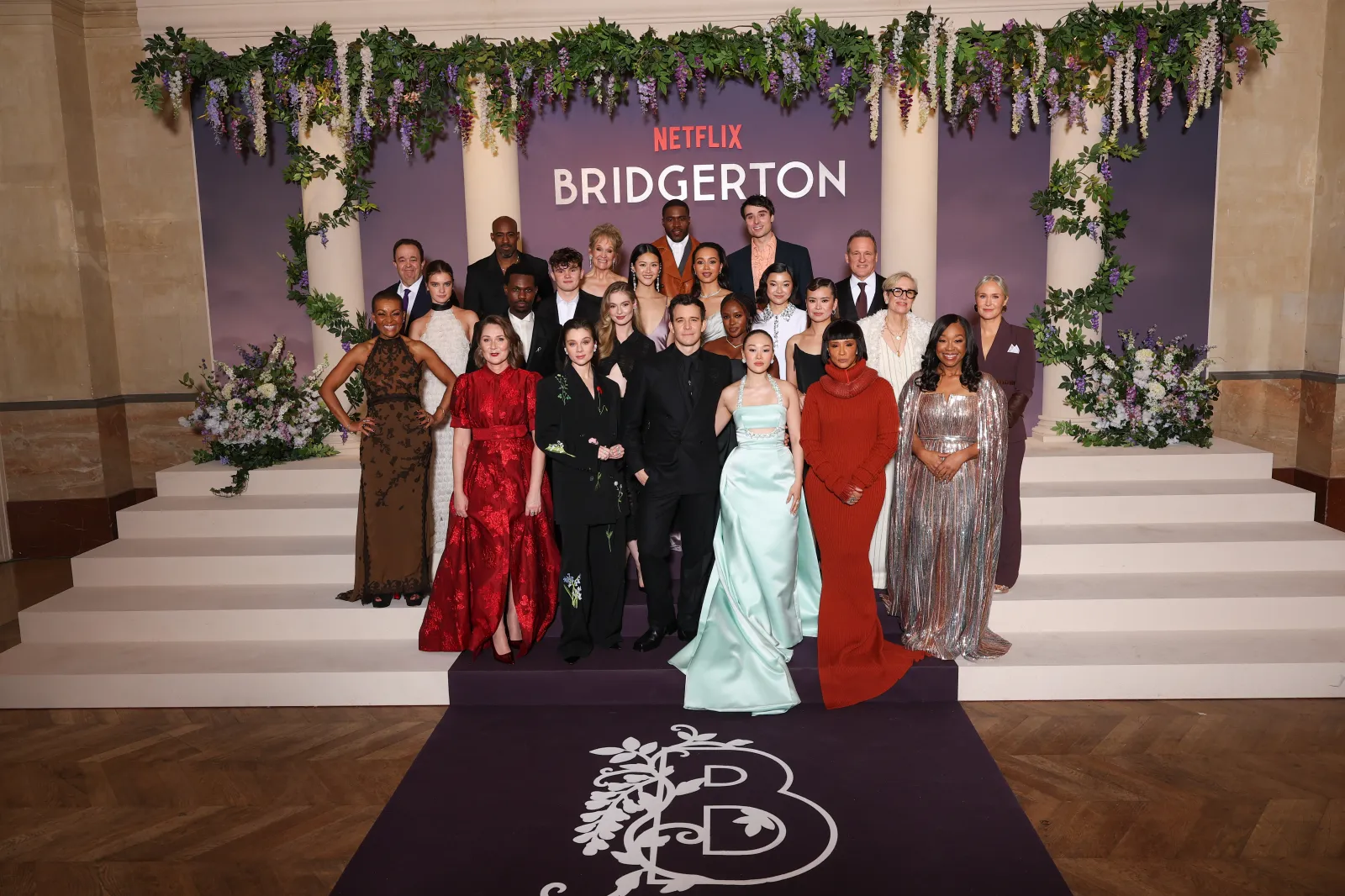
Bridgerton's latest season has come to an end with yet another successful marriage season for the Bridgerton family, and while we'll continue to see matchmaking in future seasons, it's possible this could be the end of Queen Charlotte.
Queen Charlotte, played by Golda Rosheuvel, has been a fixture of the Bridgerton universe since its debut, serving as both a comedic force and a central authority figure presiding over the marriage market. But as the show’s fictional timeline begins to align more closely with real history, it will have to choose whether to adhere to historical accuracy or keep the queen around.
Although Bridgerton is famously loose with accuracy, it does maintain a consistent internal timeline. According to multiple timeline breakdowns, the franchise has advanced steadily through the 1810s, with earlier seasons set in 1813 and 1814 and the most recent in 1817 and 1818.
Read More on TV
Newsweek reached out to Netflix, show creator Shonda Rhimes, and Rosheuvel via email for comment.
Netflix’s newest season is set in 1818 and takes viewers on, well, a few journeys. In one plot line, viewers find out whether Benedict Bridgerton will be able to marry Sophie Peck, the illegitimate child of Lord Penwood. The two spend the season in an entire "will they or won't they" situation as star-crossed lovers who have to navigate their feelings in a society that wouldn't accept them as a couple.
On another front, viewers have to deal with the heartbreaking reality of Francesca Bridgerton—now Sterling—in the aftermath of her husband's sudden death and a complicated relationship with his cousin, Michael Sterling. Viewers also saw Lady Violet Bridgerton start the season looking for love, but in the end, she chose to be an independent woman.
Similar to previous seasons, the latest installment of Bridgerton takes place over the course of a social scene. In the 1800s, that roughly translated to late winter to early summer. In the show, presentations to the queen take place in early spring, with the final balls occurring in early July, before families would retreat to their country estates to escape the heat of the summer.

...
In real life, the biggest news of that social season was having three royal marriages.
Following the death of Princess Charlotte of Wales in 1817, the royal family pushed three of Charlotte and King George's sons to marry because there was no legitimate grandchild to serve as heir. Prince Adolphus, Prince Edward and Prince William all married that season, with Edward and William having a double wedding at Kew Palace on July 11.
Prince Edward is the great-great-great-great-grandfather of King Charles III, the current leader of the British royal family.
But the biggest news of that year would come in November, when Queen Charlotte died. She served as queen consort for more than 50 years, and her death marked the end of an era at the British court, coming amid King George III's declining health and ongoing political upheaval. The coincidence of dates has not gone unnoticed by fans, particularly as Bridgerton has increasingly woven themes of aging, legacy, and loss into Queen Charlotte’s storylines.
Queen Charlotte is one of the few major Bridgerton characters drawn directly from history. The Netflix series, however, reimagines her role dramatically. In Bridgerton’s alternate history, Charlotte is depicted as a powerful political and social force, presiding personally over the marriage season and wielding influence far beyond what the real queen historically exercised.
That creative freedom has allowed Queen Charlotte to remain front and center even as the narrative focus shifts among the Bridgerton siblings—something that need not change simply because the calendar turns to 1818.
Still, the historical overlap has fueled fan theories that Queen Charlotte’s death could eventually be depicted on screen, potentially marking one of the show’s most emotional turning points. With Lady Danbury leaving London at the end of the season, it's possible the final scene between her and Queen Charlotte is the last conversation they'll have on the show.
From a storytelling standpoint, Queen Charlotte serves a unique function within Bridgerton. She is the only character who connects every season, every romance, and every scandal. Her presence provides continuity as the focus shifts from sibling to sibling, and her sharp commentary anchors the show’s satirical edge.
Removing her would represent a major structural change, one that the series may not be ready to make, regardless of historical timing. Even if the show eventually acknowledges her mortality, it could choose to do so in a way that preserves her influence, either through legacy storytelling or a gradual transition rather than an abrupt exit.
Despite the speculation, there is no confirmation that Queen Charlotte is being written out of the series, or that the show intends to depict her death in the immediate future. Bridgerton has already demonstrated a willingness to diverge from strict historical timelines when it suits the story, and the series has been renewed beyond the current season.
While Bridgerton uses real dates and figures as inspiration, it is ultimately an alternate‑history romance, not a historical reenactment, so the show's creators can keep her on despite the real-life tragedy that's about to occur.
And, if you're looking to check the books for answers, you won't find any. Queen Charlotte is one of the biggest characters in the television series, but she's barely in the books. She's actually only ever mentioned once, and it's a fleeting comment. The sixth book, When He Was Wicked, chronicles Francesca's life after her husband's death as she navigates romantic feelings for his cousin, Michael Stirling.
In the book, Queen Charlotte is only mentioned when a character talks about how his grandmother met the queen at court one day.
For now, Queen Charlotte remains very much alive in the Bridgerton world. Whether the series ultimately chooses to confront her real‑world death will likely depend less on the date and more on the needs of the story.
What is clear is that 1818 marks a crossroads: a moment where Bridgerton’s fictional timeline brushes up against reality in a way that could drastically alter the show.
In a polarized era, the center is dismissed as bland. At Newsweek, ours is different: The Courageous Center—it's not "both sides," it's sharp, challenging and alive with ideas. We follow facts, not factions. If that sounds like the kind of journalism you want to see thrive, we need you.
When you become a Newsweek Member, you support a mission to keep the center strong and vibrant. Members enjoy: Ad-free browsing, exclusive content and editor conversations. Help keep the center courageous. Join today.


View 0 Comments
Submit Correction
View Editorial & AI Guidelines