...

By Brendan Cole
Senior Reporter
0
Share
Newsweek is a Trust Project member
See more of our trusted coverage when you search.Prefer Newsweek on Googleto see more of our trusted coverage when you search.
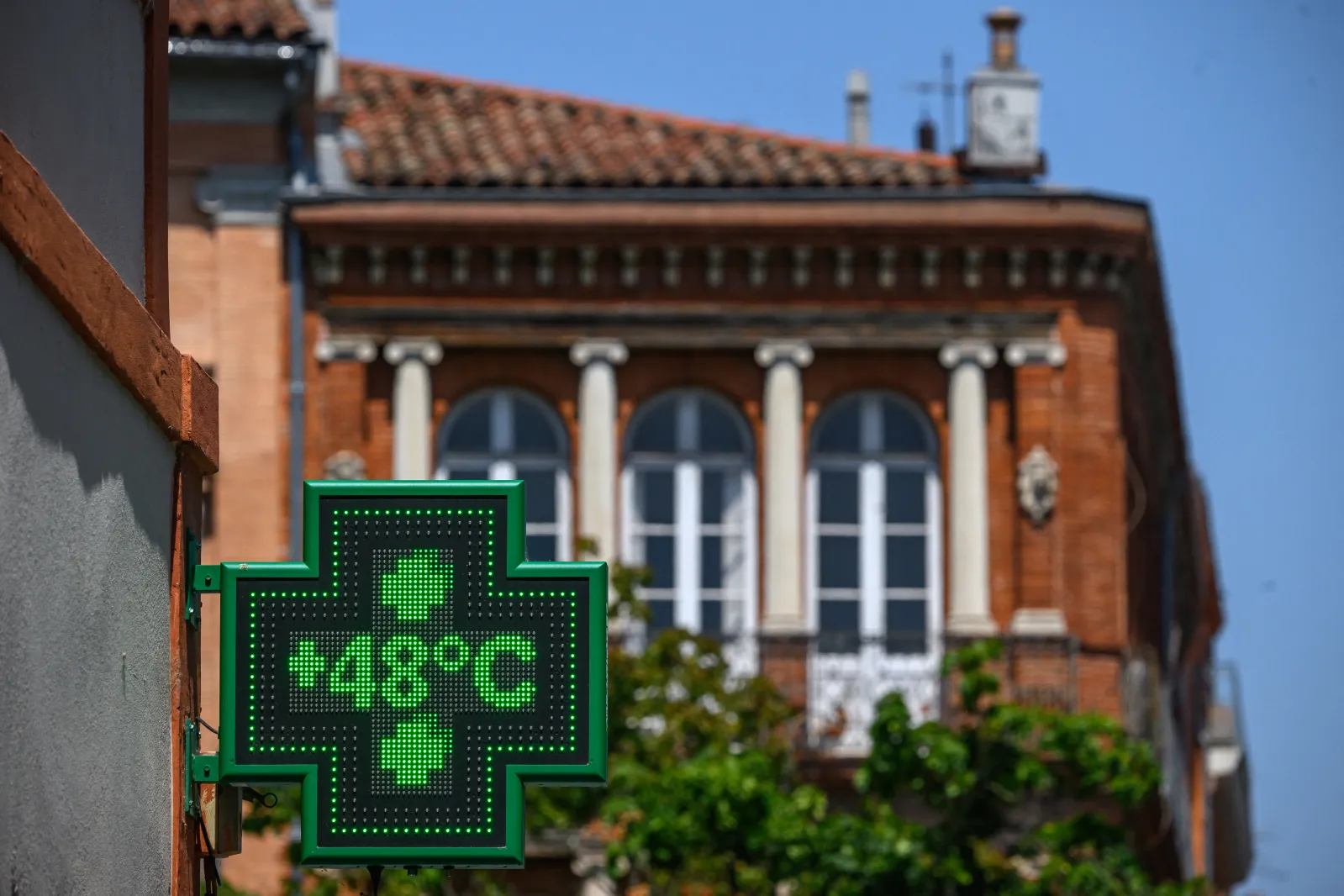
Scorching temperatures in Europe have led to the deaths of hundreds of people and broken records in a heat wave expected to last at least until the weekend.
The heat has scorched millions in the United Kingdom, France, Spain and Italy, while temperatures are expected to peak in Germany, the Netherlands and Belgium in the coming days. The heat wave will also extend to Eastern Europe, with severe heat warnings issued for countries including Poland, Croatia and Hungary for later in the week.

...
Read More
What Is a Heat Dome? Ridge Phenomenon Bakes United States, Europe1 min read

What Is a Heat Dome and What's Contributed to It?
The record temperatures across Europe have been put down to what has been described as a “heat dome"—a persistent area of high pressure that acts like a lid over the land, forcing air to sink and compress.
“As the air sinks, it warms up, whilst clear skies allow strong sunlight to heat the ground, which then radiates warmth back into the air,“ Akshay Deoras, a senior research scientist at the National Centre for Atmospheric Science & Department of Meteorology at the University of Reading, told Newsweek.
This creates a self-reinforcing cycle of heat build-up, much like a pressure cooker trapping steam and increasing temperature inside.
“This pattern is contributing to the current heat wave over the U.K. and parts of Western Europe, with the high-pressure system effectively locking in hot conditions,” Deoras said.

...
Where Have Temperature Records Been Broken?
Temperature records have been broken in countries across Western Europe.
The U.K. registered its hottest June day on Wednesday. The Met Office issued and extended a red extreme warning, meaning a risk to life, into Friday for London and parts of south-eastern England.
France's weather agency, Meteo-France, said Tuesday was the hottest day recorded since 1947, while Spain recorded its highest daily average temperature for June nationwide on Monday. Record or near‑record conditions were reported in Ireland, Belgium and parts of Central Europe.
- United Kingdom: Highest June temperature on record, 36.1 degrees Celsius (96 degrees Fahrenheit), June 24, recorded in Gosport, Hampshire
- Belgium: Record temperature for 24 June: 33.2 degrees Celsius in Uccle, south Brussels.
- France: Hottest day recorded since 1947, with an average of daytime and nighttime temperatures of 29.7 degrees Celsius
- Spain: Highest daily average temperatures in June since 1950
Reported Deaths and Hospitalizations
The World Health Organization has classified the current heat wave as a “health emergency,” estimating that heat has killed roughly 200,000 people in Europe over the past four years. Full excess-mortality counts can take weeks to emerge, but national authorities and media have confirmed a high number of fatalities as of June 24.
- Spain: An estimated 212 deaths due to the heat, according to the country's health ministry
- France: 58, including 18 heat-related deaths and 40 plus drownings
- United Kingdom: 15 water-related deaths

...
Heat Domes and Climate Change
As well as the U.K., red heat alerts are in place for parts of northern Spain, northern and central Italy, and severe heat warnings have been issued for countries including Poland, Croatia and Hungary for later in the week.
Meanwhile, temperatures are expected to peak in Germany, the Netherlands and Belgium in the coming days. The Dutch weather service, the KNMI, issued a Code Orange weather alert, which refers to a "high chance of dangerous weather" until at least Friday, with temperatures expected to ease thereafter.
Meanwhile, climate change is creating the conditions for heat domes to become more frequent.
“What climate change does, it moves the overall distribution of heat warmer, and so we would expect these conditions at a particular given temperature threshold to happen more frequently,” Andrew Charlton-Perez, a professor of meteorology at the University of Reading in England, told Newsweek.
“When we have extremes for those extremes to be a little hotter each time, and so in combination, those things pose real challenges for our infrastructure, for the way that we live in many countries.”
Climate change is an important underlying factor because rising global temperatures from greenhouse gas emissions mean the “starting point” for any heat dome is already warmer than in the past, Deoras said.
“This makes extreme heat events more likely to reach dangerous thresholds and last longer, turning what might once have been a brief warm spell into a sustained and potentially hazardous heat wave," he added.
Contact Newsweek editors on this story: Frances Mao and Sam Wilson.
View 0 Comments
Submit Correction
View Editorial & AI Guidelines