...

By Steve Mollman
News Editor
0
Share
Newsweek is a Trust Project member
See more of our trusted coverage when you search.Prefer Newsweek on Googleto see more of our trusted coverage when you search.
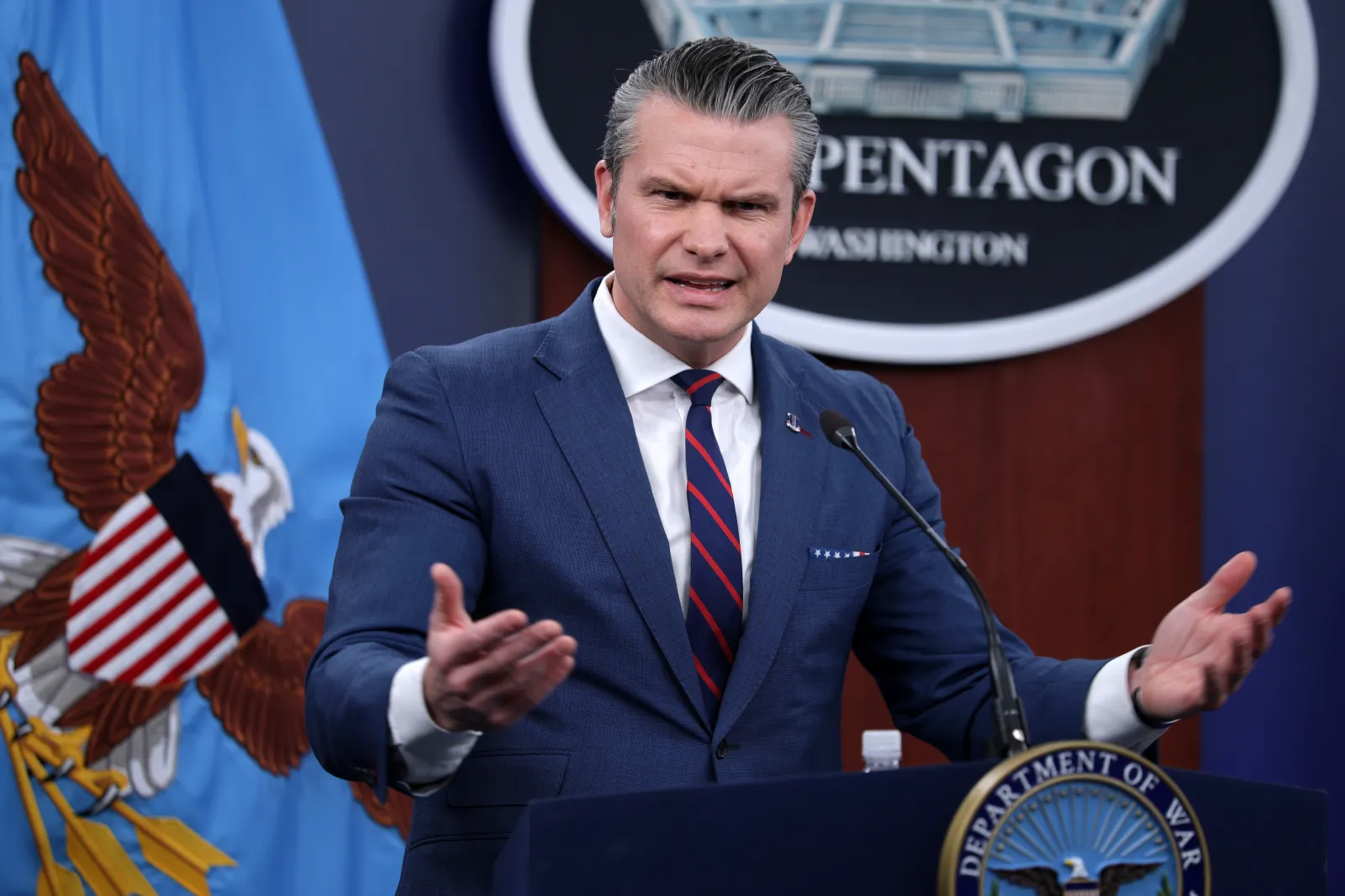
Retired Army Major General Randy Manner warned that the Pentagon is heading into a “very dangerous” moment after Defense Secretary Pete Hegseth fired senior Army officers, arguing the move risks silencing honest military advice during the Iran war.
Manner made the remarks during an appearance on Alex Witt Reports on Sunday, as the decision continues to draw criticism from former senior military leaders and Republican lawmakers with deep defense credentials.
Newsweek reached out to Defense Department on Monday. Its comment is below.
Read More on U.S.
Why It Matters
The firings have raised alarm about civil‑military relations at a time when the United States is engaged in conflict and facing high‑stakes decisions that rely heavily on experienced military judgment. Critics say abruptly removing senior officers without clear public explanations risks undermining morale, discouraging a breadth of views, and weakening confidence among troops.
Manner warned that the consequences could be immediate and severe.
“That is an extremely dangerous situation to be in,” he said on Alex Witt Reports. “Only two other leaders in the world have seen that, and that was Stalin and Hitler, who purged the best officers that they had before each of the wars they engaged in.
“It’s very dangerous. It does not help at all in terms of giving confidence to the American fighting man.”
Those concerns have been echoed publicly by Republican Representative Don Bacon of Nebraska and retired General Barry McCaffrey, both of whom have long military careers and are widely respected within defense circles.
...
What to Know
Hegseth recently fired Army Chief of Staff General Randy George, a move that has drawn scrutiny because it occurred during the Iran war and without a detailed public justification. In addition to George, Hegseth fired General David Hodne, the head of the Army’s Training and Doctrine Command, and Major General William Green, the Army’s chief of chaplains. No detailed public explanation has been provided.
Manner said the way the firings were handled could discourage candor throughout the chain of command.
“It makes people less willing to give their candid military advice for fear that doing so could cost them their jobs,” he said. “And that has an impact on the conduct of war. If there’s ever a time that top military commanders and the president need candid advice, it is during a war.”
The decision also prompted sharp criticism from Bacon, a Republican member of the House Armed Services Committee who represents Nebraska’s 2nd Congressional District. Before entering Congress, Bacon spent nearly 30 years in the U.S. Air Force, retiring as a brigadier general after serving in command roles and senior Pentagon positions.
Bacon posted his reaction on X last week, saying the firings reflected “a lack of character.” In additional posts made the same day, he warned that abruptly removing respected officers without explanation risks politicizing the military and undermining trust within the ranks.
The criticism widened on April 2, when retired General Barry McCaffrey weighed in publicly. McCaffrey is a retired four‑star Army general, a decorated Vietnam War veteran, a former commander of U.S. Southern Command, and a former White House drug czar. He has long been regarded as a leading authority on military leadership and strategy.
In an April 2 post on X, McCaffrey sharply condemned the decision to remove George, writing in full: “Hegseth fired the Army Chief of Staff Gen Randy George. Immediately. Gen George probably the best leader I’ve encountered in uniform. Integrity. Experienced combat leader. Solid judgement. Courage. Modesty. Takes care of soldiers. A war going on.”
Manner said such reactions reflect broader unease among current and former military leaders.
“You want officers who are willing to speak truth to power,” he said. “If they believe their careers are on the line for offering honest advice, then you’ve created a system that doesn’t serve the country well.”
When asked for comment, the Defense Department on Monday pointed Newsweek to an April 2 X post from Chief Pentagon Spokesman Sean Parnell, who wrote: "General Randy A. George will be retiring from his position as the 41st Chief of Staff of the Army effective immediately. The Department of War is grateful for General George’s decades of service to our nation. We wish him well in his retirement."
What Happens Next
The firings are expected to come under scrutiny in upcoming House Armed Services Committee hearings, where lawmakers are likely to question Pentagon officials about the rationale for the removals and their impact on military readiness during the Iran war.
The Defense Department is also expected to address the controversy in scheduled Pentagon briefings this week, as pressure mounts for clearer explanations and assurances about continuity of command while U.S. forces remain engaged overseas.
View 0 Comments
Submit Correction
View Editorial & AI Guidelines