...

By John Feng
China Editor
0
Share
Newsweek is a Trust Project member
See more of our trusted coverage when you search.Prefer Newsweek on Googleto see more of our trusted coverage when you search.
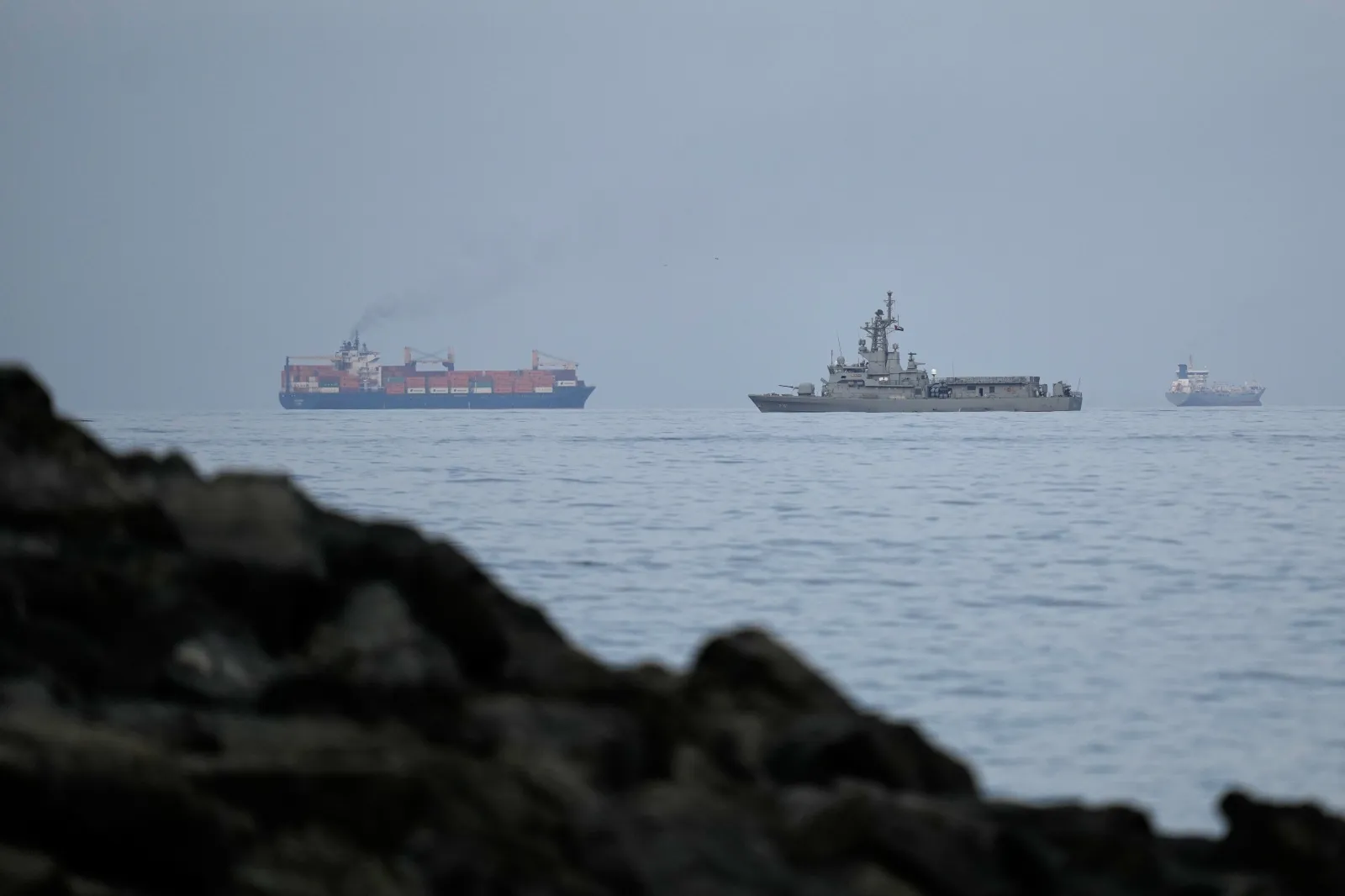
Iran has cut off transit in the Strait of Hormuz to the majority of vessels as part of its fight back against the United States and Israel, saying that not a single liter of oil will get through to those countries.
Its forces have used missiles and drones to strike at least 19 different ships attempting the passage since the war began on February 28. Among the latest to be hit was a Chinese-owned, Danish-operated cargo ship.
Only a handful of non-Iranian commercial ships have made it through, including some which declared themselves as either owned, operated or crewed by Chinese.
Read More on World
The Claim
Iran’s Islamic Revolutionary Guard Corps has successfully engineered a 90 percent decline in maritime traffic through the Strait of Hormuz, which carries over one-fifth of the world’s seaborne oil trade, including to China.
But the successful crossing of the strait by some vessels in the past week has led to speculation that ships may be claiming links to China—real or fake—in order to avoid attack.
There's also been questions over whether Beijing and Tehran struck a deal to guarantee safe passage for Chinese cargo ships, on account of their friendly ties and because China is the largest buyer of Iranian crude oil.
The Facts
Some ships claiming links to China have successfully navigated the Strait of Hormuz since the start of the Iran war but there were only six of them between March 1 and March 8.
That was just 10 percent of the remaining vessel traffic in the waters, according to analysis published on Tuesday by London-based Lloyd’s List Intelligence.
The merchant vessels—which travel under different country flags—have adopted a tactic of signalling Chinese ownership or other links.
That was still in use on Wednesday, when the Panamanian-flagged, Chinese-managed cargo ship Riva Glory broadcast its destination as “CHINAOWNERALLCHINESE” while sailing eastbound through the strait out the Persian Gulf, according to MarineTraffic data analyzed by Newsweek.
But none of the vessels was found to be falsely claiming these Chinese links. So far all the ships have had legitimate connections.

...
At least three bulk carriers—all listing their destination as "China owner"—made it through the strait into the Arabian Sea on March 11, the Chinese financial outlet Caixin said on Thursday.
One of these was the Chinese-owned timber carrier Run Chen 2, which Caixin said was "the first Chinese-flagged vessel known to have made the passage since commercial shipping through the strait was effectively halted on March 1."
But while Chinese ships have made it through, they have all only been bulk carriers which transport dry goods, rather than tankers carrying oil or LNG.
However, China has long relied on Iran's so-called "shadow fleet" for delivery of some crude oil shipments. And the only tankers known to have made it through the strait so far have been linked to the U.S.-sanctioned vessels, according to Lloyd's List.
In addition, it would appear that China isn't the only country that might be getting some leeway.
At least one crossing over the weekend was made by a fuel tanker, the Turkish-managed Bogazici, which claimed to be Muslim-owned and Turkish-operated, pointing to other similar attempts amid uncertainty during the crisis.
The Ruling
No commercial vessels have been found so far to be impersonating Chinese ships. The ones that made it through did have legitimate Chinese links. Owner and operator information is often publicly listed alongside self-broadcast location data known as AIS.
And while China is heavily dependent on energy imports via the Strait of Hormuz—as much as 40 percent of its oil and 30 percent of its LNG—the small number of Chinese ships that have transited the strategic waterway since the start of the war suggests a China-Iran deal for privileged access likely doesn’t exist, at least not yet.
On Thursday, the Chinese-owned, Danish-operated container ship Source Blessing was struck off the Emirati coast despite having broadcast "China Owner" to avoid attack, according to the BBC.

...
The claim is not without precedent, however. At the height of the Red Sea crisis, the U.S. Treasury Department said Beijing had received assurances from the Iran-backed Houthi rebels in Yemen not to strike Chinese ships crossing the Bab el Mandeb Strait into the Red Sea, although that did not prevent the Panamanian-flagged, Chinese-owned oil tanker Huang Pu from being struck by a Houthi-launched anti-ship ballistic missile in March 2024, possibly in error.
Commodity analytics firm Kpler, which owns the vessel-tracking service MarineTraffic, said on Wednesday that only seven vessels—four tankers and three bulk carriers—had crossed the Strait of Hormuz since March 6, in the latest sign of the high risks associated with any gamble against the IRGC’s threats.
The majority of large ships, including those with Chinese links, have stayed away from the strait for fear of attack or due to exorbitant insurance premiums. This was visible in satellite imagery captured on Tuesday, showing large clusters of vessels holding either side of the strait.
At least 19 ships have been hit by suspected Iranian drone or missile attacks since February 28, with others in the Persian Gulf narrowly escaping similar attempts, according to U.K.'s Maritime Trade Operations.
On Wednesday, the the Thai-flagged cargo ship Mayuree Naree was struck 11 nautical miles north of Oman in the Strait of Hormuz, the UKMTO reported. Later the same day, two oil tankers flying the flags of the Marshall Islands and Malta, respectively, were hit off the coast of Iraq.
It's a huge deterrence for all ships, not just Chinese ones.
In a post on X, MarineTraffic said the bulk carrier Hailan Journey had been headed toward the Strait of Hormuz earlier the same morning with its AIS signal stating “China owner & crew," but the ship "abruptly diverted from her course, turning back towards the UAE coast."
The U-turn happened "less than two hours after the reported attack on the bulk carrier Mayuree Naree," MarineTraffic said.
Update 3/12/26, 9:06 a.m. ET: Updated with latest attacks on civilian vessels.
View 0 Comments
Submit Correction
View Editorial & AI Guidelines