...

By Suzanne Blake
Reporter
0
Share
Newsweek is a Trust Project member
See more of our trusted coverage when you search.Prefer Newsweek on Googleto see more of our trusted coverage when you search.
Claims that Apple has deliberately erased towns and villages in southern Lebanon from its Maps app have gone viral on X, prompting accusations that the tech giant is aiding Israel’s military campaign.
But Apple says the premise of those claims is false and that the locations in question were never included on Apple Maps in the first place.
Newsweek reached out to Apple for comment.
Read More on Fact Check
The Claim
Over the weekend, X users, including @Villgecrazylady, journalist Rania Khalek, and entrepreneur and influencer Mario Nawfal shared screenshots and videos showing southern Lebanon appearing largely unlabeled on Apple Maps, while nearby areas in Israel and Syria displayed town names.
Several posts said that Apple had removed Lebanese village names in real time as Israel intensified military operations in the region. Some users framed the issue as political or ideological, accusing Apple of “erasing Lebanon’s history” or helping to legitimize occupation.
“So you’re telling me a $3,200,000,000,000 company cannot place verified and known town names in southern Lebanon?” independent journalist Ethan Levins wrote on X.
“They purposely are erasing Lebanon’s history. They can add these towns in 5 minutes.”
...
The Facts
Apple has denied removing any Lebanese towns from Apple Maps. In a statement shared with WIRED Middle East, the company said the village and town names circulating in viral posts had never been featured on Apple Maps, noting that its most detailed version of Maps has not yet launched in Lebanon.
So far, there’s no evidence that Apple recently deleted place names from the region. Instead, Apple Maps has long shown sparser labeling in southern Lebanon than Google Maps, which uses different data sources and displays more local detail at broader zoom levels.
Villages often appear on Apple Maps only when users zoom in closely or search for them directly.
The online posts alleging Apple’s sudden removal rarely include before‑and‑after comparisons proving the labels were visible on Apple Maps in the past. And archived user complaints dating back several years show similar critiques of Apple’s limited mapping data in Lebanon, showing it’s unlikely a recent or targeted change.
The Ruling
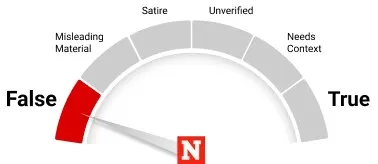
False.
There is no evidence that Apple erased or removed Lebanese towns from its Maps app. Available reporting and Apple’s own statement indicate the villages highlighted in viral posts were never part of Apple’s detailed mapping data for Lebanon.
The controversy stems from longstanding coverage gaps in the area, not any new action tied to the current conflict.
View 0 Comments
Submit Correction
View Editorial & AI Guidelines