...

By Frances Scott
0
Share
Newsweek is a Trust Project member
See more of our trusted coverage when you search.Prefer Newsweek on Googleto see more of our trusted coverage when you search.
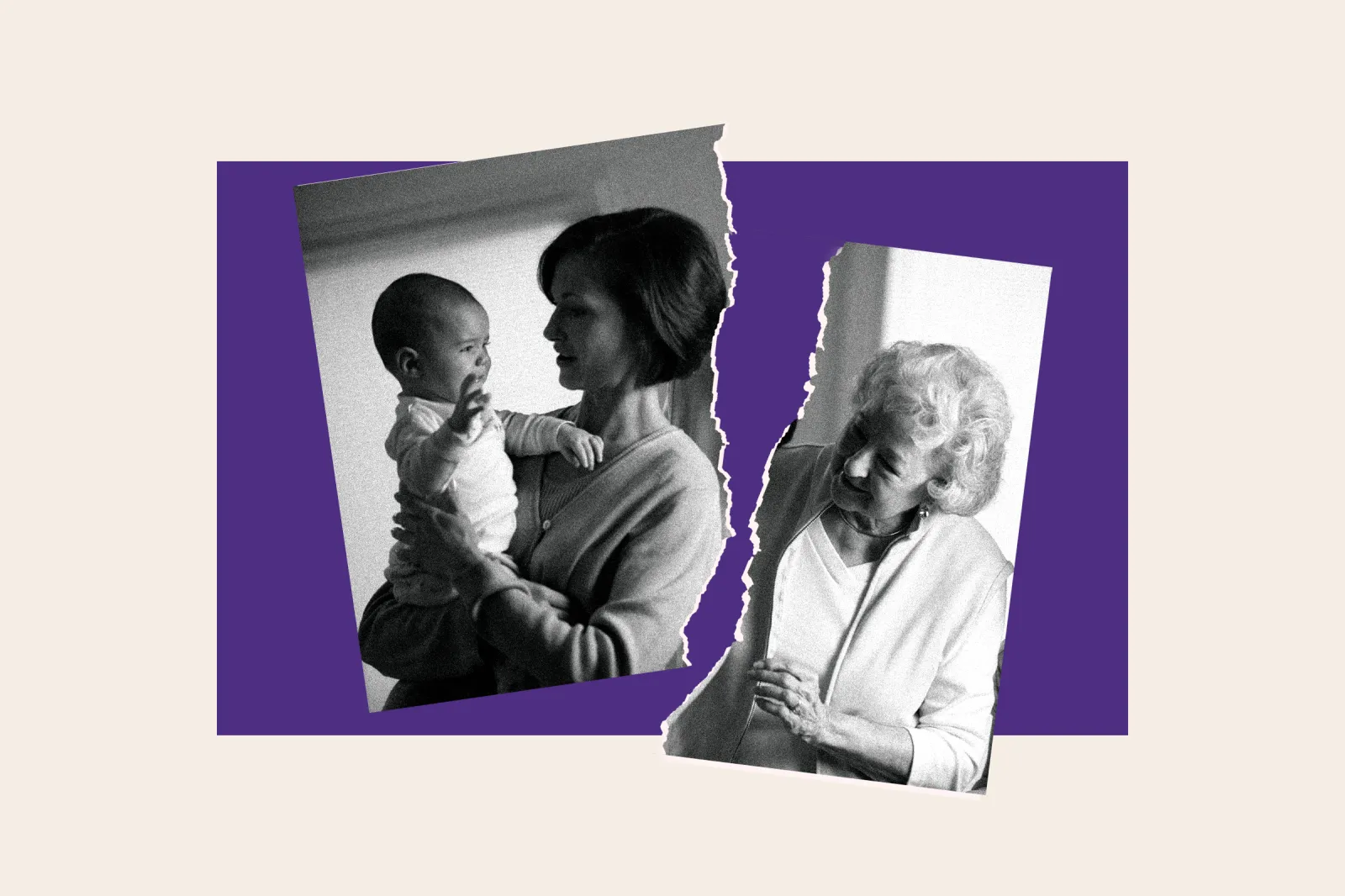
I was the first to learn my daughter was pregnant. She wrapped her arms around me and whispered in my ear, "You are going to be a grandmother." I cried at the possibility of becoming a grandmother, yes, but also at the possibility that our relationship might finally heal.
When my daughter’s twins, my beloved grandchildren, were born in 2014, I imagined a whole future: helping my daughter through their infancy, chasing toddlers through the park, driving them to soccer practice, piano lessons, swim meets. At the time of their birth I was busy at work, social, full of life. On my days off I'd help with the twins whenever asked, and those became my favorite days. I even cut my work hours to spend more time with them. I had a new purpose. I felt I mattered.
But our relationship was tenuous. Our mother-daughter bond had begun to fracture during her teenage years, collateral damage from my divorce from her stepfather. Years of stuffing down pain from his betrayals had triggered my descent into heavy drinking. My daughter was frightened seeing her mother stumble and slur words after too much wine, while her bond with her stepfather grew tighter. It was a wound that didn't close easily.
Read More on My Turn
My 12-Year-Old Daughter Woke Up As Usual—That Same Day Life Changed Forever6 min read

I Loved Tanning. 22 Years Later, I’m still Living With the Consequences9 min read

A Stranger Put $250 in My Kid’s Account. Twice4 min read

Years of sobriety, therapy and making amends gave me hope my daughter and I could find our way back to each other. But her nervous system remembered. Each small mistake I made, walking the twins farther than she was comfortable with, applying homeopathic teething gel to my granddaughter's sore gums after she'd asked me not to give them anything without her permission, chipped away at the trust we were trying to rebuild.
Then one morning, over coffee, everything changed. We were discussing her rules for my time with the grandchildren. She said she didn't feel confident I would follow them. Nothing in particular had happened. But I knew that every time I had the twins, my daughter was never completely at ease. I was always asked to text regularly with updates on how they were doing. After a sip of coffee, I asked whether we might try counseling together, to build trust in a structured way. My daughter, my only child, looked at me and said, "I don't see any hope for you and me in this lifetime."
I knew, in that moment, that my worst fear was becoming real. Eventually, she blocked my number, my email, my social media. I was completely cut off.
The first couple of years I isolated almost entirely. It was exhausting to attend a social event and have someone casually ask about my grandchildren. Seeing a grandmother with her grandchildren at the grocery store could send me back to my car in tears. I have never felt more alone.

...
Loneliness of this kind carries real consequences. In 2023, U.S. Surgeon General Dr. Vivek Murthy declared loneliness a public health epidemic, noting that nearly half of American adults experience measurable levels of it and that its health risks are comparable to smoking up to 15 cigarettes a day. In research done by the Harvard Graduate School of Education, 66% of the people surveyed cited insufficient time with family as a primary source of loneliness. That statistic landed differently for me once I lived it.
Family provides connection and emotional stability. When estrangement severs that bond, what follows can be low self-esteem, depression, anxiety and grief that has nowhere to go. For women whose identity is bound up in motherhood, the loss cuts even deeper. And estrangement is a particular kind of loss. It mimics death but comes without the rituals, the casseroles, the acknowledged mourning. It is what therapists call ambiguous loss: real and devastating, but invisible to the world around you. Shame compounds it, which can make it difficult to speak about openly.
But community can be transformative. Eventually I found online support groups for estranged parents and returned to therapy. I began to remember who I was outside the role of mother. In the small, intimate group of estranged mothers I meet with weekly, we remind each other to look for joy and not let this loss consume every corner of our lives.
Slowly, I grew more comfortable telling the truth in social situations: that I am estranged from my only child and my grandchildren. The responses have been kind. Sometimes it opens a door, someone shares their own estrangement or mentions a friend going through something similar. These moments remind me I am not as alone as I once felt.
I still miss my daughter. I always will. I grieve for any pain I caused her, and I grieve the love my grandchildren and I miss out on sharing. Those losses are real and permanent parts of my life.
But I have found community. And there is joy in my life again.
Frances Scott is a writer in Missoula, Montana, whose work has appeared in The New York Times, HuffPost, Estranged Substack and other outlets.
All views expressed in this article are the author's own.
Do you have a personal essay you want to share with Newsweek? Send your story to MyTurn@newsweek.com.
View 0 Comments
Submit Correction
View Editorial & AI Guidelines