...

By Giulia Carbonaro
Senior Reporter
0
Share
Newsweek is a Trust Project member
See more of our trusted coverage when you search.Prefer Newsweek on Googleto see more of our trusted coverage when you search.
The Federal Bureau of Investigation (FBI) is reportedly willing to pay up to $36 million to access automated license plate reader (ALPR) data nationwide, a purchase that would allow the agency to track vehicle movements across the country without a warrant.
The plan was first reported by independent news company 404 Media, which found out about it through a procurement contract pursued by the FBI. The FBI is looking for a vendor that will let it log into a Software as a Service (SaaS) and query the collected ALPRs with license plate information, a description of the vehicle, a time or date, and geolocation information.
A SaaS is a cloud-based software delivery model where a provider hosts applications on remote servers.
Read More on News
Federal law enforcement agencies like the FBI generally must secure a warrant in order to access a person’s location data from cellphone providers. Using ALPR data would allow the FBI to track a person’s movements without the need to go through a judge and obtain a warrant—including those of millions of ordinary drivers who have never committed a crime.
...
What Information Can Be Accessed Through ALPRs?
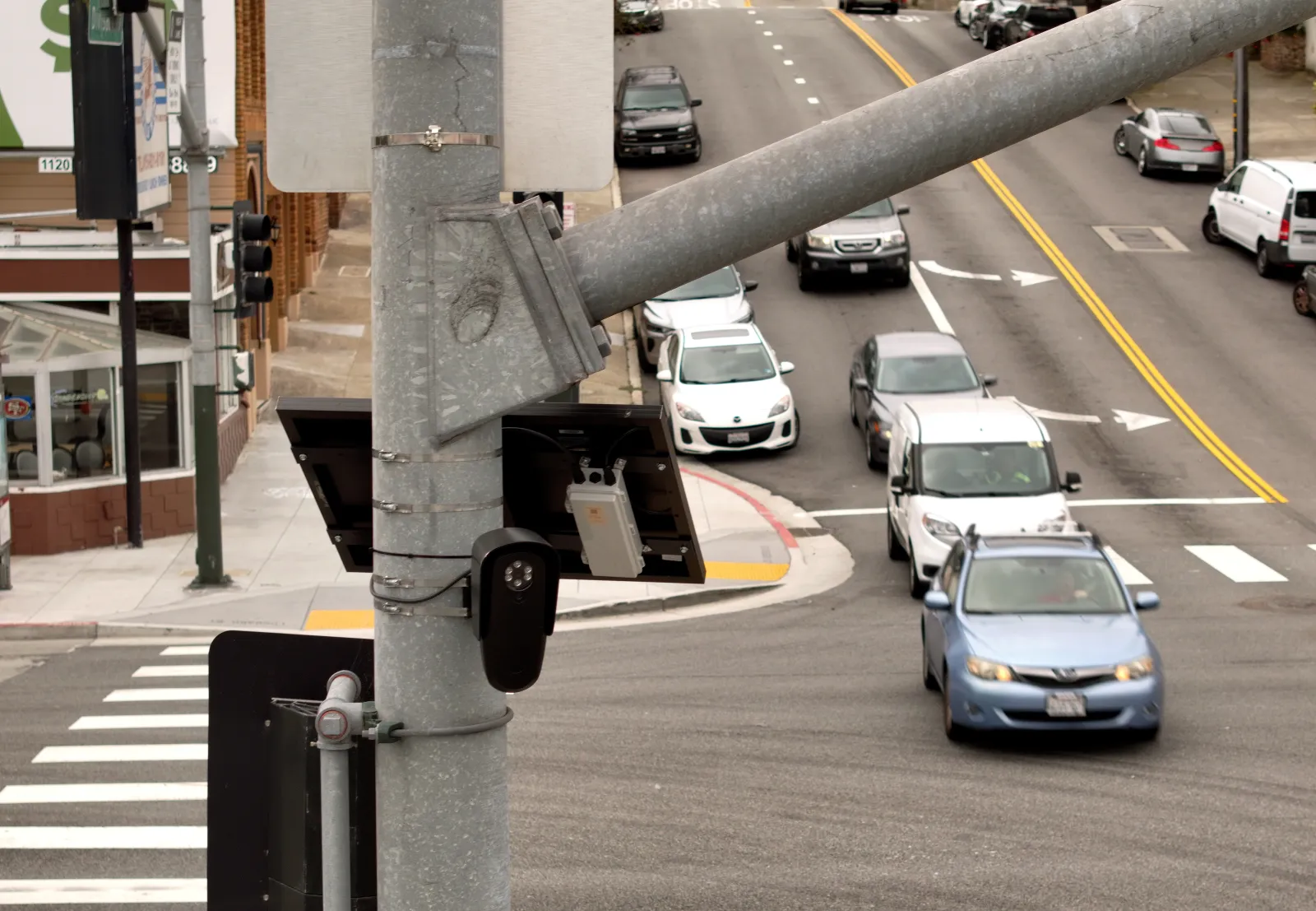
ALPR systems rely on high-speed, computer-controlled cameras and software to automatically capture, analyze and store all license plate information of vehicles that come into view, including license plate number, location, date and time.
This data, which includes photographs of the vehicle and sometimes its driver and/or passengers, is then inserted into enormous databases to generate alerts and create records of vehicle activity.
It is a fairly well-established technology that has been "part of law enforcement’s toolkit for well over two decades," according to the Department of Homeland Security (DHS). Officers and detectives use it as an investigative tool, an intelligence tool and a traffic management tool; but the system is also extensively used for toll collection, parking management, property management, and neighborhood watch and other community safety programs.
While not new, the technology is being made more effective and cheaper by advances in machine learning and the rise of AI—in a way that is also setting off alarm bells for Americans concerned about their privacy.
On their own, individual scans reveal little. But when combined across multiple cameras and over time, they can create a timeline of where a vehicle has traveled, including routes taken, frequent stops and patterns of movement. ALPRs can offer a detailed, even intimate portrait of a driver’s life and history—including who they see and where they go, whether that is a health center, an immigration clinic, a gun shop or a place of worship.
This level of aggregation could reveal sensitive details about a person’s life, such as where they:
- live and work
- seek medical care
- attend religious or political events
- travel on a regular basis
Civil rights groups have raised concerns over ALPRs over the years, with the American Civil Liberties Union (ACLU) warning that the data of millions of ordinary drivers is being collected and stored for years, or even indefinitely, by police departments and private companies, with few or no restrictions to protect privacy rights.
Why Does the FBI Want to Buy This Data?
The FBI has been buying data that can be used to track people’s movements and location history for months now, as the agency’s director Kash Patel admitted during a Senate hearing on March 18.
This is essentially a loophole around the requirement for law enforcement agencies to obtain a warrant in order to access a person’s location data from cellphone providers.
According to what Paelt told the Senate in March, the FBI does "purchase commercially available information that’s consistent with the Constitution and the laws under the Electronic Communications Privacy Act." These purchases have 'led to some valuable intelligence" for the agency, he added.
Federal agencies including the FBI have previously been found to use location data purchased by third parties to find "undocumented immigrants and others who may be entering the US unlawfully" and "look for cellphone activity in unusual places, such as remote stretches of desert that straddle the Mexican border," The Wall Street Journal reported in 2020.
Can It Do So?
Technically speaking, the FBI can circumvent the legal requirements for a warrant by buying ALPR data—but the move might still be logistically fraught. The procurement contract suggests that the agency wants to award the contract to a single vendor but only a couple of vendors would likely be able to give the federal agency what it is looking for, according to 404 Media—Flock and Motorola.
If one single vendor is unable to fulfill all the requirements, the agency may award the contract to up to two vendors. The contract is meant for the FBI’s Directorate of Intelligence, which oversees the agency's intelligence mission.
View 0 Comments
Submit Correction
View Editorial & AI Guidelines