...

By Hollie Silverman
News Editor
0
Share
Newsweek is a Trust Project member
See more of our trusted coverage when you search.Prefer Newsweek on Googleto see more of our trusted coverage when you search.
A judge granted a motion for a standstill order on Wednesday that bars the Department of Justice from reviewing anything on items seized from the home of a Washington Post reporter by the FBI last week.
The motion was approved following a filing from the outlet on Wednesday that compelled the government to return the items, which included a phone, two laptops, and a Garmin watch.
The filing argued the search “flouts the First Amendment and ignores federal statutory safeguards for journalists,” and noted that "irreparable harm" had been done.
Read More on News
FBI agents searched the home of reporter Hannah Natanson last week as part of a leak investigation involving a Pentagon contractor accused of mishandling classified national defense information, according to the Justice Department (DOJ).
Newsweek reached out to the DOJ through its press portal on Wednesday for comment.
The Context
Natanson has closely covered President Donald Trump’s remaking of the federal government and the civil service.
She has written extensively about the federal workforce and recently drew attention inside the newsroom for cultivating hundreds of new sources, prompting a colleague to describe her as “the federal government whisperer.”
The Post, owned by Amazon Founder and executive chairmanJeff Bezos, framed the seizure as an extraordinary step that threatened newsgathering activities and the confidentiality of sources, invoking constitutional protections and federal law designed to shield journalists from searches targeting their materials.
...
What To Know
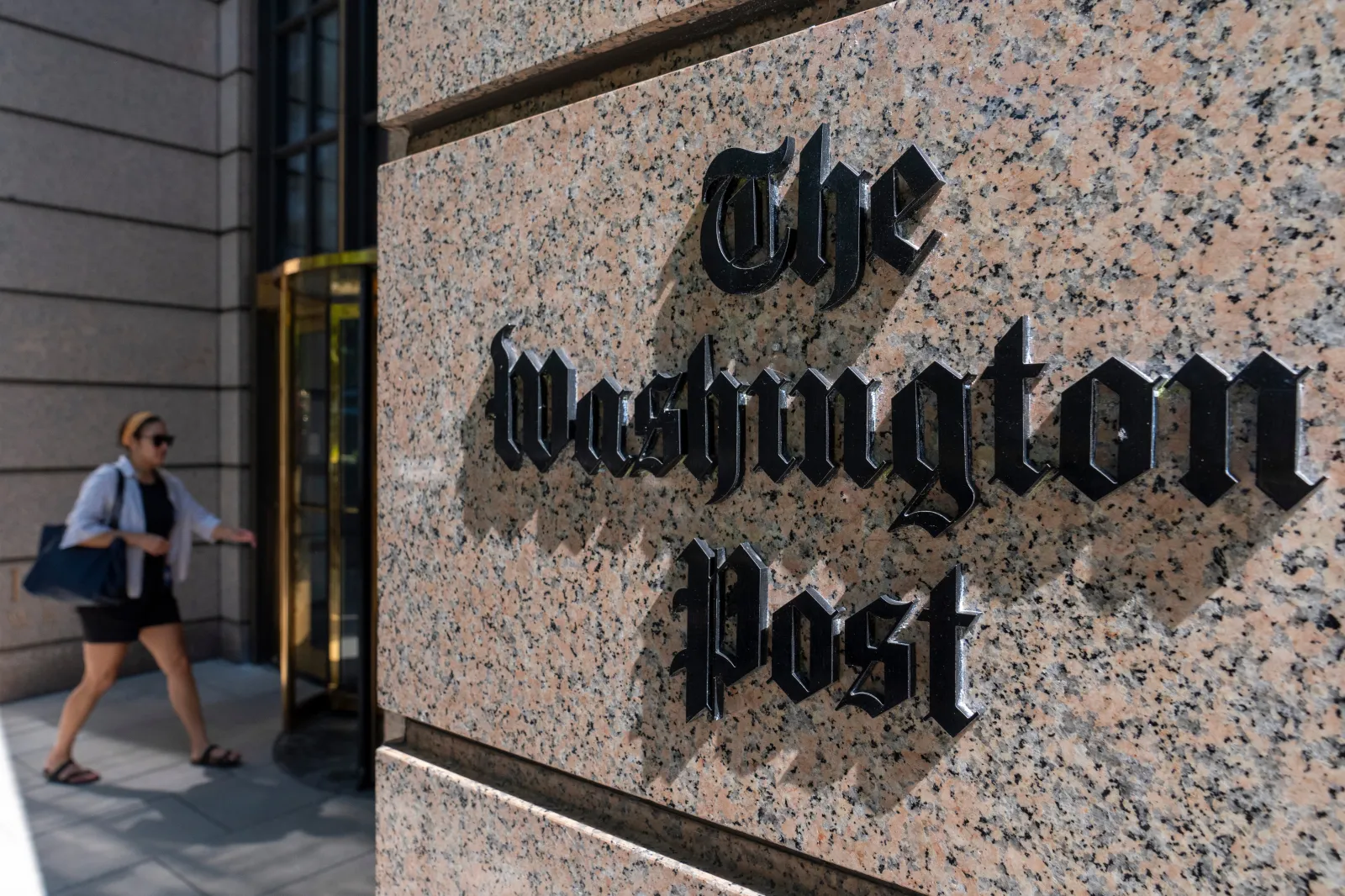
The Washington Post said it filed a court motion on Wednesday seeking the immediate return of electronic devices that federal agents seized from a Post reporter’s home last week, characterizing the search as an “extraordinary” action that infringed on press freedoms, according to the outlet’s report on the filing.
The filing argued the seizure violated the First Amendment and “federal statutory safeguards for journalists,” the Post reported.
Those safeguards include the federal Privacy Protection Act, which generally restricts government officials from searching or seizing a reporter’s work product or documentary materials, with limited exceptions.
In a statement referenced by the Post, the newspaper said the seizure “chills speech, cripples reporting, and inflicts irreparable harm,” underscoring potential impacts on confidential sources and ongoing reporting.
Judge William B. Porter granted the motion for a standstill order on Wednesday afternoon, saying, "The government must preserve but must not review any of the materials that law enforcement seized pursuant to search warrants the Court issued under case numbers."
Following the seizure, Attorney General Pam Bondi said in a statement that the search was executed at the request of the Defense Department. Bondi said Natanson had been “obtaining and reporting classified and illegally leaked information from a Pentagon contractor.”
The investigation centers on a systems engineer and information technology specialist for a government contractor in Maryland, according to the warrant
Aurelio Perez‑Lugones, who held a top secret security clearance, allegedly took home classified materials in violation of federal law. He is charged with unlawful retention of national defense information but has not been accused of disseminating or leaking classified material.
Perez‑Lugones is alleged to have printed sensitive and classified reports at work after investigators recovered documents marked “SECRET,” including one found inside a lunchbox during a search of his home and vehicle.
Following public controversy over newsroom records seizures in prior years, the DOJ revised its News Media Guidelines in 2021 to limit the use of compulsory legal process for members of the news media acting within the scope of newsgathering, subject to defined exceptions and approvals.
Those guidelines reflect internal DOJ policy rather than statutory rights and remain subject to case-specific determinations.
What People Are Saying
The Washington Post said in a statement Wednesday: “The outrageous seizure of our reporter’s confidential newsgathering materials chills speech, cripples reporting, and inflicts irreparable harm every day the government keeps its hands on these materials. We have asked the court to order the immediate return of all seized materials and prevent their use. Anything less would license future newsroom raids and normalize censorship by search warrant."
Attorney General Pam Bondi said in a post on X following the seizure: "The Trump Administration will not tolerate illegal leaks of classified information that, when reported, pose a grave risk to our Nation’s national security and the brave men and women who are serving our country."
White House press secretary Karoline Leavitt said in a statement on X last week, "Leaking classified information puts America’s national security and the safety of our military heroes in serious jeopardy. President Trump has zero tolerance for it and will continue to aggressively crack down on these illegal acts moving forward."
Jameel Jaffer, executive director of the Knight First Amendment Institute, said in a statement shared with Newsweek via email last week, “Any search targeting a journalist warrants intense scrutiny because these kinds of searches can deter and impede reporting that is vital to our democracy. Attorney General Bondi has weakened guidelines that were intended to protect the freedom of the press, but there are still important legal limits, including constitutional ones, on the government’s authority to use subpoenas, court orders, and search warrants to obtain information from journalists."
The statement continued, "The Justice Department should explain publicly why it believes this search was necessary and legally permissible, and Congress and the courts should scrutinize that explanation carefully. Searches of newsrooms and journalists are hallmarks of illiberal regimes, and we must ensure that these practices are not normalized here.”
What Happens Next
A court will determine whether and when to act on the Post’s motion seeking the return of the devices and any limits on the government’s review of seized materials.
The government now has until January 28th to respond to the filing after the motion for a standstill was granted, court records show.
If the court orders the return of devices or imposes restrictions, the decision could shape how agencies apply the Privacy Protection Act and the DOJ’s News Media Guidelines in future cases involving journalists’ electronic records.
Update 1/21/26 1:20 p.m. ET: This story has been updated with more information.
Update 1/21/26 3:48 p.m. ET: This story has been updated with more information.
Correction 1/21/26 5:28 p.m. ET: This article was updated to note that Judge Porter was appointed via court order.
In a polarized era, the center is dismissed as bland. At Newsweek, ours is different: The Courageous Center—it's not "both sides," it's sharp, challenging and alive with ideas. We follow facts, not factions. If that sounds like the kind of journalism you want to see thrive, we need you.
When you become a Newsweek Member, you support a mission to keep the center strong and vibrant. Members enjoy: Ad-free browsing, exclusive content and editor conversations. Help keep the center courageous. Join today.


View 0 Comments
Submit Correction
View Editorial & AI Guidelines