...

By Robert Alexander
Senior Crime & Court Reporter
0
Share
Newsweek is a Trust Project member
See more of our trusted coverage when you search.Prefer Newsweek on Googleto see more of our trusted coverage when you search.
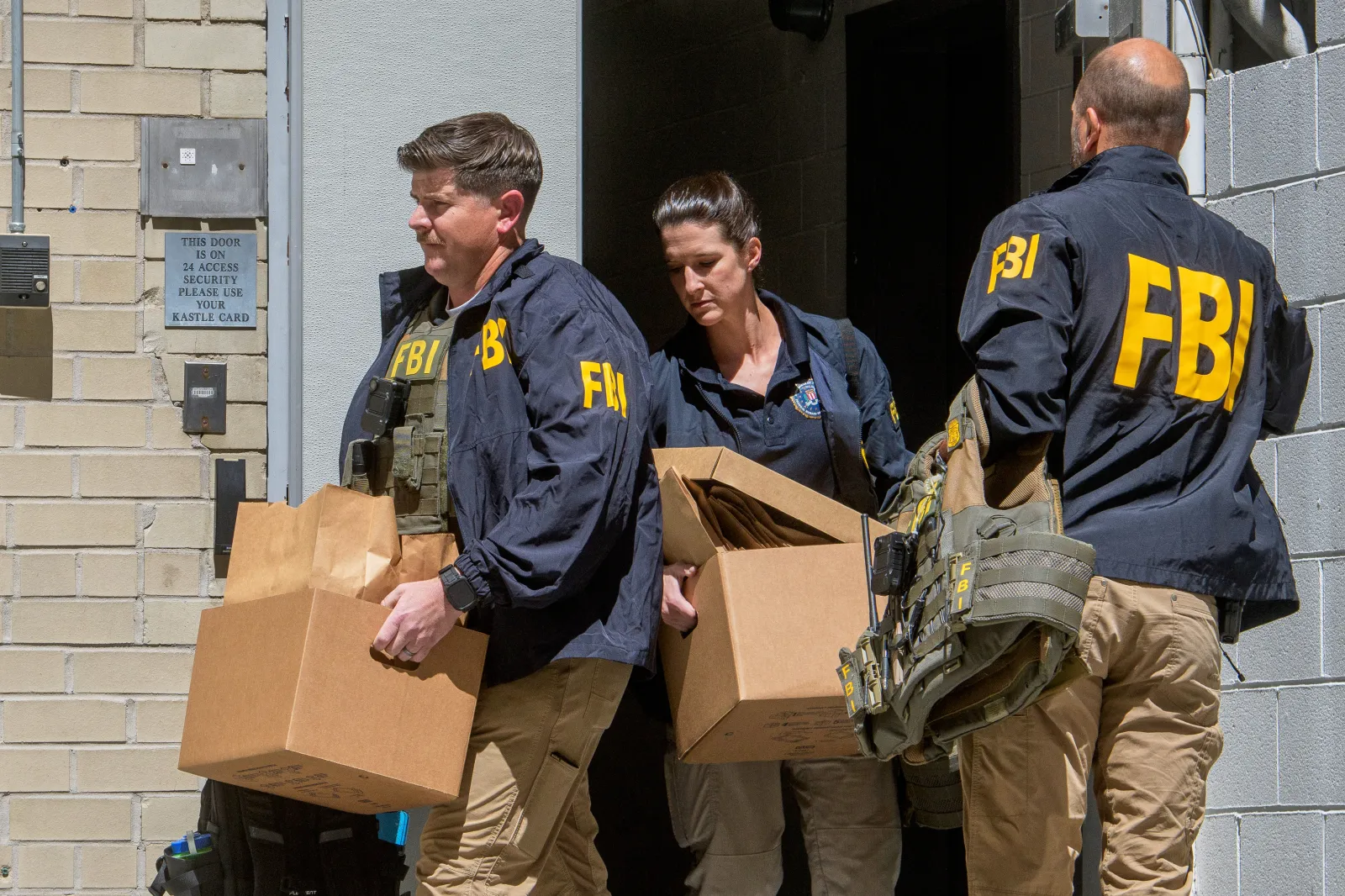
FBI agents executing a court-authorized search of former national security adviser John Bolton’s Washington, D.C., office last month discovered documents marked as classified. According to descriptions in court filings the inventory suggested the seized records included references to weapons of mass destruction, U.S. diplomatic work at the United Nations, and the government’s strategic communications efforts.
The discovery renews scrutiny of Bolton’s handling of sensitive national security information and echoes long-standing concerns first raised during a contentious legal battle over his 2020 memoir.
Newsweek contacted the FBI Public Affairs Office and Representatives of John Bolton for comment via email outside of normal office hours on Wednesday.
Read More on U.S.
Why It Matters
The discovery of classified documents in John Bolton’s office matters because it touches on the core question of whether senior national security officials are held to the same legal standards as others who handle sensitive material. The case highlights concerns about protecting national defense information, the consistency of Justice Department enforcement in a series of high-profile document probes, and the political fallout of scrutinizing a prominent Trump-era official who later became one of the president’s sharpest critics.
What To Know
...
The Search
On August 22, 2025, FBI agents executed a court-authorized warrant at Bolton’s downtown Washington office.
An inventory prepared by the agents noted the seizure of records labeled “confidential” and some marked “secret.”
Categories of documents reportedly included references to weapons of mass destruction, records from the U.S. Mission to the United Nations, and files related to U.S. strategic communications.
The same morning, agents searched Bolton’s Bethesda, Maryland, residence.
According to the filing, no overtly classified documents were recorded there, though computers and electronic devices were seized from both locations for forensic review.
The warrant was approved by U.S. Magistrate Judge Moxila Upadhyaya of the District of Columbia.
The FBI said in a statement, “The FBI is conducting court-authorized activity in the area. There is no threat to public safety. We have no further comment.”
Legal Basis
Court records show the FBI sought evidence of potential violations of three statutes: Section 793 of Title 18, the Espionage Act, which criminalizes the unauthorized retention or transmission of national defense information; and Section 1924, which prohibits the unauthorized removal and retention of classified documents.
The affidavit in support of the search warrant outlined probable cause to believe that Bolton “committed violations of federal criminal law” and that evidence of such offenses would be found at the office.
Past Disputes Over Classified Information
The new investigation echoes earlier controversies surrounding Bolton’s 2020 memoir, The Room Where It Happened.
Before publication, the National Security Council (NSC) warned that the manuscript contained “significant amounts of classified information, to include information classified at the TOP SECRET level,” according to a January 2020 letter from Ellen Knight, then the NSC’s Senior Director for Records, Access and Information Security Management.
Although Knight later advised that revisions appeared to remove classified content, Bolton moved ahead without receiving final written authorization.
The Justice Department sued to block publication, arguing that Bolton breached his nondisclosure agreements and endangered national security.
U.S. District Judge Royce Lamberth denied the government’s request for an injunction but criticized Bolton’s conduct. “Bolton has gambled with the national security of the United States. He has exposed his country to harm and himself to civil (and potentially criminal) liability,” Lamberth wrote in June 2020.
The litigation was dismissed in June 2021 after the Justice Department, under new leadership, dropped the case and a related criminal inquiry.
Political Reactions
The August searches unfolded against a backdrop of partisan tension over the handling of classified records by senior officials.
President Trump, who clashed publicly with Bolton after his White House departure, told reporters he had no prior knowledge of the raid. “I’m not a fan of John Bolton. He’s a real sort of a low life,” Trump said. He added that the search might show Bolton to be “a very unpatriotic guy.”
Vice President JD Vance confirmed that the administration was “in the very early stages of an ongoing investigation into John Bolton in relation to a classified documents probe.” He emphasized that the inquiry was not politically driven: “If they ultimately bring a case, it will be because they determine that he has broken the law… You shouldn’t throw people willy-nilly in prison. You should let the law drive these determinations, and that’s what we’re doing.”
Broader Context
The federal government has in recent years conducted several high-profile investigations into classified documents retained by former senior officials.
In 2023, Special Counsel Jack Smith charged Trump with multiple counts (initially 37, later 40) including Espionage Act violations over classified documents held at Mar-a-Lago.
The case was dismissed in July 2024 by Judge Aileen Cannon on constitutional grounds (invalid appointment of the special counsel). Afterwards, Smith dropped his appeal in Trump’s favor after Trump’s 2024 election.
President Joe Biden also faced scrutiny after documents were discovered at his Delaware home, but special counsel Robert Hur declined to bring charges, citing insufficient likelihood of conviction.
Bolton’s defenders argue that the renewed investigation reflects Trump’s calls for retribution against political adversaries.
Critics point to Bolton’s public statements over the years about the seriousness of protecting classified information. In 2016, he said on Fox Business Network, “If you’re conscious of the need to protect classified information you’ll remember what the rules are.” In 2017, he added, “If I had done at the State Department what Hillary Clinton did, I’d be wearing an orange jumpsuit now.”
What People Are Saying
FBI Director Kash Patel posted on X on the day of the searches. “NO ONE is above the law… @FBI agents on mission,” Patel wrote.
Attorney General Pam Bondi replied: “America’s safety isn’t negotiable. Justice will be pursued. Always.”
What Happens Next
The FBI and intelligence agencies will conduct a forensic review of the seized files and devices to determine whether they contain classified material and assess the potential national security risk. Based on those findings, the Justice Department will decide whether Bolton’s conduct warrants criminal charges under statutes like the Espionage Act, a civil action similar to the 2020 book dispute, or no further action. The process is expected to unfold against the backdrop of political scrutiny over how consistently such cases are handled following investigations into Donald Trump and Joe Biden.
View 0 Comments
Submit Correction
View Editorial & AI Guidelines