
...

By Hannah Parry
Associate News Editor
0
Share
Newsweek is a Trust Project member
See more of our trusted coverage when you search.Prefer Newsweek on Googleto see more of our trusted coverage when you search.
Federal Communications Commission (FCC) Chairman Brendan Carr defended his agency's scrutiny of television broadcasters on Tuesday after U.S. Supreme Court Justice Neil Gorsuch cited his comments about a late-night television host as an example of the broad powers exercised by independent federal agencies.
Carr's remarks came one day after the Supreme Court issued a 6-3 decision in Trump v. Slaughter, ruling that President Donald Trump has the constitutional authority to remove Federal Trade Commission (FTC) commissioners, significantly expanding presidential control over independent agencies.
Slaughter, who was appointed to the FTC by Trump during his first term and reappointed to the trade commission by President Joe Biden, was told in March 2025 that her service was "inconsistent" with the Trump administration's priorities and was fired without cause. The ruling overturned a 90-year-old decision that allowed Congress to shield members of certain independent agencies from being fired by a president at will.
Read More on News
...
While Gorsuch joined the majority, he wrote separately to warn that the decision also places vast legislative and judicial powers more directly under presidential control, raising fresh constitutional questions about the modern administrative state.
Gorsuch's concurrence was notable because it identifies the FCC as an example of an agency exercising sweeping regulatory authority, specifically referencing comments made by Carr. The opinion suggests that even conservative justices who favor greater presidential control over agencies remain skeptical about the breadth of powers that the agencies wield.
Carr indicated Tuesday that the FCC will continue pursuing investigations involving broadcasters despite the scrutiny.
What Gorsuch Said in His Opinion
In his concurrence, Gorsuch argued that independent agencies today exercise enormous influence over American life through rulemaking, enforcement and adjudication.
He pointed to several recent examples, including the Securities and Exchange Commission's climate disclosure regulations, the FTC's attempted nationwide ban on noncompete agreements and, what he described as "late-night comedy."
"Last year, taking objection to a network host's on-air remarks, the Chairman of the FCC suggested there would be 'additional work ... ahead' for the agency if broadcasting companies did not 'find ways to ... take action,'" Gorsuch wrote, citing a September 2025 appearance by Carr on The Benny Show.
Although Gorsuch did not identify the host by name, the reference matches Carr's public criticism of ABC's Jimmy Kimmel after the comedian repeatedly mocked Trump and his allies. Carr warned at the time that broadcasters could face "additional work" from the FCC if they failed to address the issue.
Gorsuch used the episode as an illustration of how agencies exercise significant discretionary authority under broad statutory mandates.
Related Story
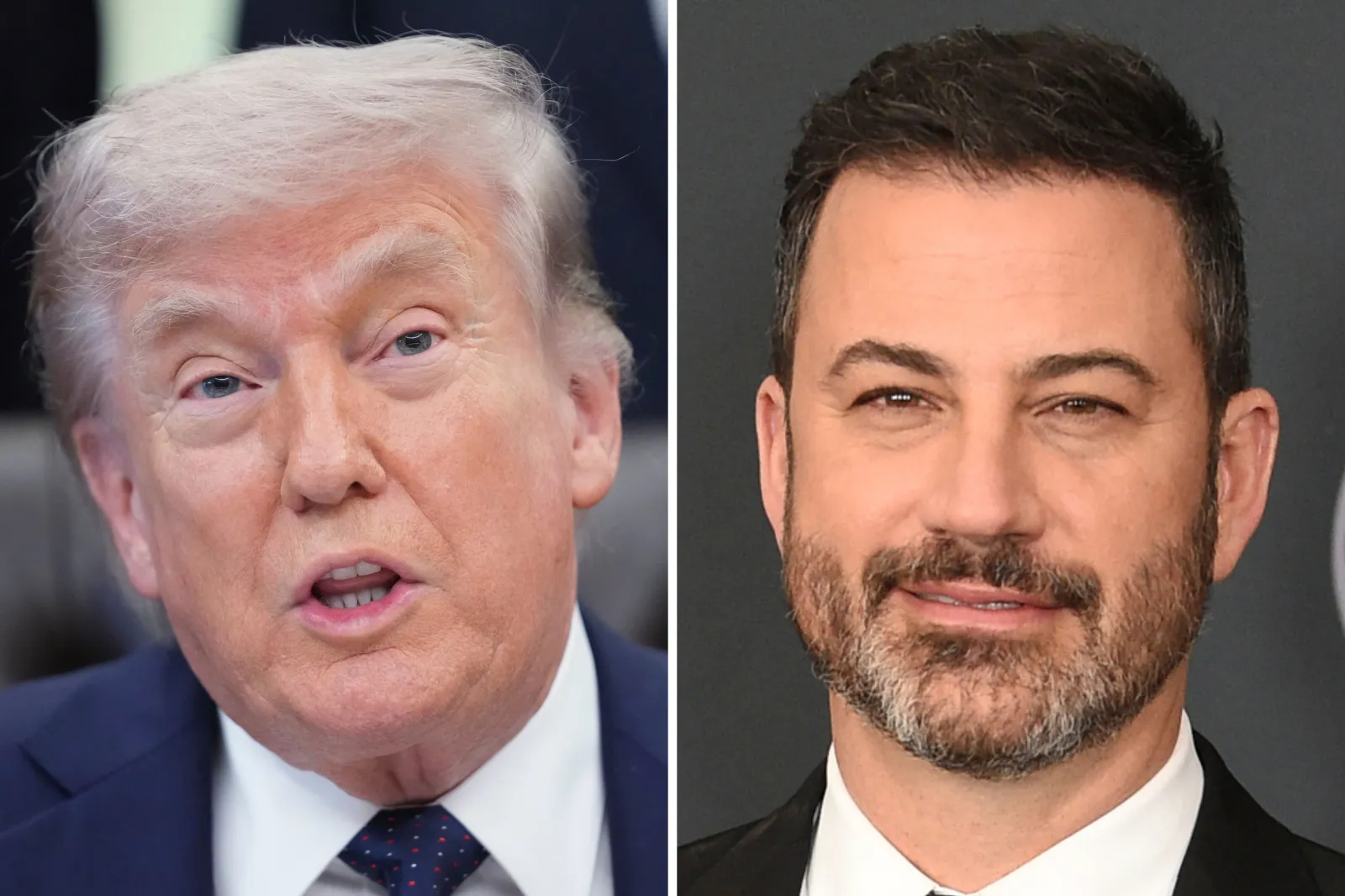
FCC Asked To Investigate Jimmy Kimmel As Trump Demands Disney Fire Him
Carr Doubles Down
Carr on Tuesday defended the FCC's willingness to scrutinize broadcast license holders.
"It's been many, many years—decades—before the FCC has actually engaged with broadcasters and said to them, frankly, look, your licenses are not sacred cows," Carr said on Real America's Voice. "If there is nothing you can do to put your license in jeopardy and, in fact, lose your license in the appropriate case, then it's not a license, it's property."
Carr added that the commission had not reached final decisions in pending proceedings but said broadcasters should not assume their licenses are immune from regulatory review.
"I do think it's entirely legitimate for the FCC to be looking at these proceedings," he said. "We haven't made our mind up there....But licenses aren't sacred cows, and it's perfectly OK for us to go down this path."
ABC Under FCC Scrutiny
The FCC is currently engaged in multiple disputes involving Disney-owned ABC.
The agency has sought public comment on whether The View qualifies as a bona fide news program under FCC rules while separately investigating Disney's diversity, equity and inclusion policies. Carr has also called for early review of several ABC-owned television station licenses, saying the action was related to Disney's corporate policies rather than Kimmel.
The timing nevertheless attracted attention after the request followed criticism of Kimmel by Trump on social media.
Broader Constitutional Warning
Although Gorsuch agreed that presidents must have authority to remove executive officials, he cautioned that the Court's decision leaves unresolved a much larger constitutional problem.
"Today, independent agencies do not just exercise executive law-enforcement powers," he wrote. "Congress has also delegated to them vast legislative and judicial powers... And, after today's decision, the President can effectively exercise all those powers too."
He warned that businesses and individuals could face coordinated action across multiple federal agencies if those agencies ultimately answer to the White House.
"A business out of favor with the party in control of the White House might be able to stave off an FCC investigation," Gorsuch wrote. "But can it survive a subsequent FTC rule declaring unlawful one of its longstanding trade practices? What about an in-house adjudication by OSHA? Or a prosecution for a new crime the SEC announces?"
Gorsuch concluded that the Court's ruling marks only the beginning of a broader constitutional debate over the administrative state, arguing that Congress and future courts may ultimately need to revisit whether agencies should continue exercising legislative and judicial powers alongside executive authority.
View 0 Comments
Submit Correction
View Editorial & AI Guidelines