...

By Giulia Carbonaro
Senior Reporter
0
Share
Newsweek is a Trust Project member
See more of our trusted coverage when you search.Prefer Newsweek on Googleto see more of our trusted coverage when you search.
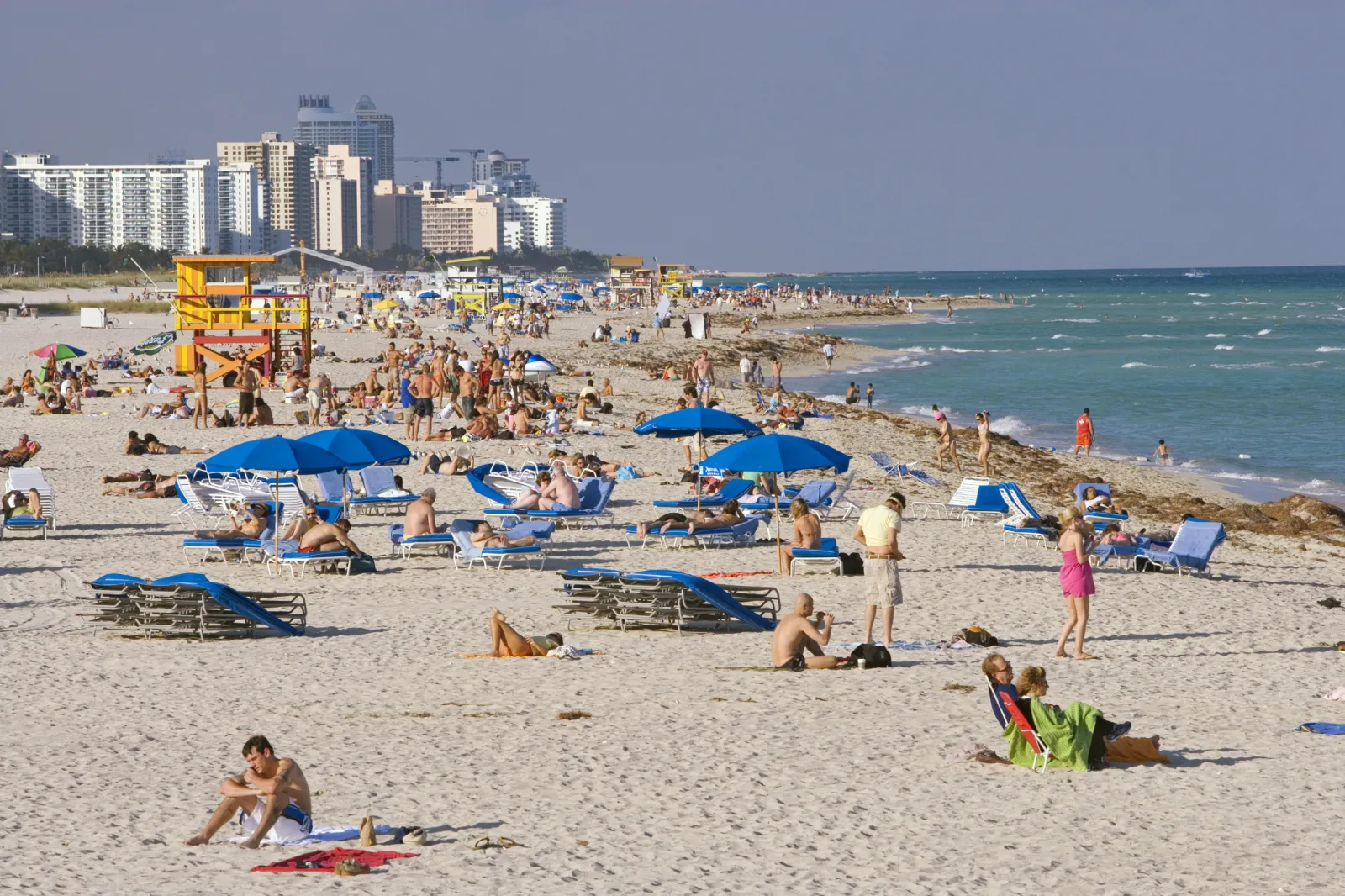
Florida Governor Ron DeSantis signed a bill on Tuesday that promises to reopen Panhandle beaches to the public, repealing a 2018 state law that allowed beachfront property owners to close off miles of local shoreline to residents.
"This bill is about restoring local control, cutting red tape and putting our residents first," the Republican governor said on Tuesday during the signing ceremony at Santa Rosa Beach, in Walton County.
The legislation only directly affects this county, although it is likely to have a ripple effect on the rest of the Sunshine State, whose economy thrives on the appeal of its sunny beaches.
Read More on U.S.
"It is a win for recreation, for tourism and for future generations," DeSantis said.
What Is the New Law About?
The bill, SB 1622, officially restores local authority to recognize what is known as the "recreational customary use" of Florida's beaches—the public's ability to enjoy the beach without beachfront homeowners trying to keep them off, even when visitors are technically on private property. That includes walking, fishing and swimming on a beach.
Legally, the sandy part of a beach below the high tide water mark can be accessed by the public; above that line, beachgoers could find themselves trespassing on private property. But "if the recreational use of the sandy area adjacent to the mean high tide has been ancient, reasonable, without interruption and free from dispute, such use as a matter of custom, should not be interfered with by the owner."
...
Under the 2018 law, now repealed by the new bill, city and county authorities in Florida could not approve a customary use ordinance until they notified affected homeowners, held a public hearing, and obtained a judge's ruling on whether a private beach had been historically accessible to the public.
This laborious process, which favored beachfront property owners and was signed into law by then-Governor Rick Scott, was introduced after the Walton County Commission ruled in 2016 that the public had recreational use rights to the local 26 miles of dry sand beach along the Gulf of Mexico.
The 2018 law effectively nullified Walton County's decision, invalidating its customary use ordinance; however, the county's commission has now been given the power to issue a new ordinance, opening up its beaches to the public, under the new bill.
'Much More Than a Policy'
The bill's sponsors have framed the new legislation as restoring Floridians' rights to access the beaches their families have walked on for decades.
"Overnight, people who had walked the same stretch of dry beach for generations were being told that they were trespassing," state Senator Jay Trumbull, one of the sponsors of the bill, said during the press conference on Tuesday.
"That's not the Walton County I know, and it's not the Florida I believe in. The people here weren't asking for anything unreasonable. They just wanted to keep doing what they've always done—walk the beach, toss a football, build a sandcastle with their families—and instead, they got confused, conflict and courtroom battles all to protect a simple, time-honored way of life."
Trumbull said that the bill is "much more than policy, it's about families," as quoted by the Tallahassee Democrat. "It's about tradition and restoring something that never should've been taken away in the first place." Newsweek reached out to Trumbull via email for comment.
JoAnn C. Ribaudo, CEO of the real estate company 30A, told Newsweek that she supports "legislative efforts that uphold the public's long-standing right to access and enjoy Florida's beaches." SB 1622 "marks a meaningful step toward restoring legal clarity around customary use and public access—principles that are essential not only to the cultural identity of the Gulf Coast but also to the economic well-being of our coastal communities," she said.
"While the bill may not address every nuance or eliminate the potential for future legal challenges, it signals a clear legislative commitment to striking a balance between private property rights and the public good," Ribaudo added. "We recognize that some resistance may remain, but we're hopeful this new law creates a more stable foundation for collaboration rather than continued litigation."
The American Shore & Beach Preservation Association (ASBPA) described the bill to Newsweek "as a model of state beach preservation legislation worthy of consideration by other coastal states navigating similar beach management challenges."
The bill, which has received the overwhelming support of lawmakers in both the Florida House and the Senate before landing on the governor's desk, also streamlines the process for restoring eroded beaches in Florida's Gulf Coast counties with fewer than 275,000 residents and at least three municipalities.
Under the new law, the state will be able to use the mean high-water line as the erosion control line, a move that will hasten beach recovery projects, especially after the devastation caused by frequent natural disasters.
The bill took effect immediately after being signed into law.
Are you a Florida resident? I'd love to hear your thoughts on the new bill. Let me know by emailing me at g.carbonaro@newsweek.com.
Update 6/30/25, 9:00 a.m. ET: This article has been updated with comments from ASBPA and JoAnn C. Ribaudo.
View 0 Comments
Submit Correction
View Editorial & AI Guidelines