...

By Adeola Adeosun
Weekend Night Editor
0
Share
Newsweek is a Trust Project member
See more of our trusted coverage when you search.Prefer Newsweek on Googleto see more of our trusted coverage when you search.
The Florida Fish and Wildlife Conservation Commission (FWC) issued Executive Order 26-03 on Friday, allowing residents to collect and surrender cold-stunned green iguanas without a permit during an unprecedented cold weather event.
The temporary program will accept iguanas at five designated FWC facilities on Sunday, February 1 from 9 a.m. to noon and Monday, February 2 from 8 a.m. to 4 p.m.
Newsweek reached out to the FWC via email on Sunday for additional comment.
Read More on News
Why It Matters
Green iguanas are classified as a Prohibited invasive species in Florida, causing significant environmental and economic damage to the state's ecosystem.
This executive order represents a rare opportunity for public participation in invasive species management during unusual weather conditions that naturally immobilize these reptiles.
The initiative addresses both the immediate challenge of removing invasive wildlife and the broader problem of Florida's 139 established nonnative species—80 percent of which entered through the live animal trade.
...
Understanding Cold-Stunned Iguanas
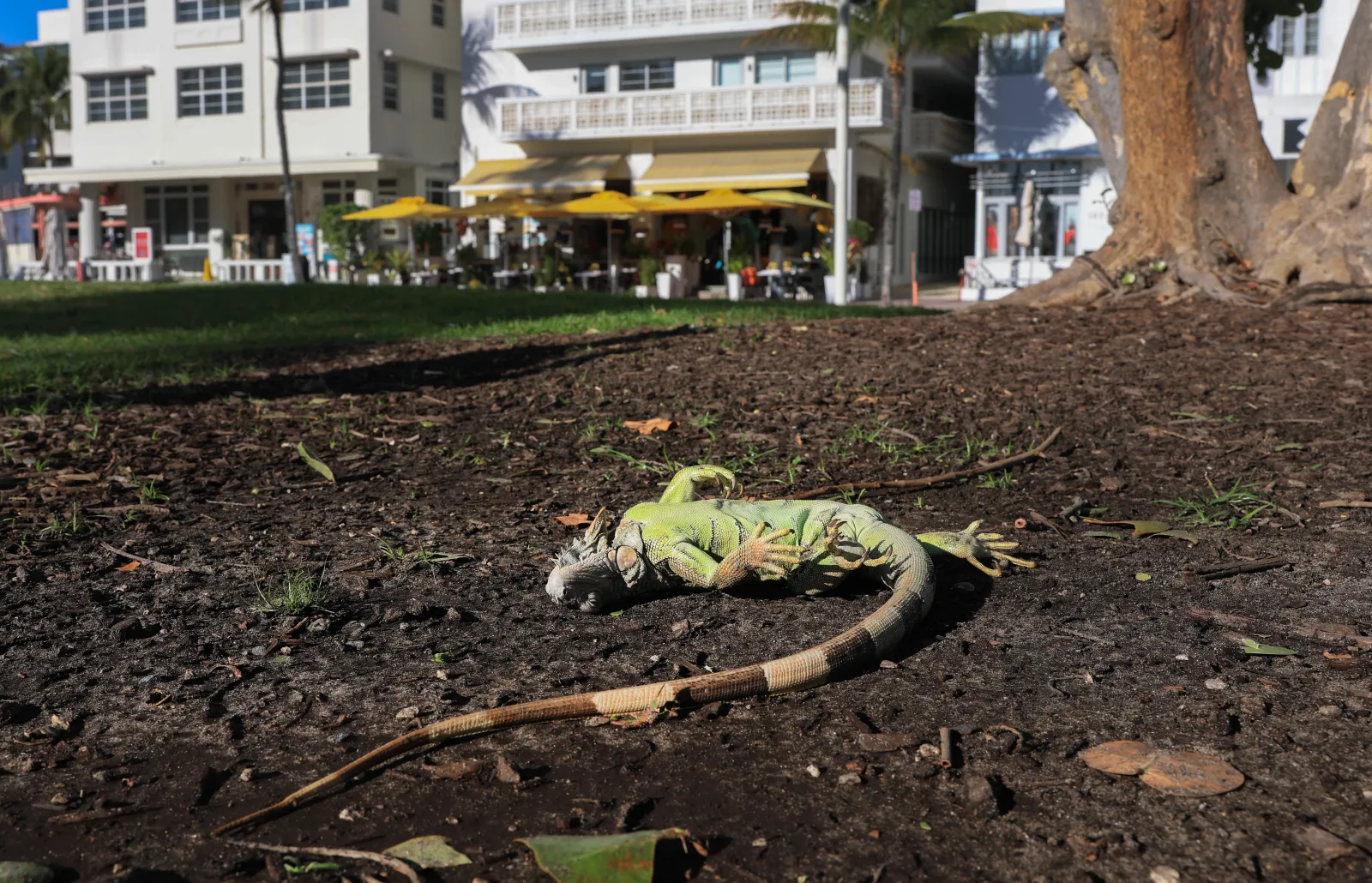
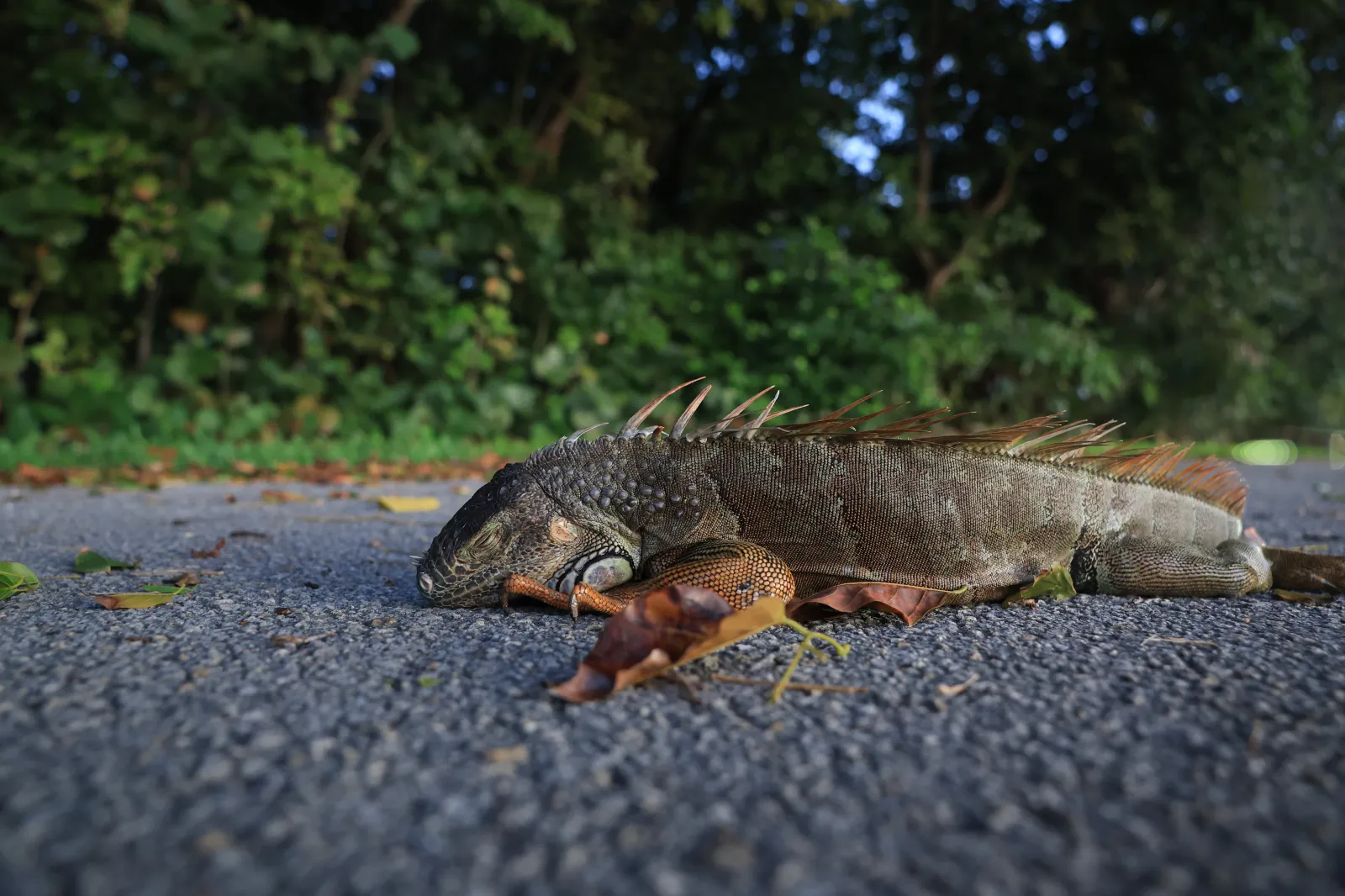
When temperatures drop to near-freezing or below, green iguanas enter a state of torpor, temporarily losing muscle control and appearing "frozen." This phenomenon sometimes causes the reptiles to fall from trees where they typically perch. The current cold snap has created conditions allowing safe collection of these otherwise difficult-to-capture animals.
However, the FWC warns that iguanas can recover from cold-stunning faster than expected. Once warmed, they become defensive and potentially dangerous, using their long whipping tails, sharp teeth, and claws.
The commission strongly advises against bringing cold-stunned iguanas indoors or placing them in vehicles except for immediate transport to designated drop-off locations.
Collection Guidelines and Safety Protocols
Residents collecting iguanas must follow strict safety and containment procedures. Collectors should wear protective gloves, long pants, and long-sleeved shirts to prevent scratches. Iguanas must be placed in secure, breathable cloth sacks that are tightly sealed, then transported inside a secondary locked container labeled "Prohibited Reptiles."
The executive order limits collection to property owners or individuals with explicit landowner permission, including FWC-managed properties in South and Southwest Florida.
Transport must occur immediately after collection to minimize the likelihood of iguanas recovering mobility during transit. Collection bags must remain sealed until transferred to FWC staff to prevent escapes.
Drop-Off Locations
Five facilities will accept surrendered iguanas:
- FWC South Florida Regional Lab, 2796 Overseas Highway 119, Marathon
- FWC Office, 10052 NW 53rd Street, Sunrise
- FWC Tequesta Field Lab, 19100 SE Federal Highway, Tequesta
- FWC Law Enforcement Office, 2423 Edwards Drive, Fort Myers
- FWC Southwest Regional Office, 3900 Drane Field Road, Lakeland
Collected iguanas will be humanely euthanized or, in select cases, transferred to permitted facilities for live animal sales.
Year-Round Removal Options
While Executive Order 26-03 provides a temporary permit exemption, Florida law allows property owners to humanely kill green iguanas year-round without permits, as these invasive reptiles are not protected except under state anti-cruelty statutes. The FWC notes this executive order specifically assists residents who wish to remove iguanas but are unable or unwilling to euthanize them personally.
Outside the parameters of this executive order, residents requiring iguana removal assistance can contact professional wildlife control operators. The FWC also provides guidance at MyFWC.com/Nonnatives for landowners seeking to discourage iguanas from frequenting their properties.
What Happens Next
The special collection program concludes Monday evening, after which standard regulations requiring permits for possession of Prohibited species resume.
The FWC continues monitoring Florida's invasive species challenge, with more than 600 nonnative fish and wildlife species reported statewide. Invasive species management remains a high priority due to negative impacts on native ecosystems, costly infrastructure damage, and potential threats to public health and safety.
...
View 0 Comments
Submit Correction
View Editorial & AI Guidelines