
By Hatty Willmoth
Food & Nutrition Reporter
0
Share
Newsweek is a Trust Project member
See more of our trusted coverage when you search.Prefer Newsweek on Googleto see more of our trusted coverage when you search.
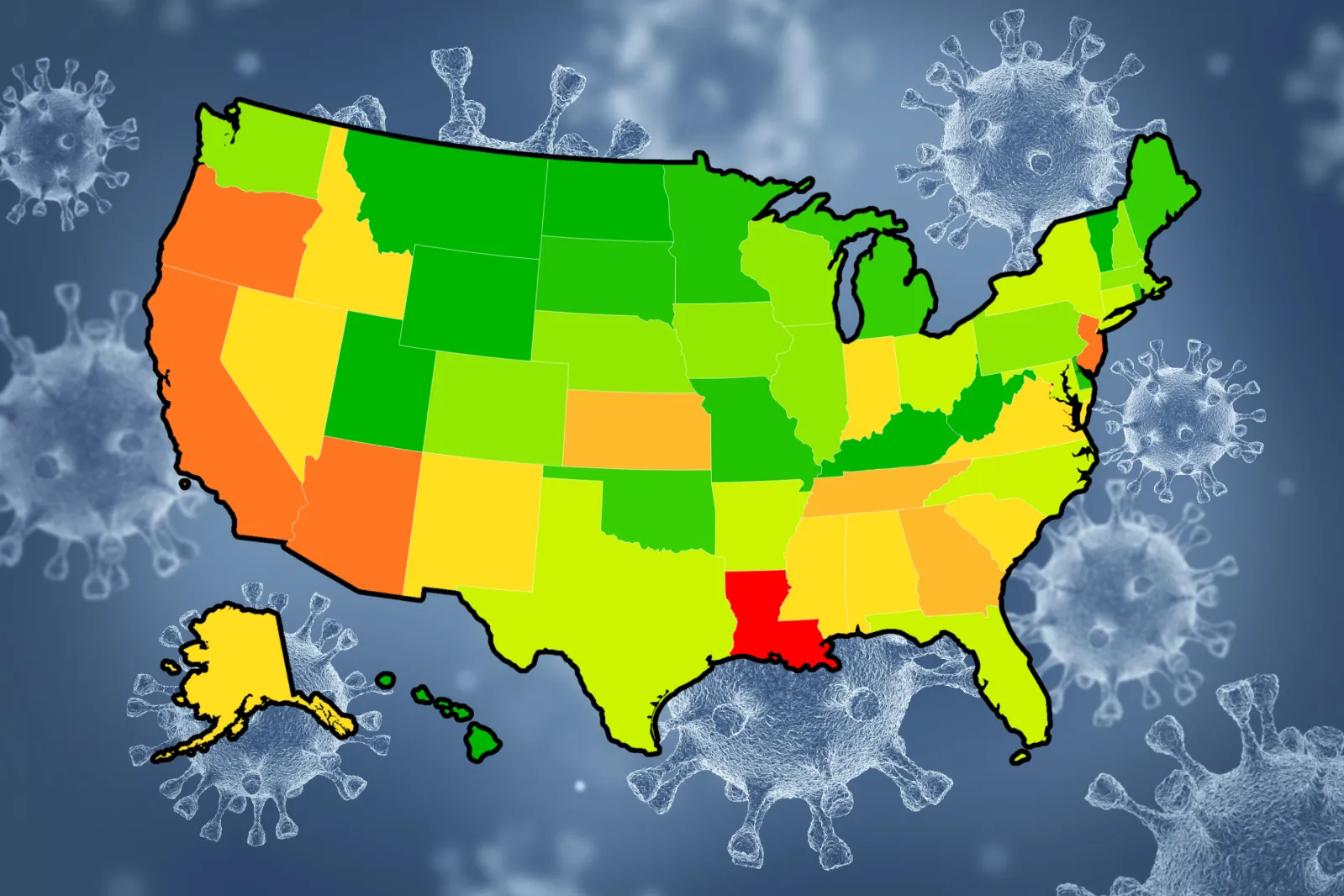
Flu season is on its way to the United States as the latest map from the Centers for Disease Control and Prevention (CDC) looks more orange than the previous week's.
The CDC's weekly influenza surveillance report, put together by its Influenza Division, monitors respiratory illnesses across the nation—both influenza and illnesses with similar symptoms, such as a fever, a cough and a sore throat.
Its latest map, for the week ending December 7, shows the highest rates of flu in Washington, D.C., and Louisiana. Flu rates are also high in Oregon, California, Arizona and New Jersey.
Read More on Health
Flu rates in New York City, Georgia, Tennessee and Kansas are classified as "moderate" but higher than most right now. Meanwhile, in Virginia, Indiana, South Carolina, Mississippi, Alabama, New Mexico, Nevada and Idaho, flu rates are lower but still "moderate," according to the CDC.
"We're starting to see flu activity pick up for the season," Carrie Reed, chief of the Epidemiology and Prevention Branch of the CDC's Influenza Division, told Newsweek. "This is about the time of year where we typically start seeing increases as we get into the holiday season and into the winter."
Reed said that it was normal for some states to see higher rates of flu earlier than others, but it varied where this took place year-on-year.
"We typically do see that some areas pick up earlier than other areas, so we do try to look every week at a state and regional level to see where it's picking up," she said. "Those are the areas that seem to be earlier this year."
Reed said that the CDC wanted Americans to get vaccinated against the flu so they didn't become sick.
"We recommend that everyone over the age of six months get their annual flu vaccine this year," she said. "Because activity is just starting to pick up, there's still time for people to get their vaccine in advance of peak flu season, before activity is really elevated in most parts of the country. It does take a couple weeks for the immune response to really pick up after the vaccine, and so the sooner people can get their vaccine, the better they will be protected as activity continues to increase."
...
During the colder months, Reed said that the U.S. sees hundreds of thousands of hospitalizations and tens of thousands of deaths from the flu every flu season.
"The vaccine really plays an important part in reducing the severity of flu and incidents of flu," she said.
Otherwise, Reed recommended maintaining good hygiene practices, staying away from people when they're sick and staying home from work when you're sick to avoid getting the flu.
"This is the time of year where more and more people are getting symptoms, and so just be mindful of good practices to make sure that you and your loved ones are staying healthy during the winter, in addition to getting flu shots," she said.
Is there a health problem that's worrying you? Do you have a question about influenza? Let us know via health@newsweek.com. We can ask experts for advice and your story could be featured in Newsweek.
View 0 Comments
Submit Correction
View Editorial & AI Guidelines