10
Loading video...

By Ryan Chan
China News Reporter
0
Share
Newsweek is a Trust Project member
See more of our trusted coverage when you search.Prefer Newsweek on Googleto see more of our trusted coverage when you search.
A Newsweek map shows where the United States has sent its heavy bombers overseas, including stealth aircraft capable of penetrating enemy defenses and delivering nuclear strikes, amid military tensions in East Asia, Europe and the Middle East in 2025.
The U.S. Air Force Global Strike Command told Newsweek that its bomber force is ready to strike "anywhere, anytime," as the force validates its agility, capability and capacity through deployments abroad designed to deter aggression from potential adversaries.
Why It Matters
The U.S. currently operates three types of bombers—the B-1B Lancer, the B-2 Spirit and the B-52H Stratofortress—for long-range precision conventional and nuclear strikes. A new stealth bomber, the B-21 Raider, is undergoing testing and is scheduled to be operational in the mid-2020s, eventually replacing both the B-1B and B-2 aircraft.
Read More on U.S.
America's bombers have been regularly deployed worldwide since January 2018 under a strategic air mission officially known as Bomber Task Force, which aims to reassure Washington's allies, particularly in NATO, Japan and South Korea, and deter aggression by providing what the Air Force calls "safe, secure and lethal combat-ready forces."
Demonstrating U.S. Bomber Reach
All three types of U.S. bombers have deployed temporarily as Bomber Task Forces from home stations in Louisiana, Missouri, North Dakota, South Dakota and Texas to the western Pacific, the Indian Ocean and Europe, according to a Newsweek map.
A B-1B mission at Andersen Air Force Base in Guam—the westernmost U.S. territory in the Pacific—began the deployment cycle in January 2025, supporting strategic deterrence to reinforce what the Air Force called the rules-based order in the Indo-Pacific region.
Strategically located in the Second Island Chain—a north-south defensive line that runs from Japan to the island of New Guinea—Guam enables the U.S. to project power to hotspots such as the Korean Peninsula, the Taiwan Strait and the South China Sea.
Guam hosted two additional Bomber Task Force deployments in May and July, both involving B-52H bombers. Unlike the B-1B fleet, which carries only conventional weapons, 46 of 76 B-52H aircraft are capable of being armed with nuclear weapons.
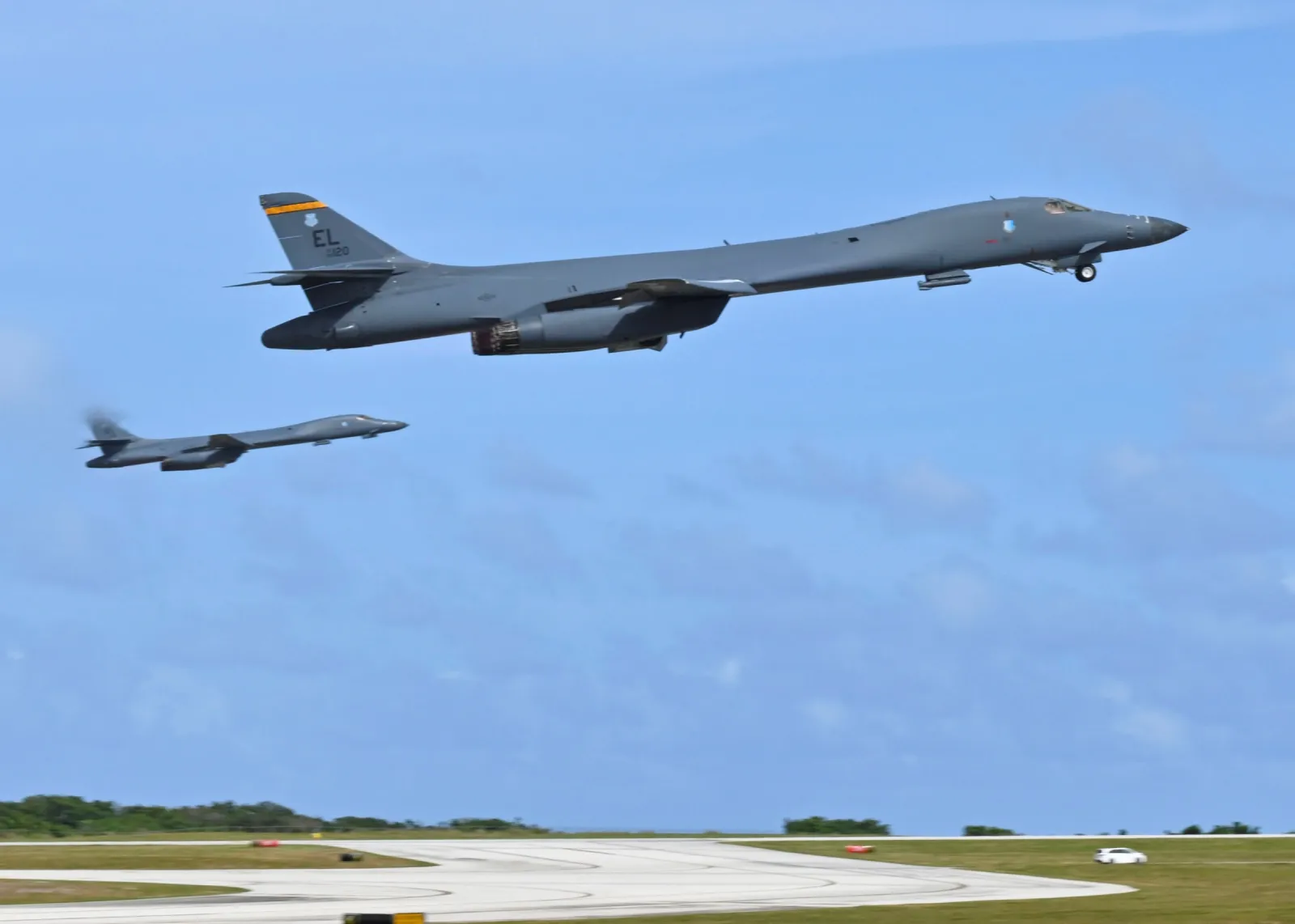
Facing growing threats from China and North Korea, as well as Russia's military presence in the Far East, the Pentagon sent B-1B bombers to Misawa Air Base in Japan twice, in April and October, reinforcing U.S. forces already deployed there.
...
In Europe, where NATO has been bolstering its defenses since Russia launched a full-scale invasion of Ukraine, U.S. bomber force was deployed in Norway, Spain and the United Kingdom, underscoring America's "shared commitment" to regional security.
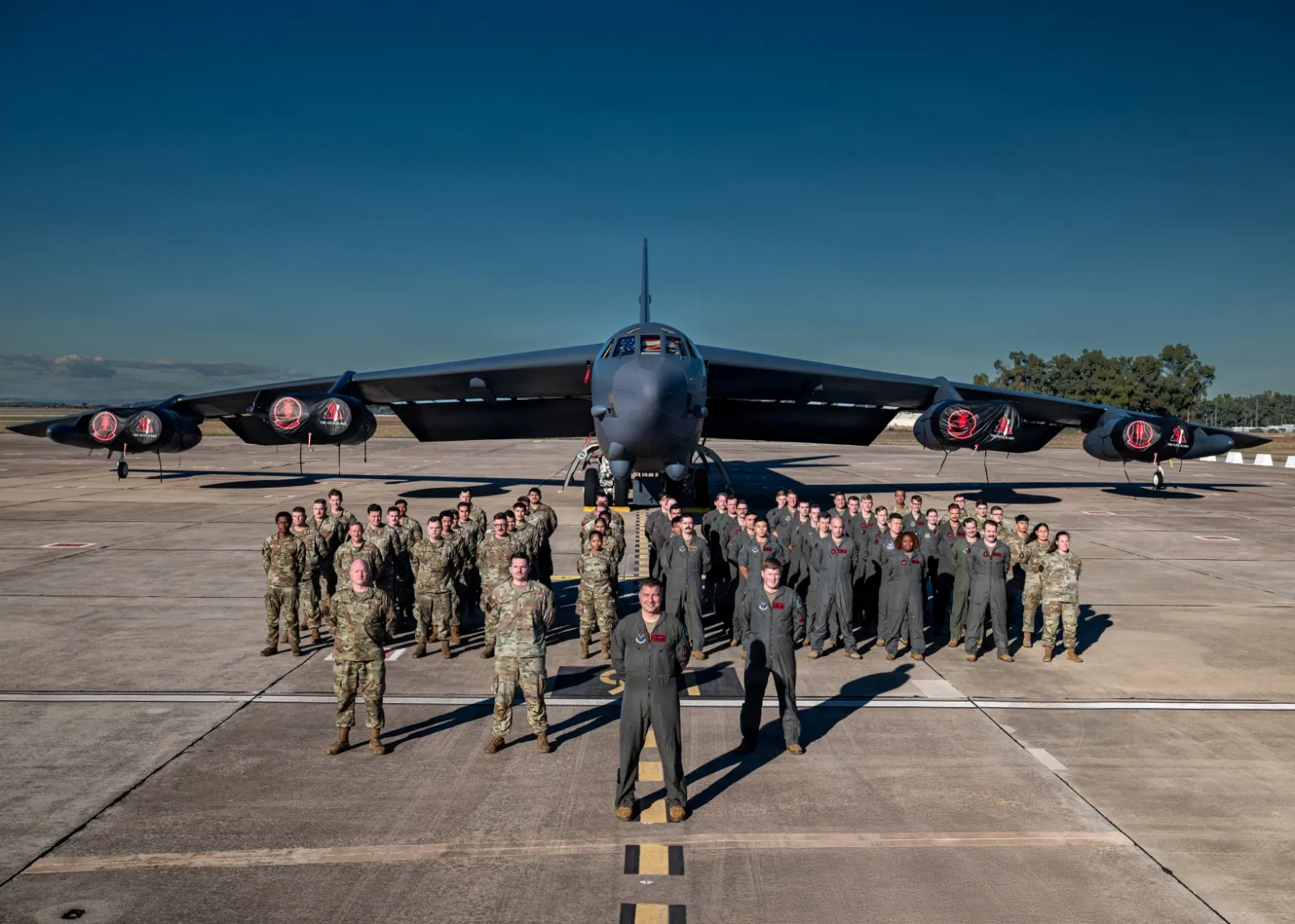
B-52H bombers featured in three of four missions in Europe, deploying in February to RAF Fairford in England and to Morón Air Base in Spain in May and November. The fourth deployment, to Ørland Air Base in Norway in August, involved B-1B bombers.
Bomber deployments allow the U.S. to train and operate with allies and partners in "a joint and combined environment," Air Force Major General Ty Neuman, commander of the 8th Air Force and the Joint-Global Strike Operations Center, told Newsweek.
The commander said such missions help geographic combatant commanders fulfill their responsibilities by enhancing readiness to respond to any potential crisis or challenge worldwide while contributing to stability and deterrence operations in their theaters.
...
A Rapid Crisis Response
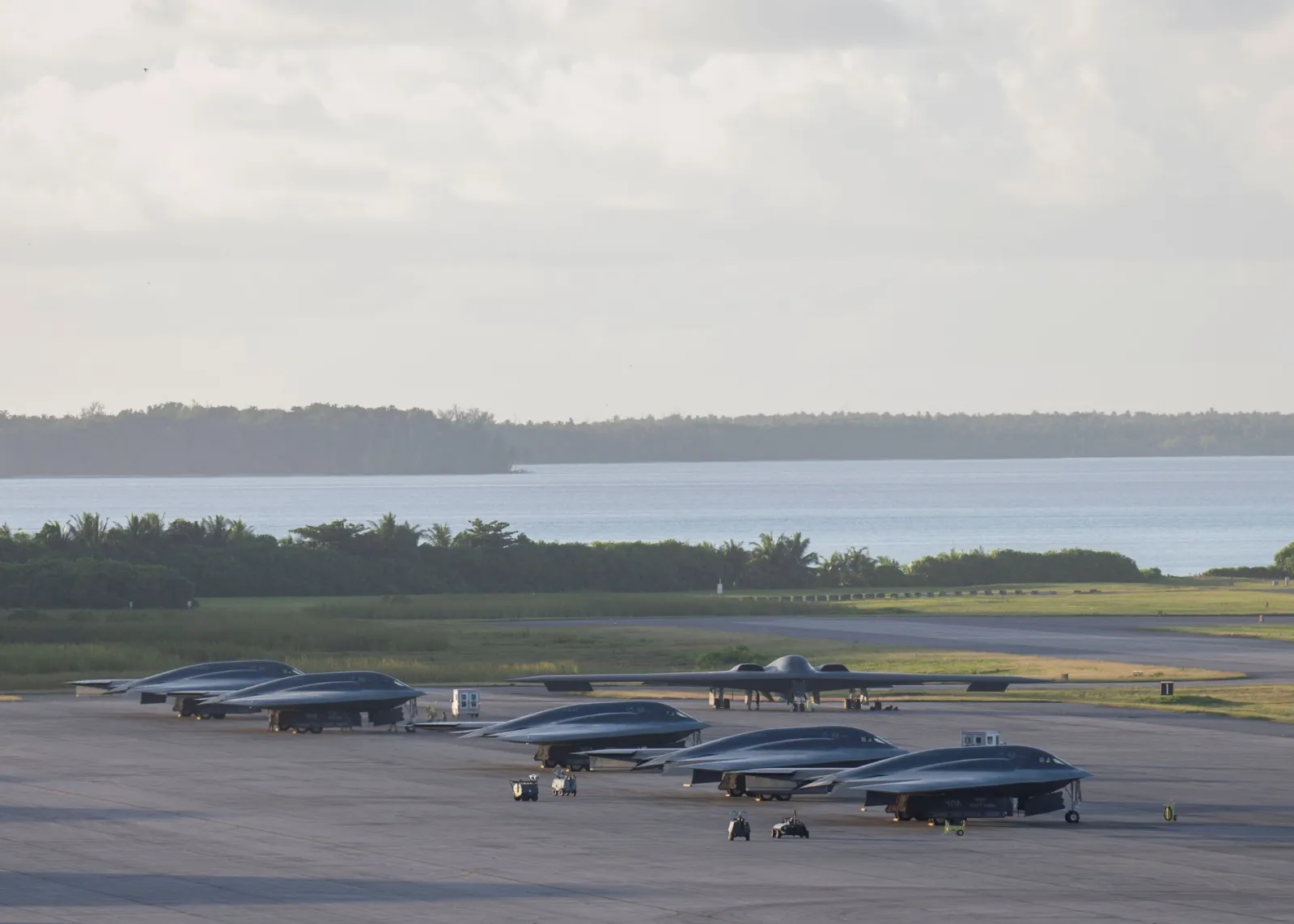
According to officially released imagery and an Air & Space Forces Magazine report, up to six B-2 bombers, along with approximately 250 personnel, deployed to Diego Garcia, part of the British Indian Ocean Territory, between March 25 and May 10.
This marked the largest B-2 bomber deployment in the aircraft's history, the U.S. Air Force said. The bombers conducted combat missions from the remote island, including strikes against Houthi rebels in Yemen, the defense outlet The War Zone reported in April.
The stealth bomber, 19 of which are currently operational, is designed to deliver conventional or nuclear munitions against what the U.S. Air Force describes as the "most valued and heavily defended" targets, using its radar-evading capabilities.
In June, the B-2 force carried out the largest strike in its history, Operation Midnight Hammer, when seven bombers flew from Whiteman Air Force Base in Missouri to drop a total of 14 Massive Ordnance Penetrator weapons on three nuclear sites in Iran.
Diego Garcia also hosted a second U.S. bomber detachment, consisting of at least four B-52H aircraft, between May 8 and July 6, according to satellite imagery shared by @MT_Anderson, an open-source intelligence analyst, on the social media platform X.
...
While the B-2 deployment was not explicitly called a Bomber Task Force, the B-52H aircraft were deployed under that designation, Air Force Lieutenant General Andrew Gebara, deputy chief of staff for Strategic Deterrence and Nuclear Integration, said.
The U.S. bomber fleet offers what Neuman described as "a rapid response capability" to any geographic combatant commander if called upon. The U.S. has six geographic combatant commands, each assigned an area of responsibility covering North America, South and Central America, Africa, Europe, the Indo-Pacific and the Middle East.
What People Are Saying
The U.S. Air Force Global Strike Command told Newsweek: "These [Bomber Task Force] missions validate our force's agility, capability and capacity, while providing critical training for our crews. [They] also strengthen our relationships with partners and allies while deterring aggression from would-be adversaries."
U.S. Air Force Major General Ty Neuman, commander of the 8th Air Force and the Joint-Global Strike Operations Center, told Newsweek: "[Bomber Task Force missions] are specialized, flexible operations organized to demonstrate and reinforce our bomber force's global reach, deterrence capability, and commitment to allies and partners."
What Happens Next
The U.S. military is expected to continue its bomber deployments, whether as part of Bomber Task Force missions or not, in the new year. The American bomber fleet may also increase its presence in the Caribbean amid ongoing tensions with Venezuela.
View 0 Comments
Submit Correction
View Editorial & AI Guidelines