10
Loading video...

By Lee Habeeb
Newsweek Columnist, Vice President of Content at Salem Media Group and host of "Our American Stories"
0
Share
Newsweek is a Trust Project member
See more of our trusted coverage when you search.Prefer Newsweek on Googleto see more of our trusted coverage when you search.
It was 1883 and a little-known social science professor at Yale named William Graham Sumner, who specialized in free markets and laissez-faire economics, would soon become more widely known thanks to a series of essays published in Harper's Weekly in 1883. Sumner's essays in one of the most widely read journals of its day soon turned into several lectures, which soon turned into a national bestselling broadside called "The Forgotten Man." It could easily be a bestseller today if reprinted, because a huge swath of the American electorate would see themselves in his work.
The lecture was focused not on the rich or the poor but a larger group of Americans Sumner believed were overlooked by the academic, policy and media elites of the day: the working-class Americans who made the country hum. If that doesn't sound familiar enough, when the elites of Sumner's day gathered to solve the problems of the day, the people responsible for paying the bulk of the tab—hardworking Americans—were rarely considered or consulted, Sumner observed.
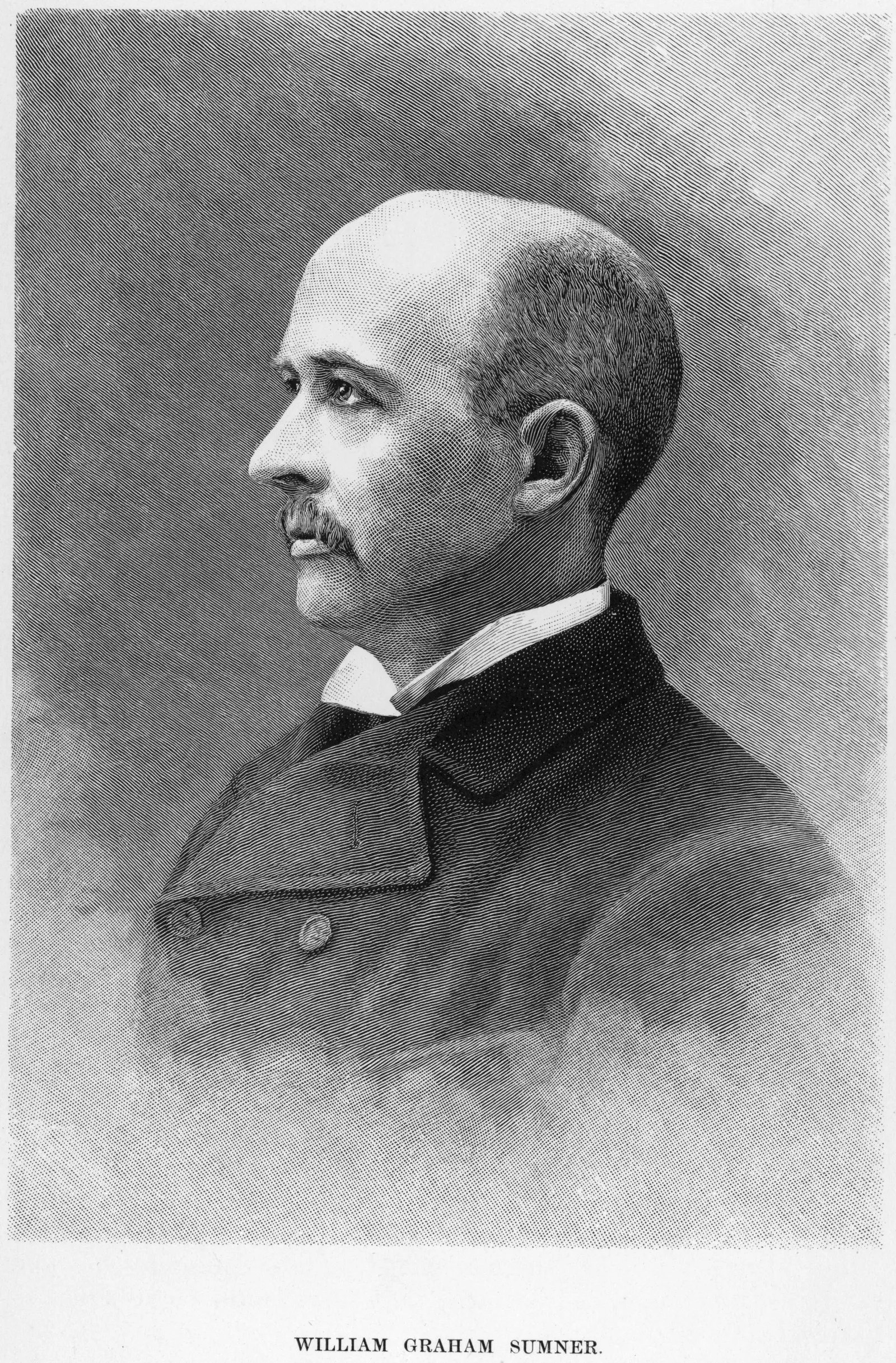
...
Read More on Essays
Here was his description of how such high-handedness—be it policy or legislation—proceeded.
A talks it over with B, and A and B then propose to get a law passed to remedy the evil and help X. Their law always proposes to determine what C shall do for X or, in the better case, what A, B and C shall do for X. As for A and B, who get a law to make themselves do for X what they are willing to do for him, we have nothing to say except that they might better have done it without any law, but what I want to do is to look up C. I want to show you what manner of man he is. I call him the Forgotten Man. He is the man who never is thought of. He is the victim of the reformer, social speculator, and philanthropist, and I hope to show you before I get through that he deserves your notice both for his character and for the many burdens which are laid upon him.
Sumner next described the nature and character of the Forgotten Man.
He is the simple, honest laborer, ready to earn his living by productive work. We pass him by because he is independent, self-supporting, and asks no favors. He does not appeal to the emotions or excite the sentiments. He only wants to make a contract and fulfill it, with respect on both sides and favor on neither side. You will find him hard at work because he has a great many to support. Nature has done a great deal for him in giving him a fertile soil and an excellent climate and he wonders why it is that, after all, his scale of comfort is so moderate. He has to get out of the soil enough to pay all his taxes, and that means the cost of all the jobs and the fund for all the plunder.
Sumner wasn't finished.
Such is the Forgotten Man. He works, he votes, generally he prays—but he always pays—yes, above all, he pays. He does not want an office; his name never gets into the newspaper except when he gets married or dies. He keeps production going on. He contributes to the strength of parties. He is flattered before election. He is strongly patriotic. He is wanted, whenever, in his little circle, there is work to be done or counsel to be given. He may grumble some occasionally to his wife and family, but he does not frequent the grocery or talk politics at the tavern. Consequently, he is forgotten.
Sumner continued with his description of the Forgotten Man.
He is a commonplace man. He gives no trouble. He excites no admiration. He is not in any way a hero (like a popular orator); or a problem (like tramps and outcasts); nor notorious (like criminals); nor an object of sentiment (like the poor and weak); nor a burden (like paupers and loafers); nor an object out of which social capital may be made (like the beneficiaries of church and state charities); nor an object for charitable aid and protection (like animals treated with cruelty); nor the object of a job (like the ignorant and illiterate); nor one over whom sentimental economists and statesmen can parade their fine sentiments (like inefficient workmen and shiftless artisans). Therefore, he is forgotten. All the burdens fall on him, or on her, for it is time to remember that the Forgotten Man is not seldom a woman.
Sumner properly understood that there were as many forgotten women in America as men. He then closed things out with these words.
What the Forgotten Man really wants is true liberty. What the Forgotten Man needs, therefore, is that we come to a clearer understanding of liberty and to a more complete realization of it. Every step which we win in liberty will set the Forgotten Man free from some of his burdens and allow him to use his powers for himself and for the commonwealth.
Sumner's words, written over 140 years ago, would echo with meaning to vast segments of the American public today if a publisher had the temerity—and the insight—to republish Sumner's essay. The mass public will see themselves in his work, even if today's ruling elites will not.
View 0 Comments
Submit Correction
View Editorial & AI Guidelines