10
Loading video...

By Khaleda Rahman
National Correspondent
0
Share
Newsweek is a Trust Project member
See more of our trusted coverage when you search.Prefer Newsweek on Googleto see more of our trusted coverage when you search.
Former FBI agent Jennifer Coffindaffer has revealed to Newsweek that she received four ransom notes tied to the disappearance of Nancy Guthrie in April, messages she believes were sent by scammers seeking to take advantage of the huge public interest in the case.
Coffindaffer said she received four emails over the course of two days to a personal email address, demanding payment in bitcoin for Guthrie’s release and an AI-generated image appearing to depict Guthrie, who was reported missing in early 2026.
“I never responded to any of them,” she told Newsweek. “I went straight to the FBI with them.”
Read More on News
Coffindaffer said she decided to speak out about the messages she received now because she believes they were from the same person or people who recently contacted Lauren Serpa, a neighbor of Guthrie’s. Serpa said she received a ransom demand in late September that claimed Guthrie was alive in Mexico and directed her to send bitcoin in exchange for her release.
The Pima County Sheriff's Department has said investigators have determined that note was “not credible.”
In a statement, the sheriff’s department said that anyone “who receives a text message or other communication related to Nancy Guthrie is encouraged to report it to law enforcement.
“We also urge the public to remain vigilant, as scammers may attempt to take advantage of this situation. Do not send money or provide personal information in response to unsolicited messages. Investigators will continue to review reported messages for credibility and investigate any potential attempts at extortion. The Nancy Guthrie investigation remains active and ongoing.”
Newsweek has contacted the sheriff’s department and the FBI for further comment via email.
Guthrie, the 84-year-old mother of Today co-host Savannah Guthrie, was last seen at her home in the Catalina Foothills near Tucson, Arizona, on January 31. She was reported missing the following day. Authorities believe she was kidnapped, abducted or otherwise taken against her will and said that drops of her blood were found near the front doorstep.
In mid-February, the FBI released surveillance footage from a camera outside her home showing a masked individual outside the residence on the night she disappeared and added that this person was considered a suspect.
More than eight months later, there’s been no sign of her and authorities have not identified a suspect or provided the public with any major breakthroughs in the case that has captured national attention.
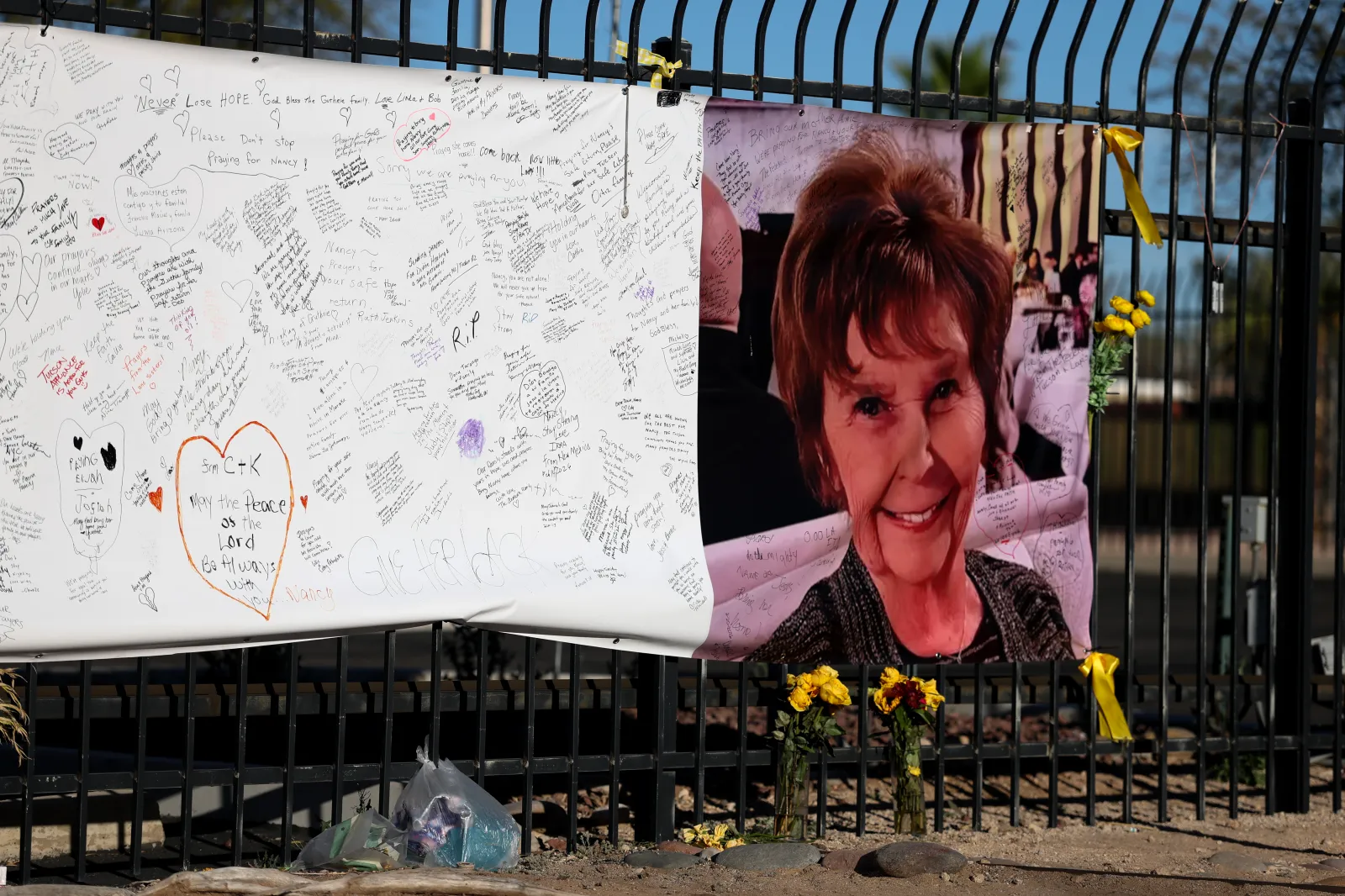
...
What the Notes Said
Coffindaffer said the emails, which Newsweek has reviewed, were all sent to a personal email address of hers that she shares with few people, and some addressed her using a middle name she does not publicly go by.
“For this to be in my personal email was really concerning because I don't know how they found that,” she said.
She said the first message arrived at 12:30 p.m. on April 10 and featured only what appeared to be an AI-generated image of Guthrie. Newsweek has reviewed the image but is not publishing it.
At 12:37 p.m., another email arrived from the same address, with a demand for 25 bitcoins in exchange for Guthrie’s release along with a Bible reference and the same AI-generated image depicting Guthrie.
“No one sees Mrs Nancy Guthrie without me, I need 25 BTC to bring Mrs Nancy Guthrie back home within 12 hours, she’s alive,” it said.
The image included in those emails, she said, bear similarities to an image of Guthrie in the video sent to Serpa, which she believes was AI-generated. “That really caught my attention because I had never seen that picture that they sent me before,” Coffindaffer said.
Coffindaffer said she received another email at 3:52 p.m. on April 10 that basically reiterated the demand of 25 bitcoins for Guthrie’s release.
She received a fourth and final email the following morning, at 11:26 a.m. This message again included a Bible reference but lowered the demand for Guthrie’s release and included a QR code for a bitcoin wallet. “I need 2 BTC urgent instantly into this bitcoin wallet account address,” it said.
Coffindaffer said that she discussed the notes with Serpa and determined the bitcoin wallet addresses in the notes they received matched. Newsweek has not verified this.
Why She Thinks She Was Targeted
Coffindaffer believes she was targeted with the notes because at the time, she had publicly advised Guthrie’s family to pay the sender of ransom notes in a bid to yield clues about their identity.
"I think the reason that they sent notes to me was because at this time, I was strongly promoting the idea of tickling the wire," she said. "I was the first one to talk about that and it's clear to me this is a group that is closely following her case and hoping that somebody will bite.”
Coffindaffer told Newsweek in an interview published on April 10 that paying the senders of ransom notes could lead to the discovery of clues about their identity. That came after TMZ reported it had received two ransom notes from someone claiming to have information about Guthrie’s disappearance.
At the time, she said it could be worth it to “tickle the wire,” referring to a federal law enforcement tactic where investigators take some kind of action to prompt a target to reveal incriminating details.
A Warning for Others
Coffindaffer said she never believed the messages came from those responsible for Guthrie's disappearance.
She said she told the FBI that she believes they were from “extortionists.”
“I think the agent and I pretty much agreed on that at that time, that it wasn't from the actual people who took her, that she wasn't alive and that these things they were saying in this note were to just entice getting paid as a scam,” she said.
She said the sentencing of a California man who pleaded guilty to harassing Guthrie’s family by sending fake ransom notes had set a “terrible” precedent. Derrick Callella could have faced up to two years in prison but was sentenced to two five-year probation terms in late August, according to court records. They are to be served concurrently.
Coffindaffer said organized extortion rings often target families and the followers of missing person cases.
They “make millions of dollars in scamming people because they do a good job with trying to target people that have a soft heart for the particular situation," she said.
She urged anyone who receives such messages to not respond and immediately report it to the FBI.
"Do not pay, contact the FBI,” she said.

...
Previous Ransom Notes
In late July, as Guthrie’s disappearance reached the six-month mark, authorities released the contents of two purported ransom notes that were sent to media outlets in the early days of Guthrie’s disappearance in the hope that someone would recognize the writing style.
The first note, sent to a Tucson television station on February 2 and addressed to Guthrie's daughter, demanded $4 million in bitcoin and contained a threat to kill Guthrie if the money was not paid. It cited details from Guthrie's home—including a white smartwatch near her bed and a damaged backyard floodlight—that suggested its author had knowledge of the scene.
A second message, sent on February 6 and addressed to the Guthrie family, claimed she had died shortly after being taken.
“She is buried in nature now,” it said. “Nothing you could have done could have changed the outcome.”
Earlier in July, the FBI’s Phoenix office said that while some ransom notes sent during the Guthrie disappearance case were determined to be fake extortion attempts, other demands "may potentially be legitimate and are still being investigated as such.”
View 0 Comments
Submit Correction
View Editorial & AI Guidelines