...

By Dorothea Lay, Susan Raufer, Marta Sisco-Izak, Daniel Chin and Sarah Pierce
Former U.S. Citizenship and Immigration Services (USCIS) Officials
0
Share
Newsweek is a Trust Project member
See more of our trusted coverage when you search.Prefer Newsweek on Googleto see more of our trusted coverage when you search.
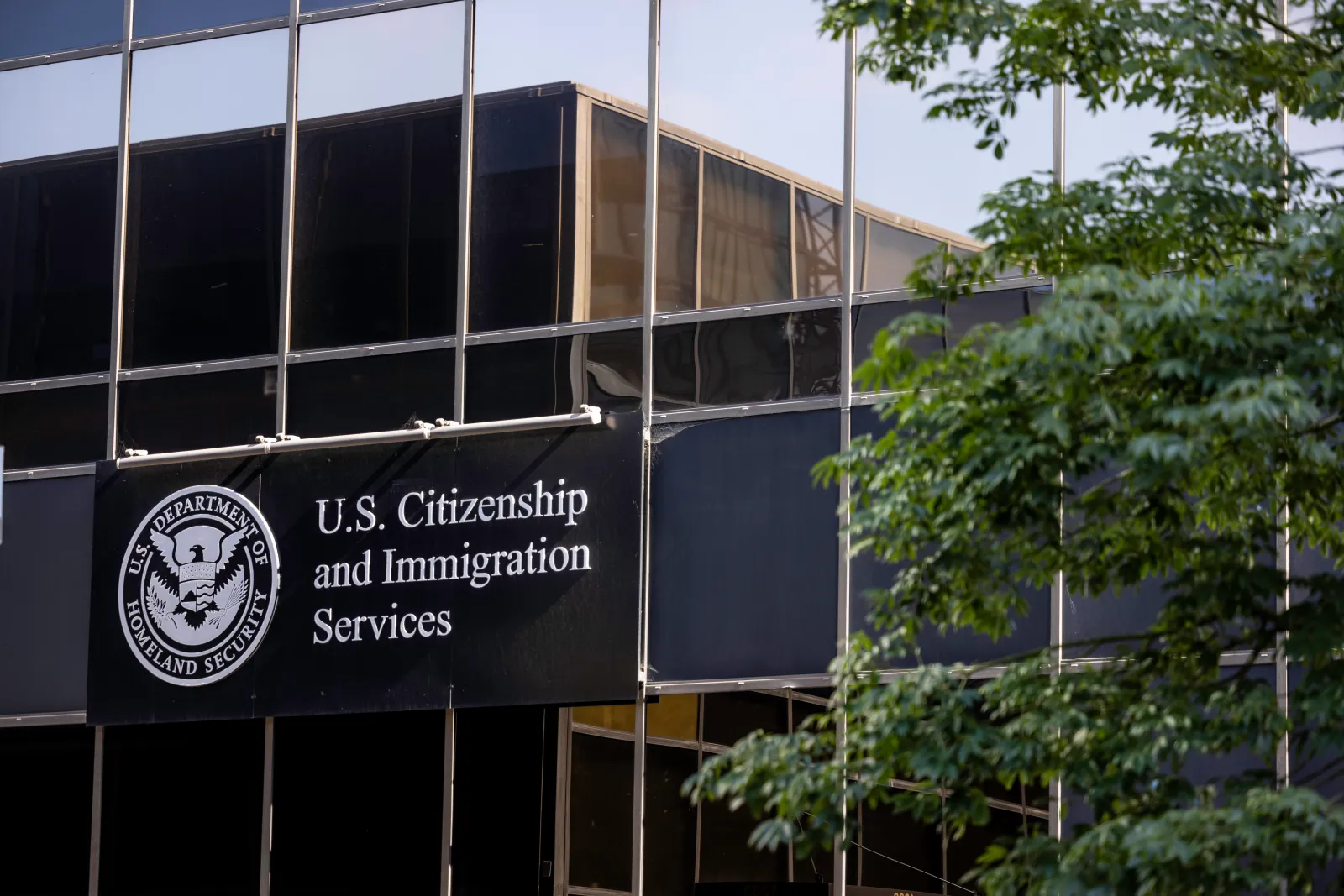
After the tragic shooting of two National Guardsmen in Washington, the Trump administration’s immediate response was not to focus on the crime itself—but rather impose some of the most extreme restrictions on the legal immigration system in years. U.S. Citizenship and Immigration Services (USCIS), the agency charged with administering legal immigration, announced an immediate pause on millions of immigration applications and ordered a sweeping review of thousands of already approved cases. Trump’s ability to quickly weaponize USCIS results from a months-long campaign to transform the agency from the inside out.
We know because we lived it. As former USCIS employees, we experienced firsthand the strategic demoralization and dismantling of the agency under President Donald Trump—both as a goal in itself and as a means of reshaping the legal immigration system. After inheriting an agency already struggling under backlogs and antiquated laws, the administration sidelined, silenced and pushed out seasoned, apolitical professionals to turn USCIS into an ideological tool.
...
Read More on Opinion
The campaign started with chaos. Soon after taking office, the administration forced tens of thousands of employees into physical offices unprepared for the sudden influx. Internet networks collapsed. Bathrooms ran out of supplies. Employees worked from closets or parking lots. At one location, conditions became so chaotic that the fire marshal was called. At others, workers were required to commute daily only to be turned away due to lack of space. These disruptions wasted massive amounts of skilled worktime, but they also served a larger purpose: pushing out seasoned staff and destabilizing the agency responsible for administering everything from green cards to humanitarian protections.
Months later came more havoc. Employees were given as little as a week to choose between leaving government service or remaining to face threatened mass layoffs, potentially without severance if civil service protections were stripped first. Days later, long-standing work schedules were revoked overnight.
The effort went beyond attrition. It was about ideology. Even before the 2024 election, allies of the Trump administration compiled a “watch list” of civil servants they accused of bias, complete with personal details and mugshot-style photos, and solicited federal employees to add colleagues to the list. Targeted employees feared for their safety—installing home security systems or leaving the agency altogether.
Career civil servants exist to implement the policies of each administration, identify and address legal and operational barriers and ensure compliance with the law. We did that job over a combined 84 years of service across six administrations, Republican and Democratic alike. The current administration twisted that duty into a narrative of sabotage, branding career experts as part of a “deep state.”
Today, the remaining USCIS workforce operates under a culture of fear, steeped in ideology. Workers face hours-long mandatory polygraph tests. Others have been forcibly reassigned to new agencies and jobs, in different states—far from their homes and outside their expertise—without allegations of misconduct or stated cause. This environment chills honest analysis and accelerates the administration’s larger agenda.
At the same time, the workforce is being reengineered. Nearly 1,800 experienced staff, with deep institutional knowledge have left, replaced by a similar number of new hires focused on enforcement. Job ads no longer describe USCIS as a service agency, but as a cultural defense force, urging applicants to “protect your homeland and defend your culture,” while offering $50,000 bonuses, and despite the administration’s aggressive return-to-office push, remote work.
USCIS’ new director openly calls the agency an “immigration enforcement agency.” America needs effective immigration enforcement, conducted within the bounds of the law—that’s why Congress created ICE and CBP after 9/11. Together they employ more than 80,000 employees and now have an additional $170 billion in new funding. USCIS was intentionally designed to do something different: administer the nation’s legal immigration system competently, fairly and securely.
That distinction is rapidly disappearing. New policies instruct officers to more heavily scrutinize the character of immigration applicants, weighing their “Americanism” or even their neighbors’ opinions. The proposed public charge rule will dramatically expand discretion to deny applications based on speculative judgments about future dependency. The agency is also preparing to grant certain officers arrest authority and permission to carry firearms.
By hollowing out the workforce, intimidating those who remain, recruiting new hires for their desire to “defend their culture” and increasingly shifting from adjudication to enforcement, the administration is destroying USCIS’ mission from within. The result is a legal immigration system that is slower, harsher, less predictable and significantly more arbitrary.
The damage will last beyond the next election. Errors will increase. Law-abiding applicants will face wrongful denials. U.S. citizens seeking to reunite with family, businesses needing talent and researchers on the verge of breakthroughs will all pay the price.
The United States will be less safe, not more. A functioning legal immigration system protects the nation by admitting those who qualify under the law and by identifying genuine threats. A system distorted by political retribution does neither well.
What is at stake is not just the future of one agency, but this nation’s ability to manage immigration in a way that is consistent with its laws and worthy of its highest ideals.
Dorothea Lay, Susan Raufer, Marta Sisco-Izak, Daniel Chin and Sarah Pierce were all former USCIS officials.
The views expressed in this article are the writers’ own.
View 0 Comments
Submit Correction
View Editorial & AI Guidelines