
10
Loading video...

By Lee Habeeb
Newsweek Columnist, Vice President of Content at Salem Media Group and host of "Our American Stories"
0
Share
Newsweek is a Trust Project member
See more of our trusted coverage when you search.Prefer Newsweek on Googleto see more of our trusted coverage when you search.
He was born one of five children in a small coal-mining town in Centerville, Iowa in a house that was, by his account, 27 feet by 25 feet, with no running water or electricity. Simon Estes' journey from that small midwestern house to leading roles in the greatest opera houses in the world—including America’s largest, the Metropolitan Opera House in New York City—is an overcoming and faith story for the ages.
If his story was turned into a movie, no one would believe it—it’s that improbable.
“My father couldn't read or write, and his parents were both slaves sold for $500,” Estes told Our American Stories. “When he came to Centerville, he worked in the coal mines. I don't think he ever brought home a check more than $18 and worked 12 hours a day. And whoever worked in the mine died between 50 and 60 years of age with black lung.”
Read More on Essays
The hard work, health hazards and poverty came with the mining territory, but so too did grinding racial discrimination. Though Iowa was not below the Mason-Dixie Line, it might as well have been.
“Colored people couldn't do lots of things white people could,” Estes explained. “We weren't allowed to sit downstairs in movie theaters with white people. Most of the restaurants, we couldn't eat in them.”

...
But one indignity stood out among the rest.
“We couldn't swim in the swimming pool until, finally, they let us swim on Saturdays from 9 to 11 o'clock,” Estes recalled. “And then the colored people had to get out of the pool and they put disinfectant in the water.”
How did the family endure?
“What really helped was our faith,” Estes explained. “If it had not been for the Bible, maybe I wouldn't have been as successful because I would have been bitter. But our parents taught us never to hate white people, but just pray for them.”
Estes recalled with fondness his childhood church services.
“The ministers in those second Baptist churches, they'd be yelling 'Hallelujah, thank you, Jesus, and everything,'” he said.
Related Story
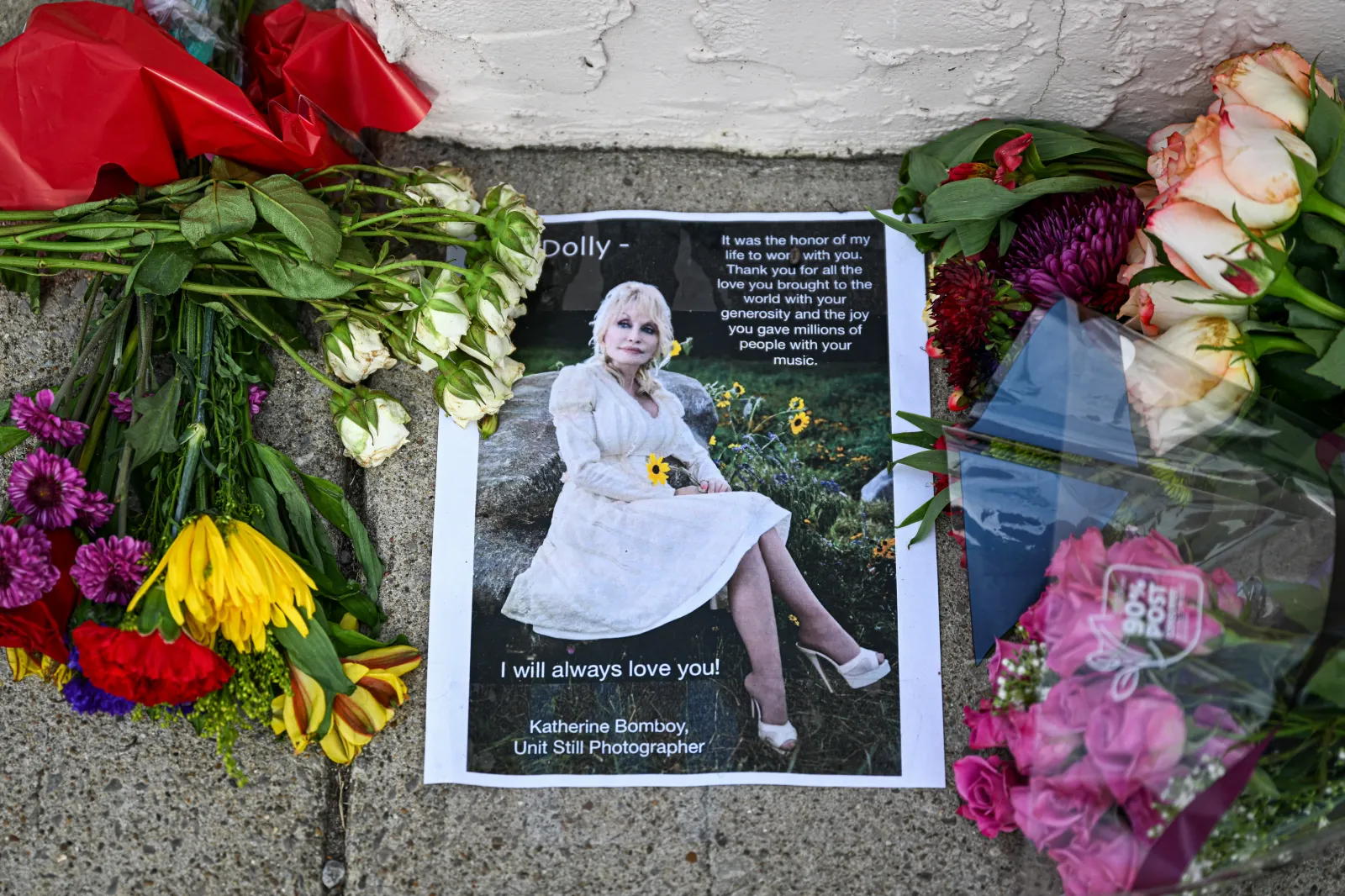
Dolly Parton RIP: Story of Her Most Famous Song Embodies Her Life Story
It was his mother who introduced Estes to music: She played piano and directed the church choir.
“She had this great voice," he said. "God gave it to her and she gave it to me.”
It was there that Estes performed his first solo as a boy soprano.
Estes sang in his high-school choir, and his voice grew deeper. He kept singing at the University of Iowa, becoming the first Black man to perform with a campus pop choral group. But Estes wanted to join the most prestigious singing group on campus—the school’s choir.
“Your voice isn't good enough,” the choir’s director told Estes.
But the same director encouraged Estes to visit with a new music teacher on campus, a Greek American named Charles Kellis.
“[Kellis] heard me singing, and said, ‘You have a voice to sing opera.’ And I said, ‘What’s opera?’ In Centerville, we didn't have an orchestra. We only had choral music. I had no exposure until he played some recordings of opera singers,” Estes recalled. “And then he wanted me to hear pure orchestral music. After I heard it, I said ‘I really like that stuff. I just called it stuff.’”
It was love at first listen.
“I loved it the moment I heard it,” Estes said. “It was dormant inside me or latent or whatever word you want to use.”
That latent talent bloomed after Kellis lobbied for Estes to attend the most prestigious musical conservatory in the nation: Julliard.
He recalled that life-changing first plane ride—and first visit to the Metropolitan Opera House to see the Verdi opera Rigoletto.
“I couldn't believe what I heard, that orchestra, and all of those voices,” Estes gushed. “I didn't realize they weren't using microphones until Mr. Kellis brought it to my attention. I thought that was amazing.”
He made his debut on an opera stage not in his own country but at the West German Opera House in 1965. America proved to be less welcoming to Black male opera singers than black females.
“Black woman could sing opera because some roles are romantic,” Estes explained. “But they didn't want a Black man next to a white woman on stage. That excluded us from certain roles. It was difficult.”
One experience exemplified the racial bigotry Estes routinely faced.
“I was singing with the Atlanta Symphony Orchestra,” Estes said. “I won't mention the man's name, but he was head of the opera. I went to see him. I said, ‘I would love very much to sing in your opera house.’ And he told me honestly, and I respected him because he was honest, ‘I would love to engage you, but our donors said if I engage a Black man, they would not give us money. It hurt because I knew I was qualified to sing opera in this country.”
Estes faced other indignities outside America, too.
“I played Ramfis the high priest in Verdi’s Aida, which takes place in Egypt. And when they made me up, they made me white as snow,” Estes said. “I went to the makeup room, looked in the mirror and thought, if my mother could see me now.”
But always, the advice of his parents—and persistent prayer—carried him through those moments.
“My parents always said, ‘Never give up, don't become discouraged. Stay strong.’ And I didn't give up,” Estes said with pride. “Whenever I would sing recitals, I would always pray before. And pray that through the talent that God gave me that somebody—one person's heart—would be touched.”
It took more time than it should have, but Estes finally got to sing at the Metropolitan Opera House.
“I’d sung in 44 of the 50 states, and after the performance, I was thinking, ‘Wow, I actually sang at the Met.’ I wished I’d sung there earlier because I was qualified, and I didn't start singing consistently at the Met until 1983. I sang six years in a row and did a number of different operas. I was thrilled.”
Estes was never paid the rates he deserved in large part because of his race. But always, he kept his focus on the positive.
“When I was a kid, I didn't think I'd get farther east than Chicago. But I've been to Australia, Russia, Africa, China, South America and all the European countries,” Estes noted. “I've sung for the Nobel Prize Committee, Nelson Mandela, two popes—Pope John I and II—and Billy Graham. Some of these things I've done, I still can't believe.”
He recalled a moment with his three daughters outside the dream home he’d built on 3 acres in New Jersey.
“It had 6,500 square feet of living space, and my little house in Centerville was 27 feet by 25," he said. "And I thought, ‘Wow. That's my house. I built this house.’ I could hardly believe it.”
At 88 years and counting, Estes’ sense of accomplishment is rivaled only by his sense of gratitude—a gratitude that springs from a deep well: his Christian faith.
“I thank God. He gave me this talent and opportunity to travel all around this planet Earth that he created," he said. "I still can't believe it.”
View 0 Comments
Submit Correction
View Editorial & AI Guidelines