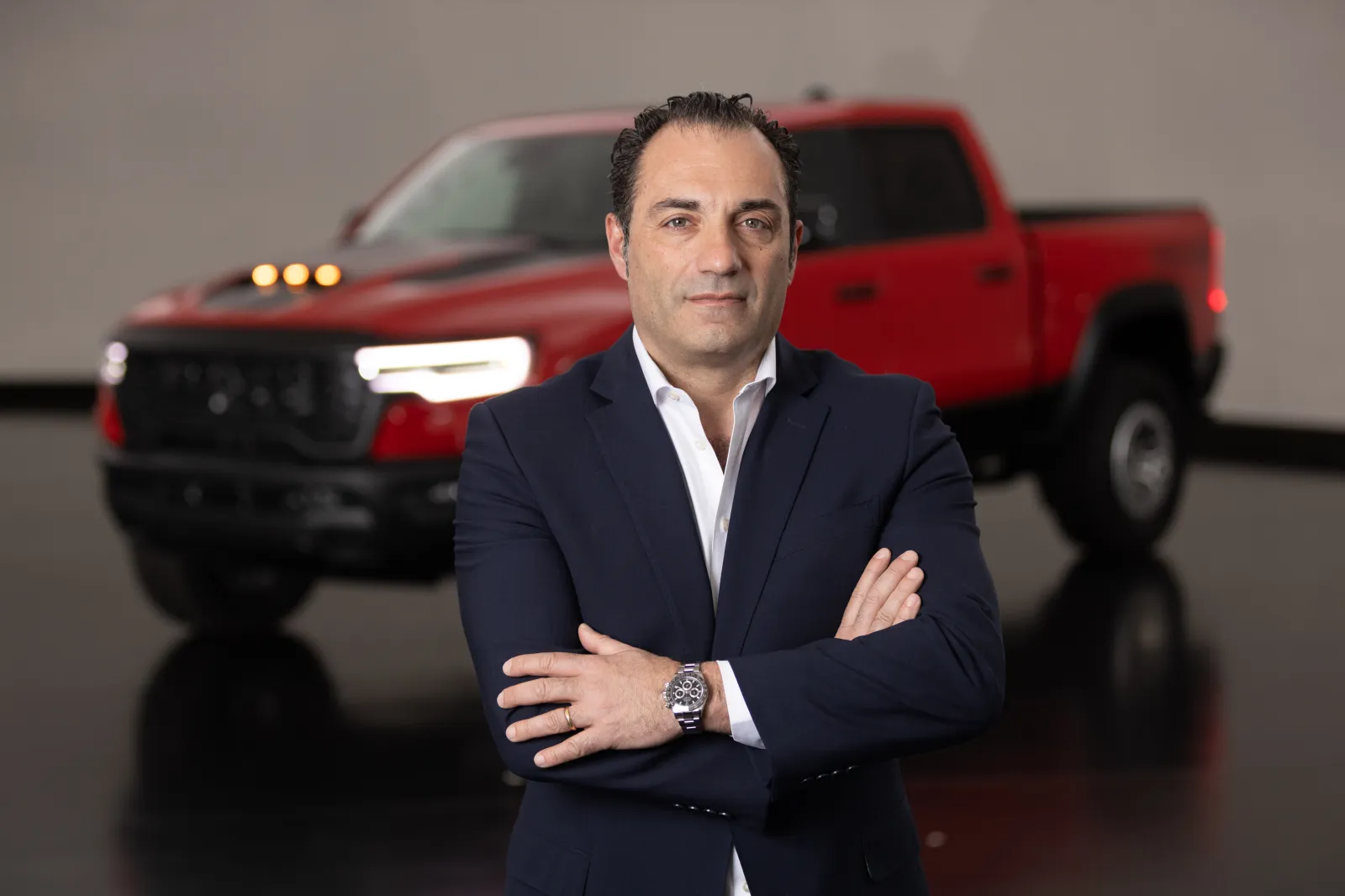
Rob Widdis

By Eileen Falkenberg-Hull
Senior Editor, Autos, Travel and Lifestyle
0
Share
Newsweek is a Trust Project member
See more of our trusted coverage when you search.Prefer Newsweek on Googleto see more of our trusted coverage when you search.
Stellantis CEO Antonio Filosa has spent the first year of his tenure making tough decisions. He’s focused on digging the company out of the profit, technology and product hole it found itself in under the previous professional regime, following its formation by a merger of PSA Group and Fiat Chrysler Automobiles.
Filosa inherited a mess. Profits were plunging, U.S. market share was sliding, on-hand dealership inventories were very high and dealer relations were near rock bottom.
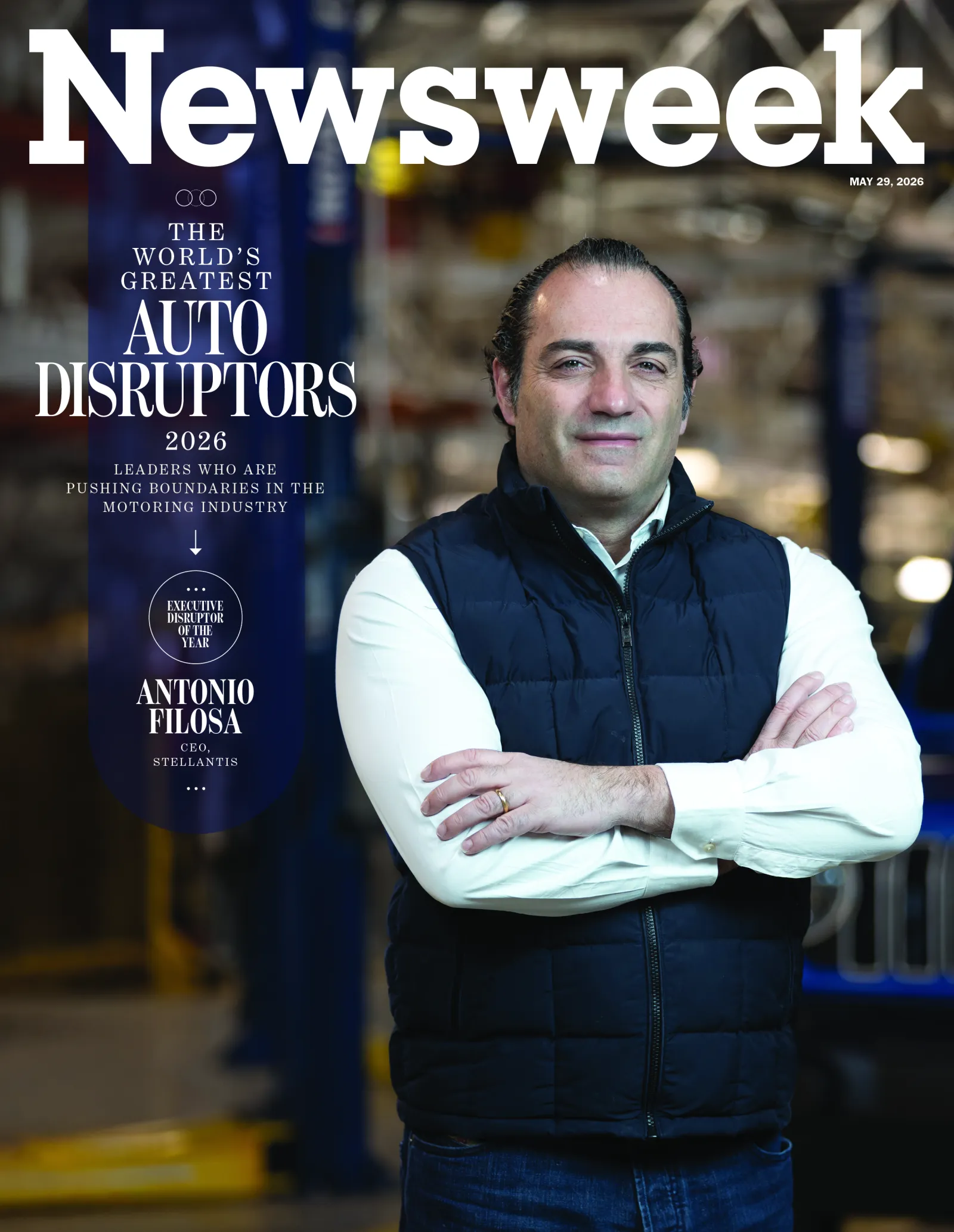
His effort to stop the bleeding, push forward with commonsense product and brand plans, regain the faith of dealers and regionalize the company’s operations are why Filosa is Newsweek’s World’s Greatest Auto Disruptors Executive Disruptor of the Year.
Read More on Business
The Italian was chosen for his current role after 26 years in automotive that stretch back to his first job at Fiat. “I started 27 years ago, working in manufacturing. I was the quality supervisor at the paint shop, night shift—a very small plant in Spain. That plant was producing commercial vans. Ninety-five percent of them were white. So, my job was pretty easy,” he told Newsweek.

Courtesy of Stellantis
Filosa wasn’t long at the Spanish facility. Soon, he was looking for roles elsewhere, landing outside Chicago, Illinois, working within Fiat’s agricultural construction business unit, first in logistics then in marketing.
Since then, he hasn’t stopped moving. On his next stint he went back to Italy and looked after the international business unit for the southern markets, which he described as India to South America. He moved to Brazil, then Argentina, then back to Brazil in various roles, all while rising within the company ranks. Now, he calls the U.S. home, and Stellantis runs most of its business operations out of the company’s Auburn Hills, Michigan, offices, north of Detroit.
Filosa estimates that he has spent 15 of his 27 years working in operations in various roles, from manufacturing to logistics to procurement, purchasing and product development. When he worked in manufacturing, he ran a large plant. His time in purchasing saw him responsible for a large company investment in a greenfield site in Brazil.
What happened next was a mixture of hard work, perseverance and good luck. “After 15 years of a strong focus on operations, [I was noticed by] the former FCA CEO, Mr. Sergio Marchionne—at the time he was following, like, 100 top talents in the company. I was one of those,” Filosa recounted.
Filosa impressed Marchionne, and a promotion followed. Filosa became the head of the Argentina business unit at an integral and economically hectic time. At the time, Argentina was dealing with hyperinflation, devalued currency and what Filosa calls “strange trading rules,” something he says set him up to better understand today’s U.S. international trade-relation negotiations.
“[I had the] opportunity of being in a business environment with very high volatility. You need to be flexible every time, right and quick, even if it’s not the best decision [at] that moment, but the quickest, the quicker, the better.… It’s a very volatile business environment, with all the macroeconomic variables on testosterone, like hyperinflation and with the effects [and] volatility,” he reminisced.
At the time, it would have been hard to foresee how these experiences would have teed him up to be a perfect fit for the job of CEO.
Fast forward to 2026, and Stellantis is facing strong global headwinds. Much of its business is focused on new vehicles, and global volume is not expected to rebound to prepandemic volumes in the U.S. and Europe for the foreseeable future. Plus, smaller overall volume is only half the battle: Stellantis, like Hyundai Motor Group, Volkswagen Group and Toyota, is battling new-to-market Chinese automakers like Geely, Chery and BYD for pieces of the smaller pie.
Fluctuating U.S. international trade policy is complicating things even further, with lingering questions about tariffs being sorted by the court system and pressure to make international parts sourcing and manufacturing a thing of the past by the Trump administration.
“Today, my role is pretty tough, because we are going into a turbulent period for many, many reasons. To be agile is very important, and to constantly engage the team to find a way to make accurate decisions as fast as possible is very important,” Filosa said.
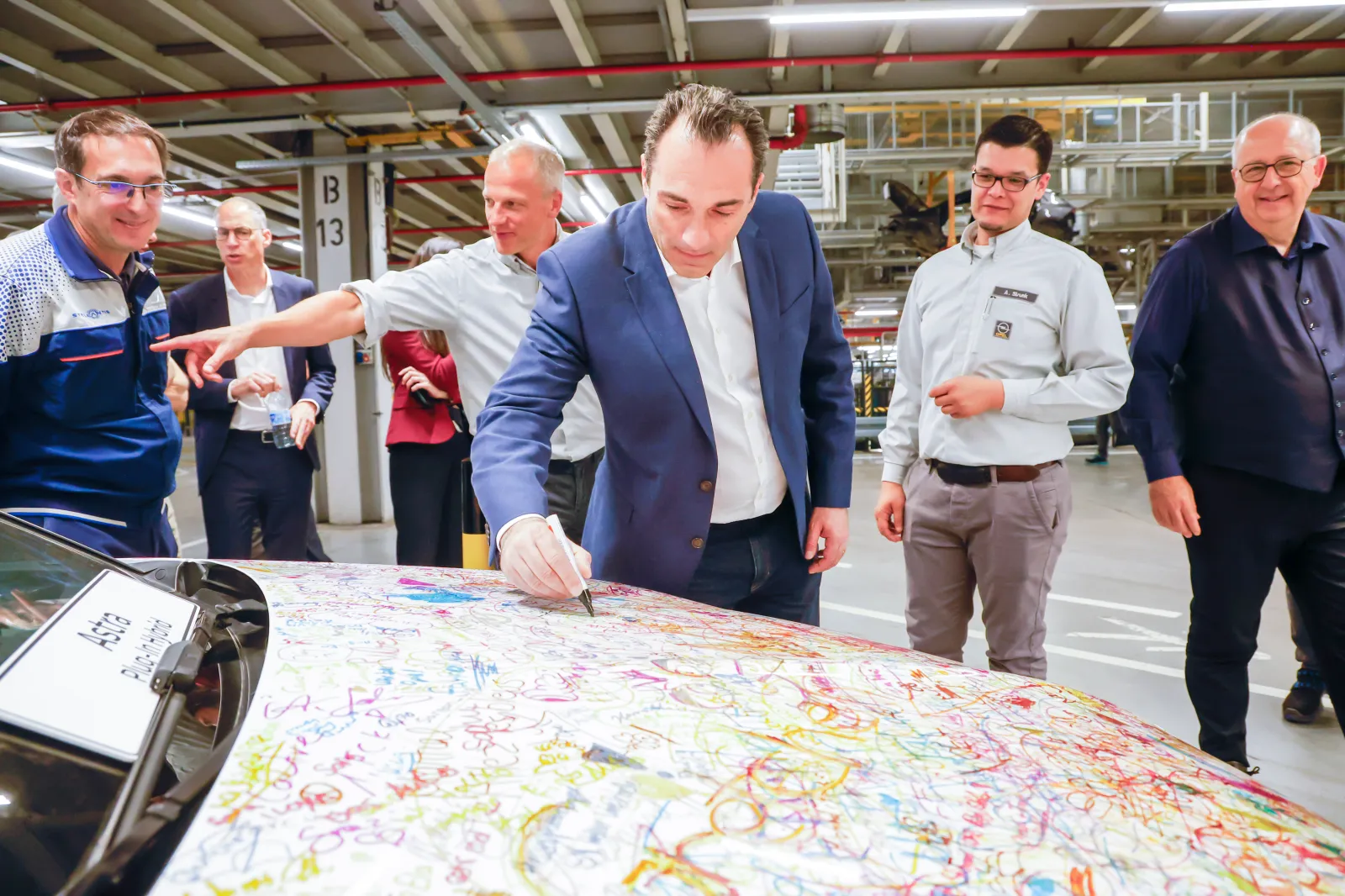
“On the other side, my work today is very exciting, because, yes, we need to solve a lot of issues, but one of the most important ways that we found to solve our issues is to change our investment location,” he continued, pointing out an investment in the U.S. of $13 billion over the next four years that will lead the company to launch 19 products and increase production by 50 percent. To execute that, the company expects to create 5,000 jobs to support manufacturing in Illinois, Ohio, Michigan and Indiana. The company is already in the process of adding 2,000 jobs in manufacturing, supplier quality and on the Mopar brand to support quality and customer experience improvements.
“We need to be very precise in what we do [and] very rigorous in the execution,” Filosa said.
Courtesy of Stellantis
In the near term, he sees opportunity for growth to come from the Ram brand in South America, especially the Ram Dakota midsize pickup truck. The company will also capitalize on its 20 percent ownership stake in Chinese automaker Leapmotor and 51 percent stake in its business operations outside Greater China—Leapmotor International—to launch that brand in South America and broaden its sales in Europe.
Regionalization is perhaps the biggest part of Filosa’s Stellantis turnaround plan. “We want to really be rigorous and strong in the way we manage the brand portfolio,” he said. Sources told Reuters that rather than following a global portfolio approach, the CEO instead will be prioritizing investment in Ram, Jeep, Fiat and Peugeot. Other brands in the portfolio like Alfa Romeo, Dodge and Citroën will be deprioritized.
Regionalization goes even further at Stellantis. Chief Design Officer Ralph Gilles told Newsweek last September that the company has empowered its regional design teams to create vehicle designs that are right-sized and tuned for the market.
“We have a lot of interesting discussions with Ralph about how to materialize even more the customers’ needs into the design of future cars. I believe it’s happening, and I believe that you will see a lot of things coming in the U.S., but not only the U.S., from our brands that really represent this regional way to work on design and engineering,” Filosa said.
You need to be flexible every time, right and quick... the quicker, the better.
Antonio Filosa
Read about all of Newsweek’s Greatest Auto Disruptors 2026 award winners:
Visionary, Executive, Marketing, Design, Technology, Sustainability, Powertrain, Community, Research & Development and Legacy of Disruption
Photography Courtesy of Stellantis
How We Did It: To determine the candidates for this year’s World’s Greatest Auto Disruptors, Newsweek’s Autos team, led by Senior Autos Editor Eileen Falkenberg-Hull, compiled a list considering every major automaker in each of the award categories. Brands, teams and individuals were nominated based on their cumulative merits for the past year, after combing through each candidate’s accomplishments in the areas of future product planning, business strategy, technology, marketing, engineering, sustainability, manufacturing, community and research and development. To be considered, candidates had to be employing executive decision-making, corporate strategy, product development and publicity in a way that is driving fundamental, transformative change in the automotive market, with measurable real-world results—or have clear and demonstrable potential to do so. The Legacy award honors an individual who has achieved these results over decades in the industry. The list of nominees was narrowed by Autos editors. Winners were chosen after a consensus was reached amongst the Autos team and Newsweek top editors.
View 0 Comments
Submit Correction
View Editorial & AI Guidelines