...

By Khaleda Rahman
National Correspondent
0
Share
Newsweek is a Trust Project member
See more of our trusted coverage when you search.Prefer Newsweek on Googleto see more of our trusted coverage when you search.
More than a dozen Democrats crossed party lines to support the Farm Bill, which passed the House on Thursday after infighting among Republicans.
The Farm Bill—or the Farm, Food, and National Security Act of 2026—is a sweeping package aimed at supporting farmers. But a number of its measures, such as those regarding pesticides, caused divisions.
The bill passed in a 224-200 vote after stripping a provision opposed by the "Make America Healthy Again" movement that would have blocked some lawsuits against pesticide makers. Fourteen Democrats joined most Republicans to support the bill, while three Republicans opposed it.
Read More on News
Why It Matters
Although traditionally a bipartisan piece of legislation, the Farm Bill has faced hurdles since the prior bill expired in 2023, as Republicans and Democrats in both chambers have battled over its provisions, ranging from farm subsidies to food stamps.
The measure was welcomed by farm groups who say it could provide some stability for farmers under pressure because of the higher costs of fuel and fertilizer amid the Iran war. But anti-hunger groups have criticized the bill for not overturning cuts to food assistance programs for lower-income families.
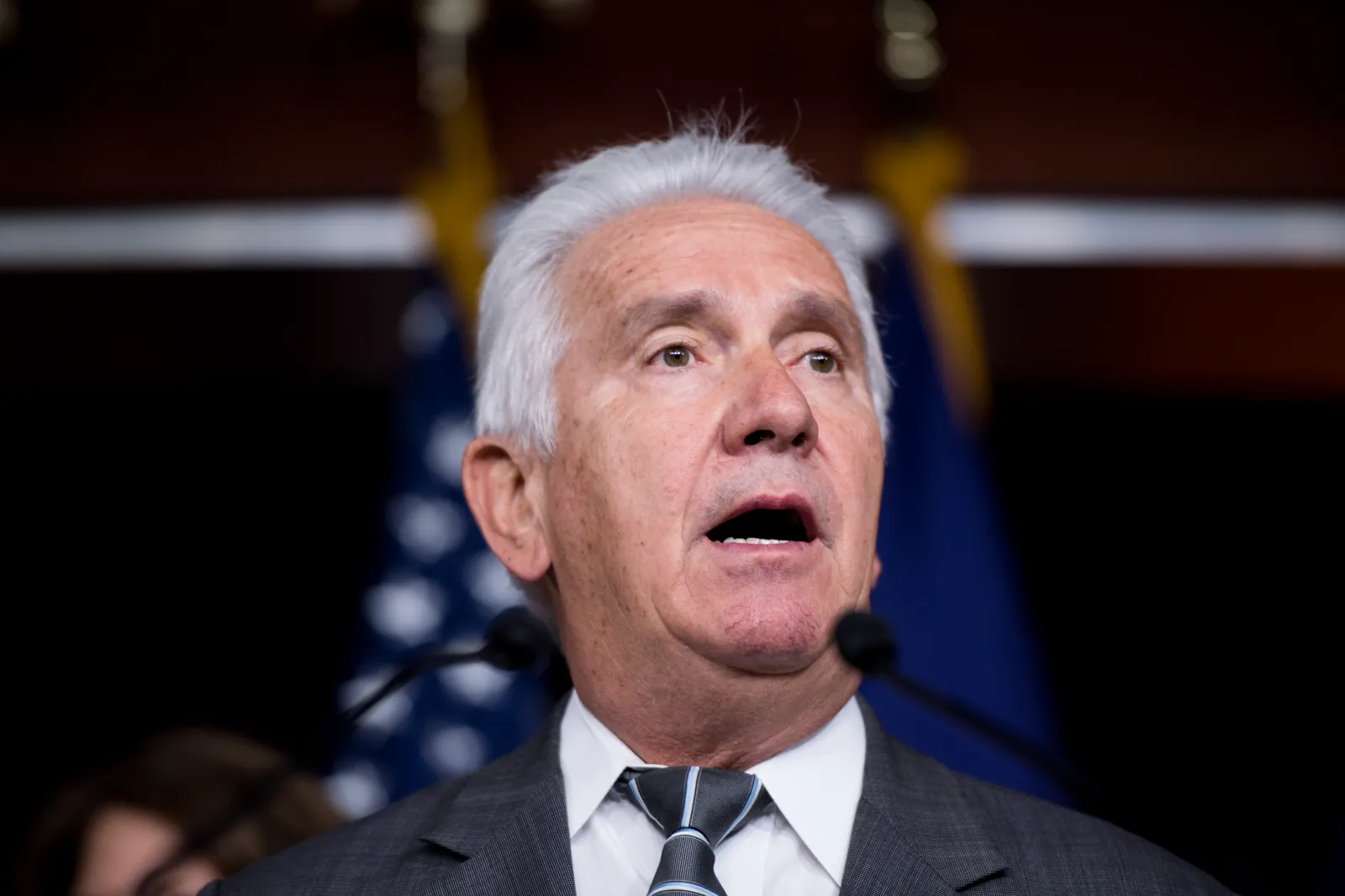
Democrats Who Voted For the Bill
- Sanford Bishop (GA)
- Jim Costa (CA)
- Don Davis (NC)
- Henry Cuellar (TX)
- Sharice Davids (KS)
- Vicente Gonzalez (TX)
- Adam Gray (CA)
- Josh Harder (CA)
- Marcy Kaptur (OH)
- Kristen McDonald Rivet (MI)
- Marie Gluesenkamp Perez (WA)
- Josh Riley (NY)
- Kim Schrier (WA)
- Darren Soto (FL)
- Gabe Vasquez (NM)
...
What To Know
Farm groups, including the American Farm Bureau Federation, welcomed the passage of the bill.
"After three years of extensions and eight years since a farm bill was passed, we’re grateful the House found a bipartisan path forward," the bureau's president, Zippy Duvall, said in a statement. "Important updates to research and conservation, as well as increased loan limits and clarity on interstate commerce, will help farmers survive today’s challenges and give them the tools to thrive in the future."
But Democrats argued the bill does little to support farmers.
"The so-called farm bill that passed the House today does nothing to resolve high input costs, lost markets, surging food prices or provide a single penny in economic assistance to struggling family farmers," Angie Craig, the top Democrat on the House Agriculture Committee, said in a statement.
Representative Henry Cuellar of Texas, who was among the Democrats who supported the bill, said he did so because "farmers and ranchers needed certainty after all this time and I'll always back the people who put food on our tables and drive our economies."
Cuellar wrote on X that House Democrats "fought to strengthen this bill and protect our producers, our workers and our communities. Our work doesn't stop here. I'll keep fighting to improve this bill as it moves through the Senate and make sure it delivers for the people we represent."
Democrats had opposed the bill largely because it preserved deep cuts to food stamps passed in President Donald Trump's One Big Beautiful Bill last year.
But it was Republican infighting that threatened to derail the bill's passage this week, with disputes over pesticides, ethanol and other issues.
Lawmakers aligned with the Make America Healthy Again movement scored victories with the bill, including the removal of language that had essentially barred states from requiring labelling that warns consumers about the dangers of pesticides. However, they failed in efforts to bar SNAP recipients from purchasing soda with their benefits.
Representative Anna Paulina Luna, a Florida Republican, had led the charge to allow states to require labels warning consumers about the dangers of pesticides.
“I do not support giving blanket immunity to corporations at the expense of American families,” she said in a statement celebrating the passage of her amendment.
“Pesticides are linked to a 30% increase in childhood cancer and over 170 studies corroborate the evidence. This amendment ensures we stand on the side of the American people and the health of our nation, not corporate interests.”
A fight over a provision to allow year-round sales of E15—a cheaper, higher ethanol blend of gasoline—had also threatened the bill's passage. Lawmakers agreed to remove the provision from the bill with the House expected to vote on a standalone E15 bill later in May.
What Happens Next
The bill will need to pass the Senate before it can advance to Trump's desk. And it remains to be seen whether the Senate will adopt the House measure or produce its own version of the bill, which will have to be reconciled with the House version.
View 0 Comments
Submit Correction
View Editorial & AI Guidelines