
...

By Jenni Fink
Senior Editor
0
Share
Newsweek is a Trust Project member
See more of our trusted coverage when you search.Prefer Newsweek on Googleto see more of our trusted coverage when you search.
The Trump administration told a judge on Wednesday that borrowing money from the Child Nutrition Programs to fully fund SNAP benefits in November would leave funding for school lunches for millions of kids at risk.
Why it Matters
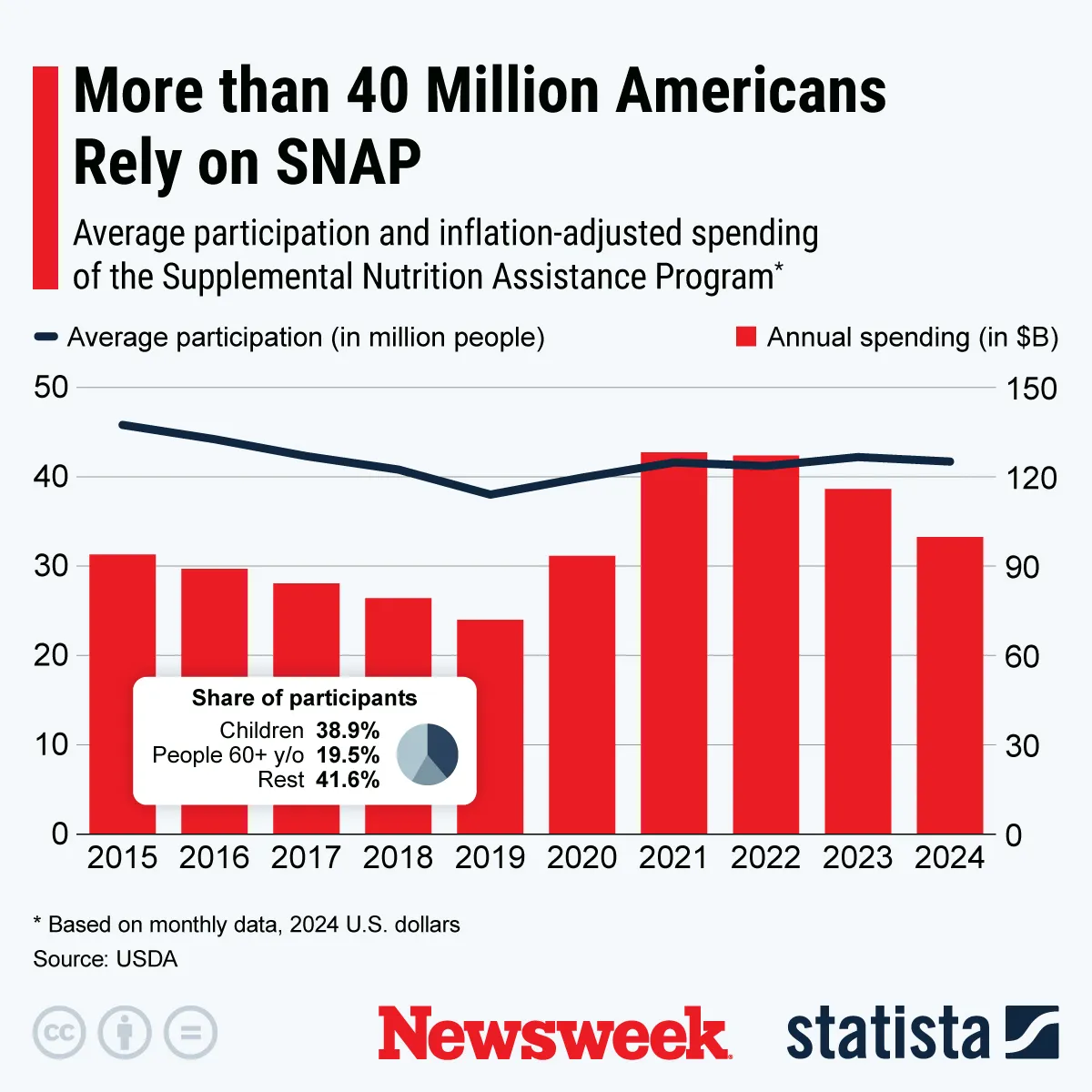
The ongoing federal government shutdown has led to a contentious debate in Washington over the prioritization of critical nutrition assistance programs. As the Trump administration grapples with maintaining funding for the Supplemental Nutrition Assistance Program (SNAP), concerns have surfaced over diverting funds from essential child nutrition programs, such as the National School Lunch Program. With SNAP serving approximately 42 million Americans and school meals supporting millions of children daily, any shift in funding poses immediate risks to food security among the nation's most vulnerable populations, particularly children who rely on school-provided meals.
Read More on Politics
What To Know
President Donald Trump’s administration announced that only partial SNAP payments could be made in November due to insufficient appropriations during the federal shutdown, setting aside $4.65 billion in emergency funds—enough to cover about half of the usual benefits. SNAP, overseen by the U.S. Department of Agriculture (USDA), serves about one in eight Americans and typically costs more than $8 billion each month, according to the Associated Press.
Two federal judges ordered the government to use available funds to maintain the program, prompting the USDA to act without drawing on additional emergency reserves. USDA Deputy Under Secretary Patrick Penn stated in court documents that the department would not tap other contingency funds because such action could "create gaps in child nutrition programs" for the fiscal year. An estimated 29 million children rely on these programs for low- or no-cost school lunches.
...
Penn stated in the court filing that the USDA considered using funds intended for the Child Nutrition Programs to support SNAP. Funding full SNAP benefits in November would require at least $4 billion from the Child Nutrition Programs. But, ultimately, the agency decided it was too risky.
"Amid this no-win quandary and upon further consideration following the Courts’ orders, USDA has determined that creating a shortfall in Child Nutrition Program funds to fund one month of SNAP benefits is an unacceptable risk, even considering the procedural difficulties with delivering a partial November SNAP payment, because shifting $4 billion dollars to America’s
SNAP population merely shifts the problem to millions of America’s low income children that receive their meals at school," Penn wrote in the court filing.
Penn noted that Congress could appropriate more funds for the Child Nutrition Programs, but it's not guaranteed. Under current law, funding for the Child Nutrition Programs also can't be allocated until Fiscal Year 2027, meaning the $4 billion that would be removed from the program would be a "permanent loss" for the rest of the current fiscal year, Penn told the judge.
...
What People Are Saying
Patrick Penn, Deputy Under Secretary at the USDA, stated in a court filing: "Using billions of dollars from Child Nutrition for SNAP would leave an unprecedented gap in Child Nutrition funding that Congress has never had to fill with annual
appropriations, and USDA cannot predict what Congress will do under these circumstances."
Bobby Kogan, budget analyst at the Center for American Progress, told NPR: "If you have an entitlement to something, and you have money that can fill that use, then you must fill that use."
What Happens Next
While partial SNAP benefits are being funded for November, it's unclear when they'll be sent out. Penn wrote in his court filing that states must find a way to calculate the reduced benefits and noted that it may take weeks or months to do so, given the current systems in place.
View 0 Comments
Submit Correction
View Editorial & AI Guidelines