10
Loading video...

By Giulia Carbonaro
Senior Reporter
0
Share
Newsweek is a Trust Project member
See more of our trusted coverage when you search.Prefer Newsweek on Googleto see more of our trusted coverage when you search.
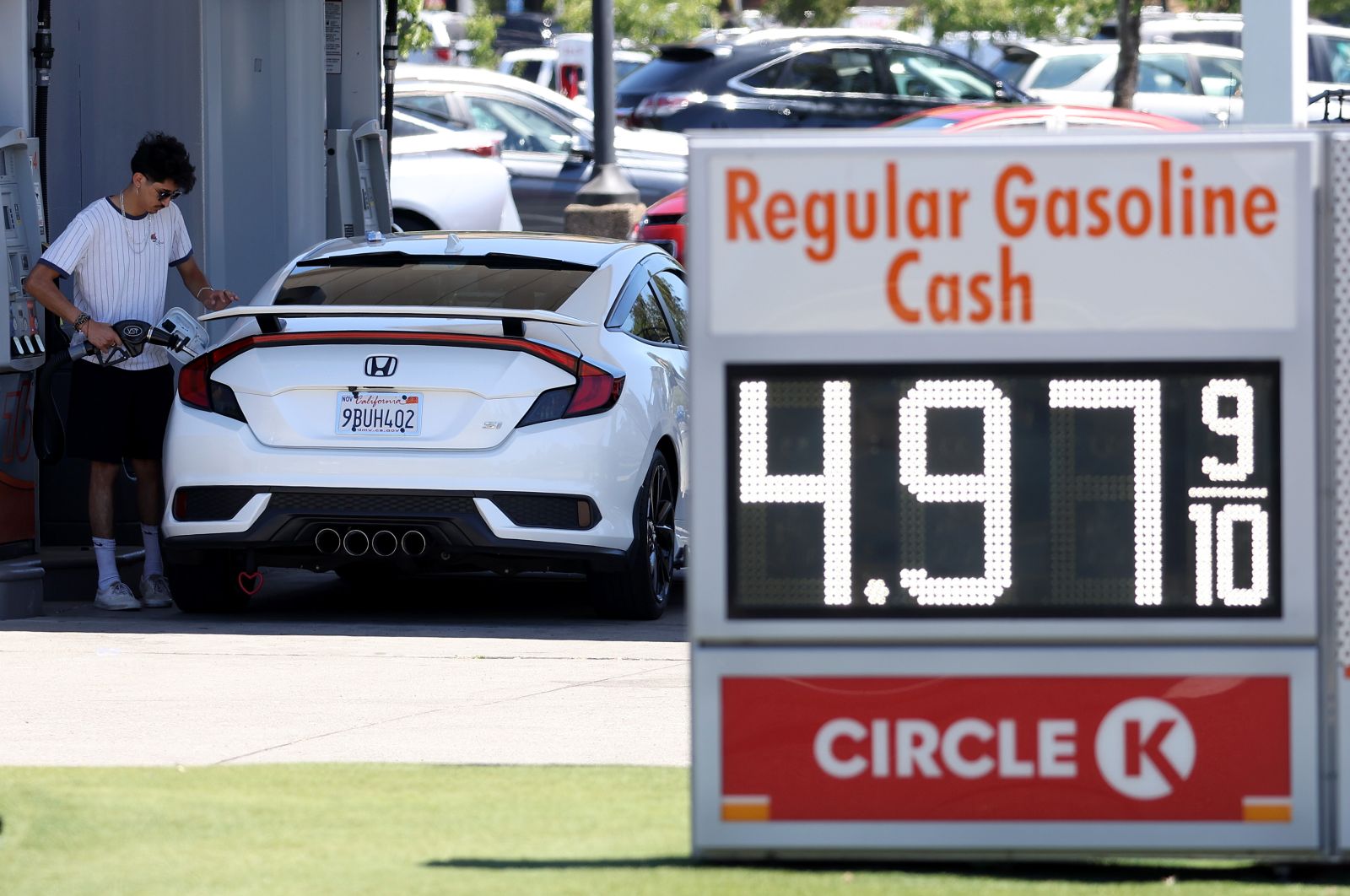
American drivers are once again facing high prices at gas pumps, as the heatwave combines with a reduced oil supply to drive up the cost of fuel. The national average for a gallon of gas crept closer to $4, at $3.821, as of Thursday according to the AAA. Six states are showing the fastest rises, with California having passed the $5-mark for a gallon.
Wyoming, Oklahoma, Rhode Island, Maine, Nevada and California are the states where gas prices are increasing faster than anywhere else in the country, according to fuel-pricing website GasBuddy.
However, the national average is nowhere near the heights reached last year when the cost of a gallon of fuel exceeded $5—reportedly more than double the average price since President Joe Biden's first day in office. In July last year, the Biden administration announced that prices were finally coming down.
Read More
Exclusive: Adam Schiff Wants to Kill the Filibuster to Make America Greener6 min read

Americans Should Not Have to Rent the American Dream | Opinion5 min read

Biden’s Economy Is Booming. Here’s Why You’re Not Feeling It7 min read

...
Now gas prices are going back up again, reaching an eight-month high last week as temperatures keep soaring across the country. Last week, the national average for a gallon of gas jumped by 13 cents to $3.71, according to the AAA. In the following days, it has continued rising.
According to Patrick DeHaan, head of petroleum analysis at GasBuddy, the extreme heat this summer is bringing prices up, with refineries being unable to convert oil into products like gasoline, as he told USA Today. The higher the temperature, the less safe a refinery becomes—leading many refiners to scale down production during a heatwave.
"If refiners in your region have lower or falling utilization rates, you're more likely to see gas prices rise," said DeHaan.
Newsweek contacted DeHaan for comment by email on Thursday.
High oil prices are also contributing to driving up the cost of gas, as they rise in connection to the OPEC decision to cut production. In the U.S., gas prices are closely linked to crude oil prices and production.
According to a Reuters survey published recently, the average daily production level across OPEC members in July was at its lowest since September 2021.
Gas prices are rising for many drivers across the country, but changes vary due to differences in maintenance operations and levels of supplies.
According to the latest daily data from GasBuddy, has prices have been growing by the gallon in Wyoming (+0.006); Oklahoma (+0.005); Rhode Island (+0.004); Maine, Nevada and California (+0.003); Washington, Idaho, Iowa, Louisiana and Texas (+0.002); and Alabama, Alaska, Arizona, Arkansas, Georgia, Illinois, Indiana, Kansas, Kentucky, Massachusetts, Michigan, Minnesota, Missouri, Montana, North Carolina and Utah (+0.001).
Only in Nebraska (-0.002); Colorado, Connecticut, Delaware, Mississippi, New Hampshire, North Dakota and South Dakota, (-0.001); and Hawaii (-0.016) have gas prices recently dropped.
On Thursday, the highest gas prices could be found in California ($5.037); Washington ($4.985); Hawaii ($4.726); Oregon ($4.639); Alaska ($4.394); Nevada ($4.326); Utah ($4.096); and Illinois ($4.043); according to the AAA.
View 0 Comments
Submit Correction
View Editorial & AI Guidelines