
Getty Images

By Anna Rahmanan
0
Share
Newsweek is a Trust Project member
See more of our trusted coverage when you search.Prefer Newsweek on Googleto see more of our trusted coverage when you search.
I was scrolling through the Gap app, as I do roughly twice a day, ostensibly looking for clothes for my children and actually checking whether the brand had dropped another matching set I could justify as “practical,” when I saw it—a bag that looked like someone had taken the Gap hoodie of my adolescence, removed the sleeves and given it somewhere to put my laptop.
The Hoodie Tote costs $79.95, comes in Gap’s familiar sweatshirt fleece and has the arched logo embroidered above a kangaroo pocket. It is, essentially, a hoodie you carry.
I immediately needed one.
Read More on Life
Blue or gray, my usual Gap colors? The pink, which I could theoretically share with my daughters and almost certainly would not? And what about the little NYC pouch?
This is how nostalgia gets you. First, you are a grown woman buying a handbag. Then, for a second (or a shopping trip), you are 15.
Except something more interesting is happening here.
Plenty of the people currently coveting Gap, Levi’s, Ralph Lauren, Coach and the old Ivy League uniforms of J. Press have little or no memory of these brands in the eras now being resurrected. YouGov found last year that 65 percent of Gen Z considers the 1990s fashionable, even though the youngest members of that generation never experienced the decade.
Young Americans, in other words, are becoming nostalgic for somebody else’s past.
The New Luxury Is Having Been Here Before
Fashion has spent years becoming astonishingly good at producing the new. The internet can identify a microtrend on Monday, turn it into a shopping category by Wednesday and make it feel exhausted by Sunday.
History moves more slowly, though.
A 2026 study of Gen Z and secondhand clothing describes “symbolic nostalgia:” longing for a time a person did not actually experience, assembled instead from images, media, stories. Another recent study of Gen Z vintage shoppers found that their attraction to old clothes goes beyond sustainability and price and is bound up with identity and self-expression.
This helps explain why the old American brands suddenly feel so new.
Related Story
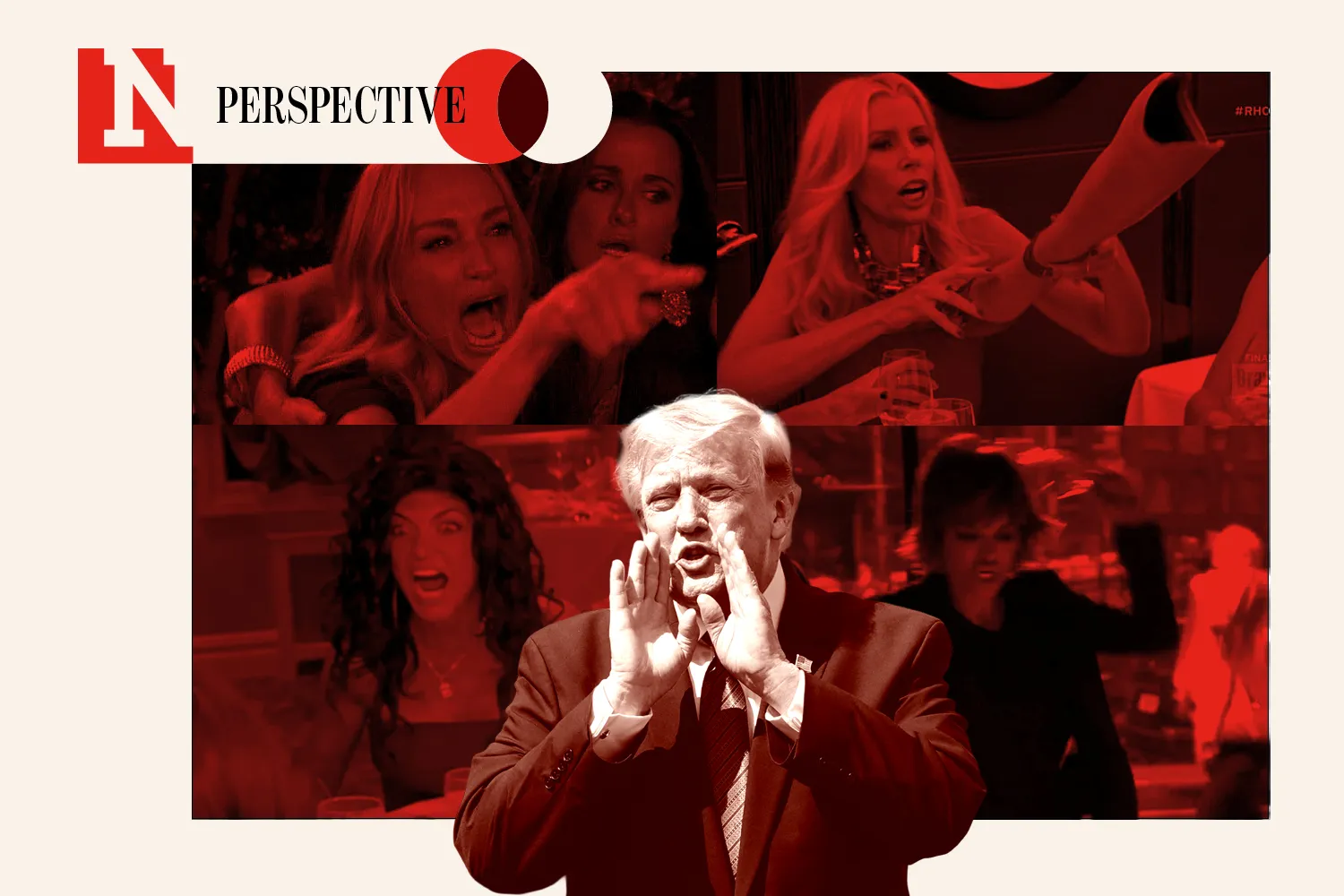
The ‘Real Housewives’ Theory of Trump’s GOP
Gap, founded in 1969, is having one of its strongest runs in years. In its most recent quarter, Gap brand sales rose 9 percent and comparable sales climbed 10 percent, with the company specifically pointing to denim and fleece—the categories on which much of Gap’s cultural memory was built.
The Hoodie Tote is clever because it turns that memory into an object: anyone can manufacture a gray sweatshirt bag but only Gap can make one that makes you think of the Gap sweatshirt. Don’t you feel like you need it now also?
Everyone Wants an Heirloom, Even If It Is New
Look around New York Fashion Week for a prime example of the pattern at play.
Ralph Lauren, 86, opened the week with distressed denim, brocade, tailoring and the accumulated mythology of nearly six decades of Ralph Lauren America. Gen Z has rediscovered the brand’s polos, rugby shirts and baseball caps, while Ralph Lauren recently reported record annual revenue of $8.1 billion. The old is new again.
J. Press, founded at Yale in 1902, is attempting an even stranger trick: turning extreme oldness into novelty. The company has brought back womenswear after more than 50 years and is leaning into Oxford shirts, tweed, Shetland sweaters and the Ivy League history associated with figures including John F. Kennedy.
Moving on to Coach, a brand that has discovered much the same thing in leather. The company has reconnected with Gen Z partly by reviving recognizable bags and letting them look lived-in rather than clinically new. And then there’s Levi’s, who has been raiding its own archives quite literally: its recent Beyoncé campaign re-created classic Levi’s advertisements, including a 1988 spot.
Nostalgia Feels Better When the Future Is Moving Fast
Clearly, nostalgia sells. But why?
Researchers have long found that nostalgia can increase feelings of social connectedness and shape consumer choices. Earlier research has also linked insecurity with greater preference for nostalgic products.
We wouldn’t go so far as to say that a 22-year-old is buying a Polo ruby because she’s anxious about the world. Sometimes, a sweater is just a very good sweater.
But the success of these brands and the research above suggest that heritage now offers something especially valuable in an endless feed of newness: proof that something existed before you found it and proof that something is important even if it’s not plastered everywhere on your version of virtual reality.
A TikTok-born label can manufacture a perfect barn jacket by distressing the canvas, enlarging the collar and photographing it on a model standing next to an old Volvo. But it cannot manufacture the real photo of someone’s dad wearing one in 1987. Perhaps that is why the Gap bag feels so irresistible to me: I am not borrowing someone else’s nostalgia, I actually remember this stuff.
My daughters don't, because they haven't lived through it of course. But, one day, when they are rummaging through my closet and rolling their eyes at the clothes their poor old mother once thought were incredibly chic, maybe they will find the tote and want it anyway. By then, it will no longer be Gap selling them a version of the past. It will be mine.
View 0 Comments
Submit Correction
View Editorial & AI Guidelines