...

By Sam Stevenson
Associate News Editor
0
Share
Newsweek is a Trust Project member
See more of our trusted coverage when you search.Prefer Newsweek on Googleto see more of our trusted coverage when you search.
Republicans’ path to holding the House in 2026 is coming into sharper focus after a Supreme Court ruling that could reshape congressional maps nationwide—just as prediction markets overwhelmingly favor Democrats to take control.
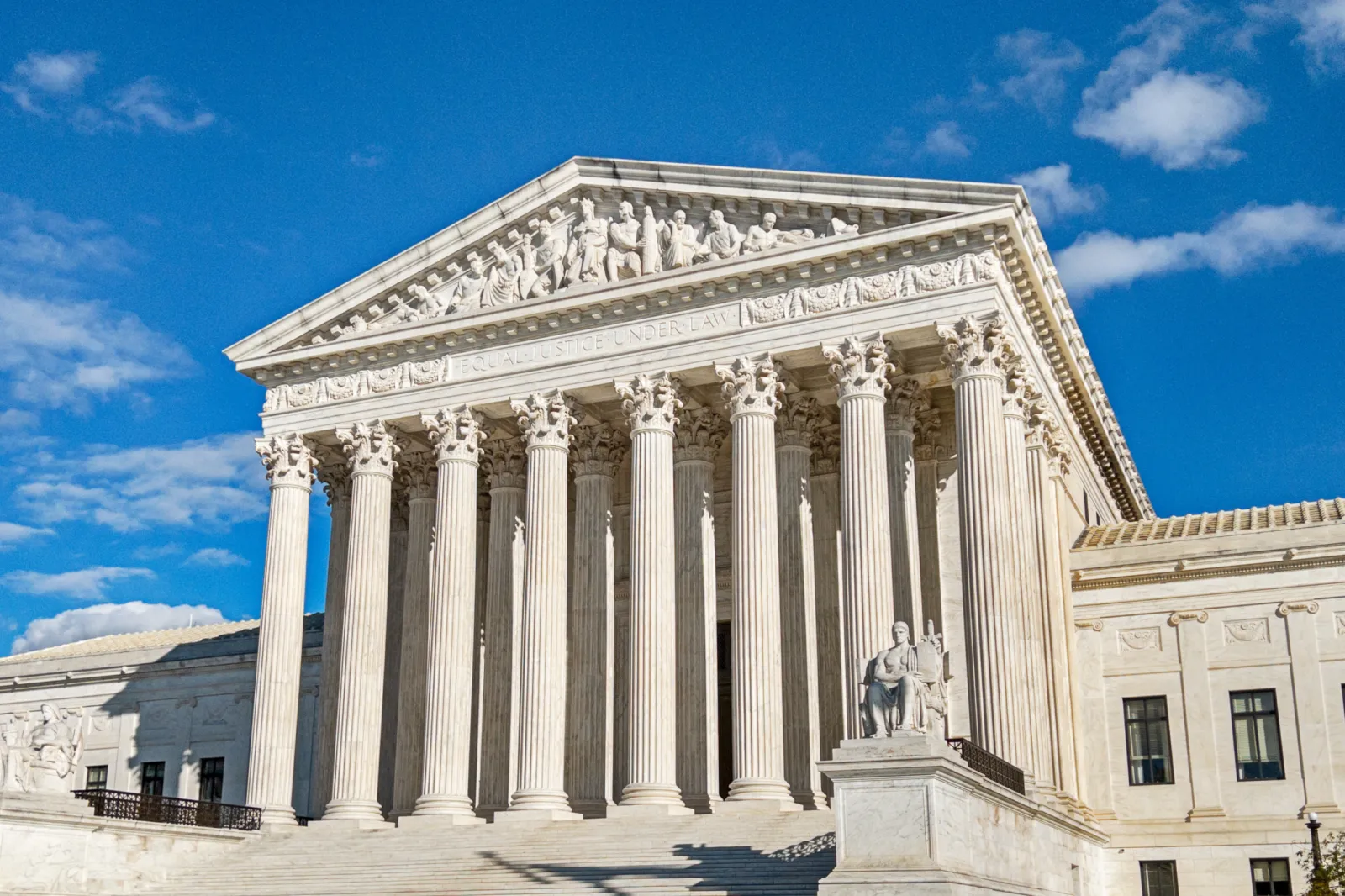
The Supreme Court ruled Wednesday that Louisiana’s second majority-Black congressional district violated the Constitution, tightening limits on how states can use race when drawing electoral maps under the Voting Rights Act.
The decision lands as redistricting battles are already taking shape ahead of the 2026 midterms, potentially shifting the boundaries of closely contested House seats in a chamber where control could again come down to a handful of races.
Read More on Politics
But political prediction markets suggest the ruling has not meaningfully shifted expectations about control of the House in 2026.
On Kalshi, a regulated U.S. prediction market, traders currently price Democrats as having roughly an 82 percent chance of winning House control, compared with approximately 18 percent for Republicans.
On Polymarket, a crypto‑based platform, Democratic odds are even higher, at around 85 percent.
Will the Democratic Party control the House after the 2026 Midterm elections?
Yes 85% · No 16%
View full market & trade on Polymarket
Will the Republican Party control the House after the 2026 Midterm elections?
Yes 16% · No 85%
View full market & trade on Polymarket
Prediction markets allow participants to buy and sell contracts tied to political outcomes, aggregating real‑money wagers into probability estimates.
Supporters argue the markets synthesize polling, historical trends and new information more quickly than traditional forecasts, while critics caution they can overreact to headlines and reflect speculative sentiment rather than underlying fundamentals.
How the Ruling Affects Courts
The ruling in Louisiana vs. Callais limits how far courts can go in requiring congressional districts designed to give minority voters a majority.
That matters because even small changes to district lines can decide control of the House in closely fought elections.
Republican-led legislatures could now have more room to redraw maps in Democratic-leaning areas.
What the Ruling Changes—and What It Doesn’t
The Supreme Court’s 6-3 decision struck down Louisiana’s second majority-Black congressional district, concluding that race was the dominant factor in drawing the map and that the state went beyond constitutional limits.
Writing for the majority, Justice Samuel Alito argued that Section 2 of the Voting Rights Act was meant “to enforce the Constitution—not collide with it.”
President Donald Trump hailed the ruling as a victory for “Equal Protection under the Law,” thanking Alito for an opinion he said returned the Voting Rights Act to its “original intent.”
But Democrats framed it differently, with former President Barack Obama warning the decision “effectively guts a key pillar” of the Act, allowing legislatures to dilute minority voting power, so long as they cite partisanship rather than race.
From an electoral perspective, the stakes extend well beyond Louisiana. Redistricting affects more than 300 House seats nationwide, and even small boundary changes can matter in swing districts.
Democrats argue the ruling opens the door for Republican-led states to dismantle districts that have reliably favored Democratic candidates, while Republicans counter that it reins in what they see as unconstitutional racial sorting.
Why Redistricting Effects May Take Time To Emerge
Voting rights advocates note that redistricting operates on a slower timeline, warning that the full electoral impact of the Court’s decision may not surface until new maps are drawn and tested at the ballot box.
Somos Votantes, a national Hispanic voter advocacy group, said the ruling sharply weakens protections Latino voters have relied on for decades.
Founder and President Melissa Morales said Section 2 of the Voting Rights Act “not an abstract policy,” but a safeguard that has stopped politicians from drawing maps “designed to dilute and silence our voices,” arguing the court has now rendered that protection “all but meaningless.”
Morales pointed to what she described as a broader pattern, noting the court recently intervened to protect a Republican congressional map in Staten Island that a New York state court had found discriminated against Black and Latino voters.
“It’s difficult to reconcile these decisions without acknowledging a disparity in whose rights are being prioritized,” she said, warning that the maps drawn next could shape Latino representation in Congress for a generation.
Democratic strategists echoed that concern. Democratic Legislative Campaign Committee president Heather Williams called the decision “a devastating day for democracy,” arguing that weakening Section 2 gives Republicans more latitude to “rig maps to protect their own power.”
Because state legislatures draw more than 300 congressional districts, she said, control of those chambers will be central to the fight for the House.
Calling the moment “all hands on deck,” Williams said Democrats must expand state legislative majorities so Democratic governors can push back against GOP gerrymanders, adding, “We don’t have a moment to lose.”
...
What Happens Next
For now, traders remain unconvinced that the legal shift outweighs broader political fundamentals. Markets continue to favor Democrats, despite Republicans holding a narrow House majority entering the cycle, reflecting persistent Democratic leads in generic ballot polling, Trump’s slumping approval ratings and the historical tendency for the president’s party to lose seats in midterms.
View 0 Comments
Submit Correction
View Editorial & AI Guidelines