
10
Loading video...

By Anna Skinner
Associate News Editor
0
Share
Newsweek is a Trust Project member
See more of our trusted coverage when you search.Prefer Newsweek on Googleto see more of our trusted coverage when you search.
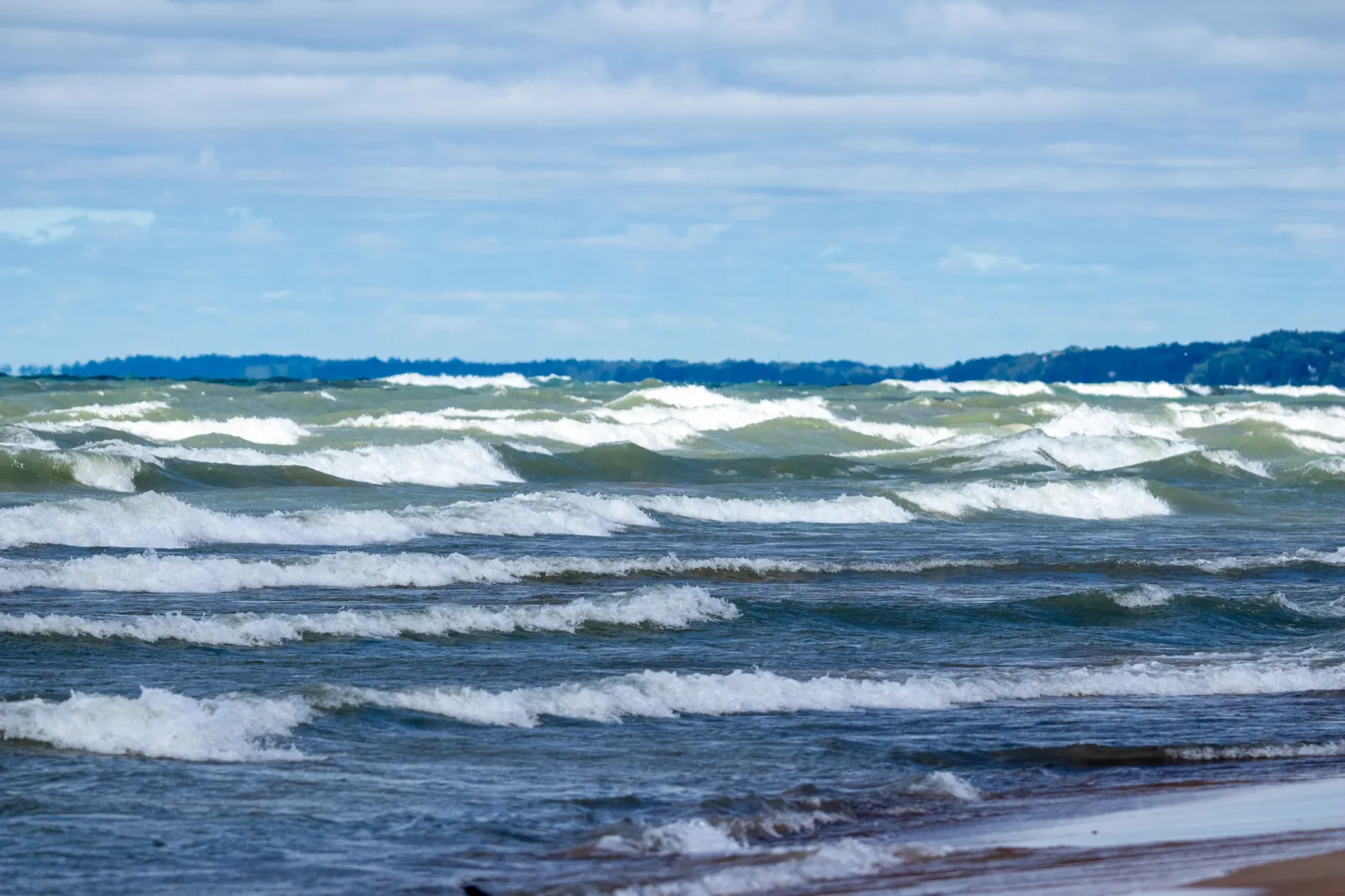
Fresh beach hazard statements have been issued along parts of Lake Michigan, with forecasters warning that high waves, dangerous currents and rip currents could turn life-threatening for swimmers heading to the shoreline this weekend.
The latest alerts come just days after widespread warnings stretched across all five Great Lakes, prompting officials to tell nearly 1 million people to stay out of the water as dangerous conditions developed from Lake Superior to Lake Ontario. According to the National Weather Service's (NWS) Great Lakes Beach Hazards program, beach hazard statements are issued when a high swim risk is forecast due to waves, rip currents or other dangerous currents.
The new advisories are focused on portions of Wisconsin and Michigan, where forecasters say strong wave action and currents will create hazardous swimming conditions through Friday and, in some locations, into Saturday.
Read More on Weather
Officials have repeatedly emphasized that Great Lakes currents can be just as dangerous as those found in the ocean. The Great Lakes Surf Rescue Project (GLSRP), a nonprofit water safety organization that tracks regional drowning incidents, says dangerous currents, including rip currents and structural currents near piers and breakwalls, contribute to dozens of deaths every year. The organization reports there have been approximately 1,480 Great Lakes drownings since 2010. There have been 65 Great Lakes drownings to date this year, with 35 of those occurring in Lake Michigan.
The warnings also arrive after the traditional summer lifeguard season has ended at many beaches.
"This time of year there are no lifeguards on the beaches across the Great Lakes," GLSRP executive director Dave Benjamin told Newsweek. "Beaches that do have lifeguards in the summertime, are usually lifeguarding Friday of Memorial Day weekend through Monday of Labor Day weekend. Again, not all beaches will have lifeguards."
That means beachgoers may face dangerous water conditions without trained rescuers nearby, making it even more important to heed official warnings.
...
Full List of Impacted Beaches as Warnings Issued
The NWS identified several beaches expected to be particularly vulnerable to dangerous currents, high waves and hazardous surf conditions.
Wisconsin Beach Warnings
Kewaunee County
- Crescent Beach
- City of Kewaunee Beach
Manitowoc County
- Point Beach
- Neshotah Beach
- Red Arrow Beach
Door County
- Rock Island State Beach
- Baileys Harbor beaches
- Whitefish Dunes Beach
The National Weather Service said high waves and dangerous currents are expected from Friday afternoon through Saturday afternoon, and officials advised residents and visitors to stay out of the water.
Michigan
Southern Schoolcraft County
- Lakeview Park
- Seul Choix Point
The Marquette NWS office warned that high wave action and strong rip currents would create life-threatening swimming conditions Friday afternoon and evening. Forecasters noted that similar wave setups have previously been associated with rescues and fatalities at those locations.
"Waves in rapid succession can tire swimmers quickly," the beach hazards statement said.
Across each affected area, the agency's guidance was straightforward: remain out of the water until conditions improve.
The latest warnings follow a particularly active period for Great Lakes beach hazards. Earlier this week, beach hazard statements and swim advisories were issued for shorelines on all five Great Lakes as a large weather system generated dangerous waves and currents across the region. Officials warned that conditions capable of exhausting or overwhelming swimmers can develop rapidly even when temperatures remain warm, and skies appear relatively calm.
Beach safety experts say many visitors underestimate the Great Lakes because they are inland. Yet strong winds blowing across long stretches of open water can produce waves and currents powerful enough to rival those encountered along ocean coastlines.
Related Story

Republican Lawmaker Wants to Rename Lake Erie
How to Survive a Rip Current
Safety officials stress that the most important thing a swimmer can do when caught in a rip current is avoid panic.
Rip currents are powerful, narrow channels of water that move away from the shoreline. They develop when waves push water toward the beach, and the accumulated water flows back out through a concentrated path. While rip currents generally do not pull people underwater, they can quickly carry even strong swimmers away from shore, leading to exhaustion, panic and drowning.
Rather than swimming directly against the current toward shore, experts recommend conserving energy. The GLSRP teaches a simple strategy summarized as "Flip, Float and Follow." That means rolling onto your back, floating to conserve energy and then following the current to determine the safest escape path.
If you can swim, experts advise moving parallel to the shoreline rather than directly toward the beach. Once free of the current, swimmers can gradually angle back toward shore. If escape is not possible, continue floating, conserve energy and signal for help.
The NWS and water safety experts emphasize that the safest option when beach hazard statements are active is simply to stay out of the water altogether. Dangerous currents can form near piers, breakwalls, river mouths and open beaches, and can quickly overpower even experienced swimmers.
With lifeguards absent from many Great Lakes beaches after Labor Day and hazardous wave conditions forecast into the weekend, officials are urging visitors to check local forecasts before heading to the shore and to treat any beach hazard statement as a serious warning rather than a suggestion.
Contact Newsweek editors on this story: Jason Lemon and Sam Wilson.
View 0 Comments
Submit Correction
View Editorial & AI Guidelines