...

By José Ulisses de Pina Correia e Silva
0
Share
Newsweek is a Trust Project member
See more of our trusted coverage when you search.Prefer Newsweek on Googleto see more of our trusted coverage when you search.
Small island states are uniquely placed to navigate today’s changing world. Their size and focused economies, rather than making them vulnerable, have made many capable of addressing global economic shocks and thrive as the shift occurs from the "globalization generation" to a new arena of great power play.
Look at the evidence: Remoteness and small populations increased resistance to COVID, enabling economic bounceback faster than that of most major economies. Limited national resources have focused economic decision-making on developing "anchor industries" such as tourism, while growing adjacent business sectors such as global transport hubs. Limitations on government capacity that comes with small populations have concentrated efforts on the economically practical and warded against overexertion of efforts to build economic hopes around regional political and trade blocs that we see in other parts of the world.
Not all small island states have the same credentials, but Cape Verde—my 10-island Atlantic archipelago nation, equidistant between the Americas and Africa and with a 500,000 population—is worthy place to view how countries can manage today’s geopolitical tectonic shifts. Alongside other similar tourism and fisheries-focused small island states such as the Maldives, our recent economic record proves that our resourcefulness in surfing global geopolitical currents is better than most.
Read More on Opinion
...
COVID was overcome quicker in Cape Verde than in Europe or the United States. In 2020, the pandemic year, our tourism numbers plunged by 75 percent. But by 2022–2023 arrivals returned to and then exceeded pre-pandemic levels, driving 17 percent annual GDP growth in 2023. Relative isolation and widely recognized health care capacity also helped keep confirmed cases at 11 percent of the population and fatalities at 0.07 percent—lower than the United States’ 30 percent and 0.3 percent, respectively.
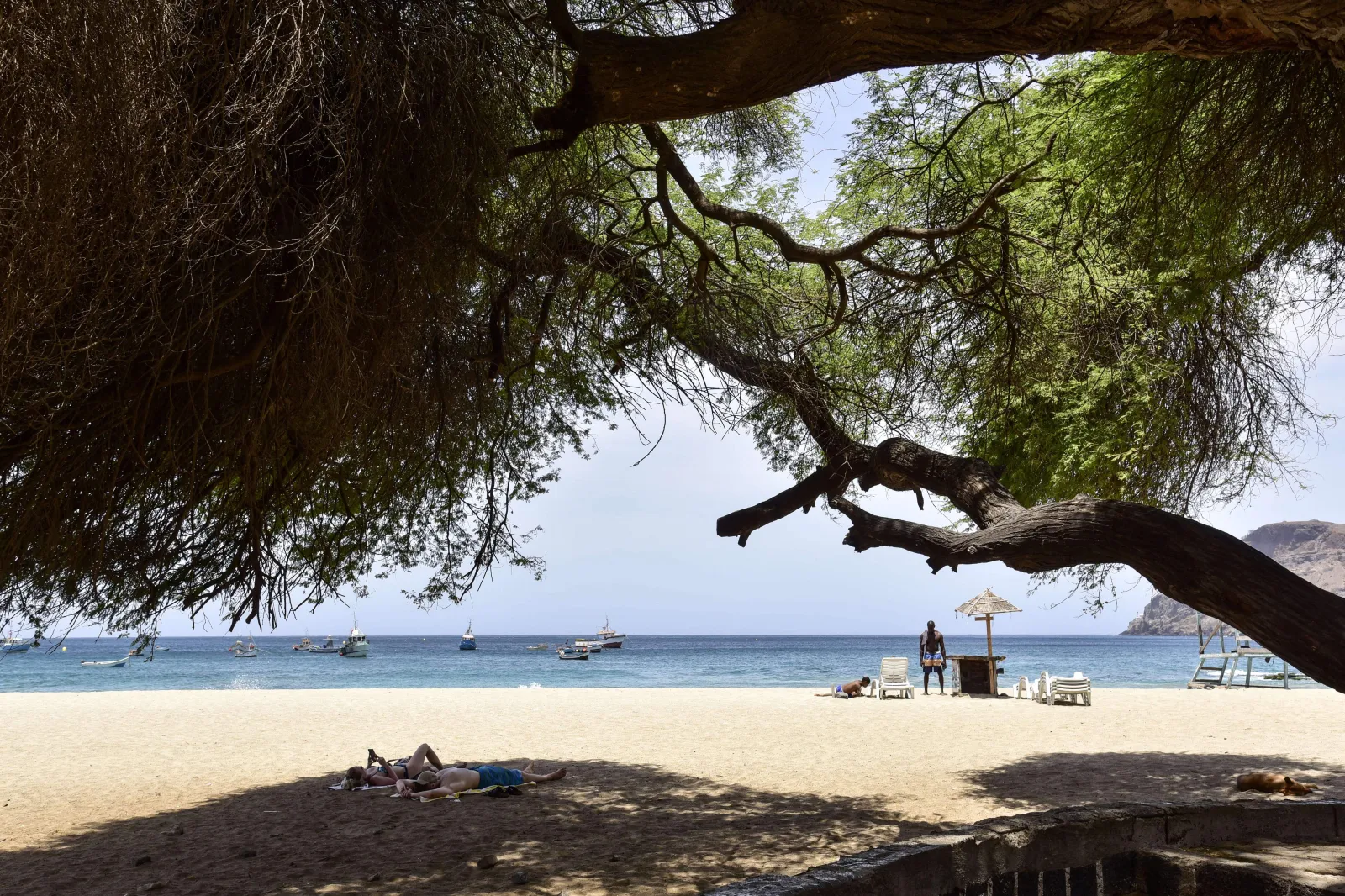
Partial separation of the centers of tourism from islands where the majority of Cape Verdeans live has enabled us to maintain the uniqueness of our culture and nationhood while benefiting from the investment international tourism brings. Even in low season, not less than 10 percent of people in our country are from overseas. Yet unlike in the Western world, there is no public discourse here over threats to our cultural traditions.
Our small size has not hindered our tax raising but has focused our public spending on value for money. Our public services have benefited from a tax base bolstered by tourism numbers and international travel and hospitality operators which could not be mustered from our small population alone. It has provided us with transport, health, and education infrastructure a nation of half a million could not afford alone.
Small size also means economic expansion is focused on the practical. There is no room for over promising or funding of "white elephant" projects—because there is no luxury for allowing for new initiatives that might fail. Instead, all effort is focused on expanding into adjacent industries—in our case, becoming an international air transit hub.
The foundation of this initiative is our 1.5 million-strong diaspora, larger in number than our local native population and spread as far as the U.S. and Brazil to Portugal and the Netherlands. Added to this are rapid developments since 2020 combining the construction of new resorts, new air connectivity with British, German airlines now joining Italian and Portuguese carriers flying direct, and the doubling of airports investment after their acquisition by global airhub operator Vinci. Combined, we are building Cape Verde into the interconnector between the continents of America, Africa, and Europe.
Similarly, we see our counterparts in the Maldives moving into adjacent sectors, in their case financial services. While numerous small island states cultivate this sector, their cultural and geographical connections to the Gulf makes them, as Cape Verde is for transport, a credible steppingstone for finance as between Arabian and Indian subcontinents.
This is not to say there are no challenges. Small island states can be vulnerable to commodity price spikes, particularly in foodstuffs and fuel, much of which must be imported. All nations are "going green" where they can, but for Cape Verde energy transition to renewables is less about bolstering our environmental credentials when we are among the world’s lowest polluters. Rather, we advance developments in wind, solar, and geothermal energy for baseload for our energy security and to reduce exposure to fossil fuel price fluctuations and reduce electricity prices for our citizens and economy.
Many countries far larger than our own appear stunned by the geopolitical and economic shifts in the world around us. For nations that have been at the heart of the liberal international order that has served them so well and for so long, perhaps it is harder to contemplate that it may be changing. Small island states such as Cape Verde may seem vulnerable to such shifts, but we are already used to steering a path in world that is not of our making. Yet despite these challenges, Cape Verde is ranked in the top 30 globally for governance, according to World Economics in 2026 (29th overall, and 1st in Africa) and, since February, holds an improved Standard & Poor credit rating up from "B" to "B+." This makes us uniquely ready for what lies ahead.
José Ulisses de Pina Correia e Silva is prime minister of Cape Verde.
The views expressed in this article are the writer's own.
View 0 Comments
Submit Correction
View Editorial & AI Guidelines