...

By Robert Alexander
Senior Crime & Court Reporter
0
Share
Newsweek is a Trust Project member
See more of our trusted coverage when you search.Prefer Newsweek on Googleto see more of our trusted coverage when you search.
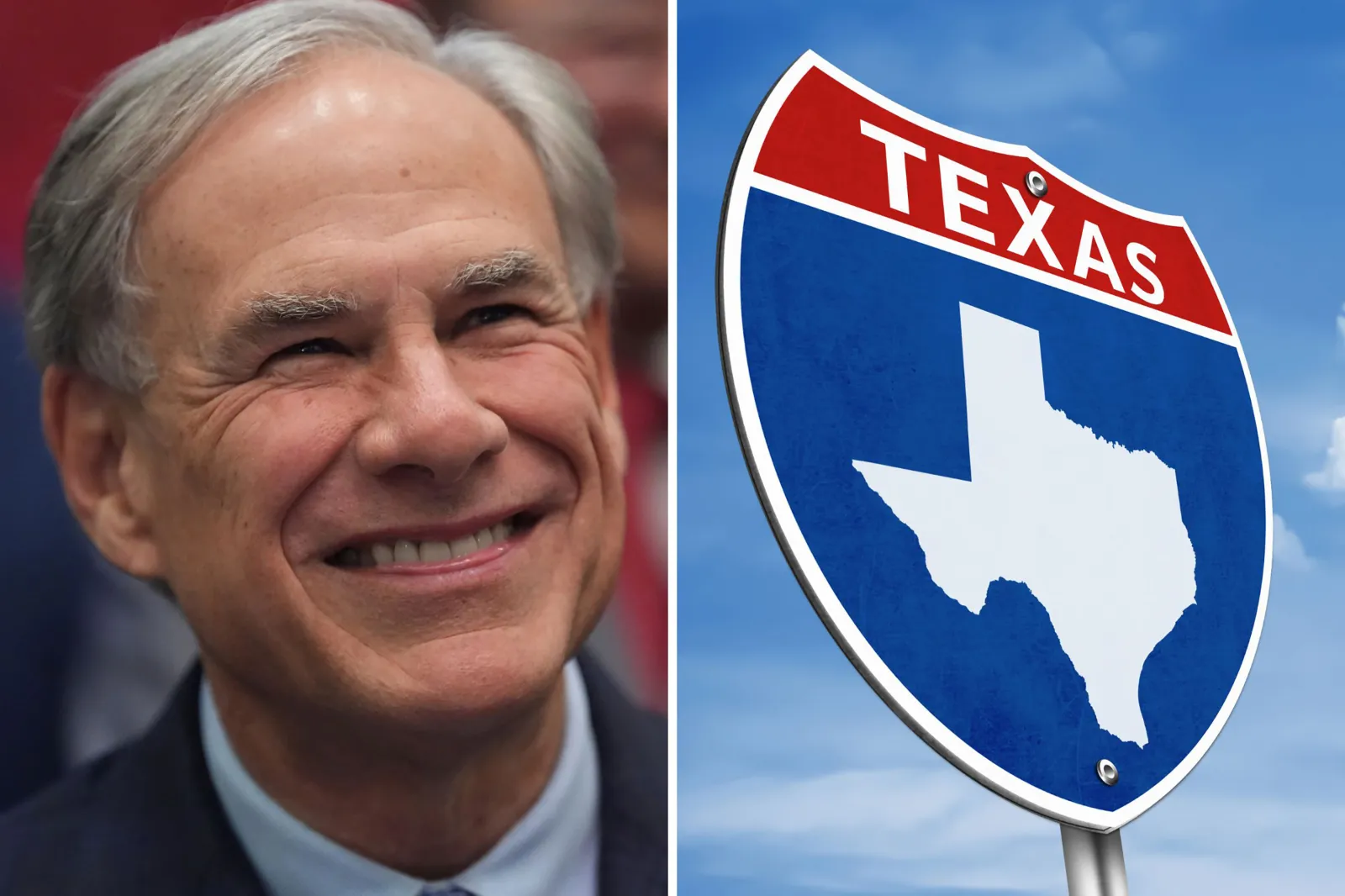
Texas Governor Greg Abbott confronted two significant legal defeats this week, as federal courts blocked a mid-decade congressional redistricting plan and halted the implementation of a state law requiring the posting of the Ten Commandments in public school classrooms.
The decisions, issued within hours of each other, underscore how federal judges have increasingly become the final arbiters in high-stakes political and cultural fights in the nation’s second-largest state.
Read More on News
Abbott issued a statement after the decision on the map, and his office gave Newsweek a statement regarding the Ten Commandments.
Why It Matters
Texas was hit with two major legal setbacks in the span of hours this week, as federal courts blocked both a mid-decade congressional redistricting plan and a law requiring the Ten Commandments in public school classrooms—decisions that carry consequences far beyond the state.
Together, the rulings threaten Republican efforts to reshape the U.S. House map ahead of the 2026 elections and reaffirm constitutional limits on government-backed religious expression, underscoring the increasingly central role of the judiciary in resolving the nation’s most contentious political and cultural battles.
...
What To Know
Legal Setback On Redistricting
In the redistricting case, a three-judge federal panel barred Texas from using its newly enacted 2025 U.S. House map for the 2026 elections.
The court ordered the state to revert to its 2021 map, concluding that the challengers were “likely to prove at trial that Texas racially gerrymandered the 2025 Map.
The decision is a setback for Texas Republicans and for President Donald Trump, who had pressed state lawmakers to pursue a redrawing effort aimed at increasing GOP House seats ahead of the midterms.
U.S. District Judge Jeffrey V. Brown, writing for the court, faulted a July 2025 Justice Department letter that demanded revisions to several “coalition districts”—areas where non-White voters collectively form a majority, but no single racial group exceeds 50 percent.
Brown wrote that the letter “contains so many factual, legal, and typographical errors” that it was “challenging to unpack” its legal basis.
Internal critiques from Texas officials were also highlighted, with the ruling noting that even attorneys at the state Attorney General’s office described the letter as “legally[] unsound,” “baseless,” “erroneous,” “ham-fisted,” and “a mess.”
The court held that while legislatures are not required to draw coalition districts under federal law, they “are not prohibited from doing so,” adding that “nor is it lawful for a legislature to purposefully target such districts for destruction.”
According to the opinion, the Governor explicitly directed lawmakers to “draw a new U.S. House map to resolve DOJ’s concerns,” which in the court’s view amounted to an instruction “to redistrict based on race.”
State officials sharply criticized the ruling.
Abbott said it “undermines the authority the U.S. Constitution assigns to the Texas Legislature by imposing a different map by judicial edict,” while Attorney General Ken Paxton asserted that the map was “entirely legal and passed for partisan purposes to better represent the political affiliations of Texas.”
Democratic lawmakers, who had opposed the redistricting bill in the Legislature, welcomed the outcome.
State Rep. Gene Wu called it “one of the most brazen attempts to steal our democracy that Texas has ever seen,” saying the court’s move was necessary to halt a map that “will dilute non-White voters’ influence.”
Governor Greg Abbott issued the following statement after a federal court in El Paso enjoined the use of Texas’s 2025 congressional redistricting map:
“The Legislature redrew our congressional maps to better reflect Texans' conservative voting preferences – and for no other reason. Any claim that these maps are discriminatory is absurd and unsupported by the testimony offered during ten days of hearings. This ruling is clearly erroneous and undermines the authority the U.S. Constitution assigns to the Texas Legislature by imposing a different map by judicial edict. The State of Texas will swiftly appeal to the United States Supreme Court.”
Ten Commandments Law Also Blocked

...
On the same day, a federal judge in San Antonio issued a preliminary injunction blocking SB 10, a law requiring the posting of a specific version of the Ten Commandments in public school classrooms.
Plaintiffs, including clergy from multiple faiths, argued the law violated the First Amendment’s Establishment Clause.
In his opinion, U.S. District Judge Fred Biery framed the dispute as one involving “matters of individual conscience and the soul” and noted that the First Amendment “protects the minority” in communities where one faith tradition dominates public life.
Biery referenced historical examples of religious conflict to underscore the constitutional commitment to preventing government endorsement of particular religious doctrines.
The opinion also emphasized longstanding Supreme Court precedent that state governments, through the Fourteenth Amendment, may not “respect[] an establishment of religion.”
Late on Wednesday, Governor Abbott's press secretary, Andrew Mahaleris, gave the following statement to Newsweek regarding the Ten Commandments ruling:
“For many years, the Ten Commandments were displayed in public buildings and classrooms across America to instill strong moral character in our children and among our communities. Texas returned to this tradition when the Texas Legislature passed Senate Bill 10 and the Governor signed it into law. As Attorney General of Texas, Governor Abbott proudly defended the Ten Commandments Monument on the Texas Capitol grounds before the Supreme Court—and won. The Texas Attorney General is already fighting to defend this law as well in the Fifth Circuit. I look forward to the full court upholding this law consistent with our history and tradition.”
Appeals Likely As National Implications Grow
Both cases are expected to move quickly to appeals, including potential emergency applications to the U.S. Supreme Court.
With national control of the U.S. House potentially hinging on a handful of seats—and with ongoing legal battles in other states such as California and Louisiana—the Texas rulings represent only the latest development in what has become an unusually volatile mid-decade redistricting cycle.
For now, the decisions underscore a broader reality that courts remain a central force in defining the limits of state power on election administration and religious expression, even as political actors on both sides seek to shape these domains to their advantage.
How Often Does Redistricting Occur?
Redistricting for the House of Representatives happens every 10 years after the U.S. Census Bureau collects and compiles new population data, the agency said in 2023. It also said that litigation or changes in how a jurisdiction is managed could lead to redistricting at any time, but some states have constitutional bans on mid-decade redistricting.
What is Gerrymandering?
The word “gerrymander” was coined over 200 years ago to describe political manipulation in legislative map-making.
The term originated in 1812, after Massachusetts Governor Elbridge Gerry signed a bill redrawing state Senate districts to benefit the Democratic-Republican Party. A newspaper illustration dubbed it “The Gerry-mander” for its resemblance to a salamander.
What People Are Saying
Judge Jeffrey V. Brown, on the redistricting ruling, said: “The challengers were likely to prove at trial that Texas racially gerrymandered the 2025 Map.”
**Judge Fred Biery, in the Ten Commandments case, said: “**The First Amendment protects the minority in communities where one faith tradition dominates public life.”
Texas Governor Greg Abbott, in a November 18, 2025, statement responding to the redistricting injunction, said, "[The ruling] undermines the authority the U.S. Constitution assigns to the Texas Legislature by imposing a different map by judicial edict.”
What Happens Next
Texas is poised for fast-moving appeals after federal courts blocked its mid-decade congressional map and halted a law requiring the Ten Commandments in public school classrooms, setting up likely battles in the Fifth Circuit and the U.S. Supreme Court.
Election officials must now prepare to use the 2021 map unless the high court intervenes, while national parties recalibrate their 2026 strategies without the GOP gains the new map was designed to deliver.
The rulings may influence similar redistricting and religion cases in other states, and the Supreme Court could ultimately use the disputes to revisit major questions about racial gerrymandering, coalition districts, and the limits of state-sponsored religious expression.
Update 11/19/25 4:56 p.m. ET: This article has been updated with Governor Abbott's statement and comment from Abbott's press secretary, Andrew Mahaleris.
View 0 Comments
Submit Correction
View Editorial & AI Guidelines