10
Loading video...

By Mark Fallon
0
Share
Newsweek is a Trust Project member
See more of our trusted coverage when you search.Prefer Newsweek on Googleto see more of our trusted coverage when you search.
For years, Mohamedou Ould Slahi was a number—prisoner 760—another detainee in a sea of orange souls rendered to an American gulag in the Caribbean. I had only seen him inside the heavily guarded compound detention camp at Guantánamo. The military task force that ran it had a self-given motto—“Honor Bound to Defend Freedom.” He was a PUC—a person under custody—and a name in the case files of hundreds of Muslim men and boys sent to a legal no-man’s land for investigation and interrogation. He was one I was supposed to bring to justice. He was also one whose torture I tried, and failed, to stop.
As deputy commander and special agent-in-charge of the Pentagon’s Criminal Investigation Task Force (CITF), I was responsible for building cases against Guantánamo detainees for the military commissions. Mohamedou was presented to us as one of the “worst of the worst.” He was a member of al-Qaeda, we were told. He attended an al-Qaeda training camp in Afghanistan, we were told. He met with the 9/11 hijackers, we were told. He received phone calls from Osama bin Laden’s satellite phone, we were told. He was in Canada with Ahmed Ressam, the “Millennium Bomber,” who was arrested entering the U.S. with a trunk full of explosives meant for Los Angeles International Airport, we were told. He was being tortured by the military task force that ran the detention camp, we discovered.
On April 26, 2026, I finally saw Mohamedou as a free man, in the Netherlands, his new home. As I exited baggage claim, he stood waiting for me in an orange hat, with an orange scarf that he immediately wrapped around my neck. Just below his radiant smile, he held a sign he had made for my arrival: “Honor bound to remain human! Welcome my friend!”
Read More on Essays
In the airport coffee shop, there were no guards, no handcuffs and no leg irons. Instead, there was tea, coffee and apple pie. Mohamedou had feared airports. After all, airports had rendered him so much pain and suffering—from Mauritania to Jordan, Afghanistan and Guantánamo Bay. He told me how scared he was to come, but he insisted on greeting me. Then he said something I will never forget: “I feel safe with you.”

...
That meeting is the heart of Leaving Hotel California, a short documentary by Dutch journalism students Aybuke Demirel and Chimène de Jonge, which won the Audience Choice Award at the Golden Isles Film Festival in October. It puts the human cost of Guantánamo at the scale of two people, sitting in a coffee shop and wandering through Amsterdam on King’s Day, Mohamedou among the celebrating crowds, dressed in orange.
Nine years ago, in “How Terrorist Threats Made the U.S. as Brutal as Its Enemies,” I wrote in these pages that after 9/11 “we allowed the enemy to change who we were.” Mohamedou’s case shows how. He was subjected to a “special interrogation plan” approved personally by Secretary of Defense Donald Rumsfeld on August 13, 2003, while National Security Advisor Condoleezza Rice was convening National Security Council Principals meetings on the treatment of Defense Department detainees. Whatever he said under those conditions could not be trusted and could not be used. For years, it could not even be known. Even today, the plan itself remains classified.
That secrecy is familiar. In 2017, former Navy General Counsel Alberto Mora asked in Newsweek why my own account of these events, Unjustifiable Means, had been held in government prepublication review for more than seven months. The truth about torture has always come out slowly. Even the words you are reading had to pass prepublication review and must carry the caveat: “The views expressed in this article are those of the author and do not reflect the official policy or position of the Department of War or the U.S. Government.”
Related Story
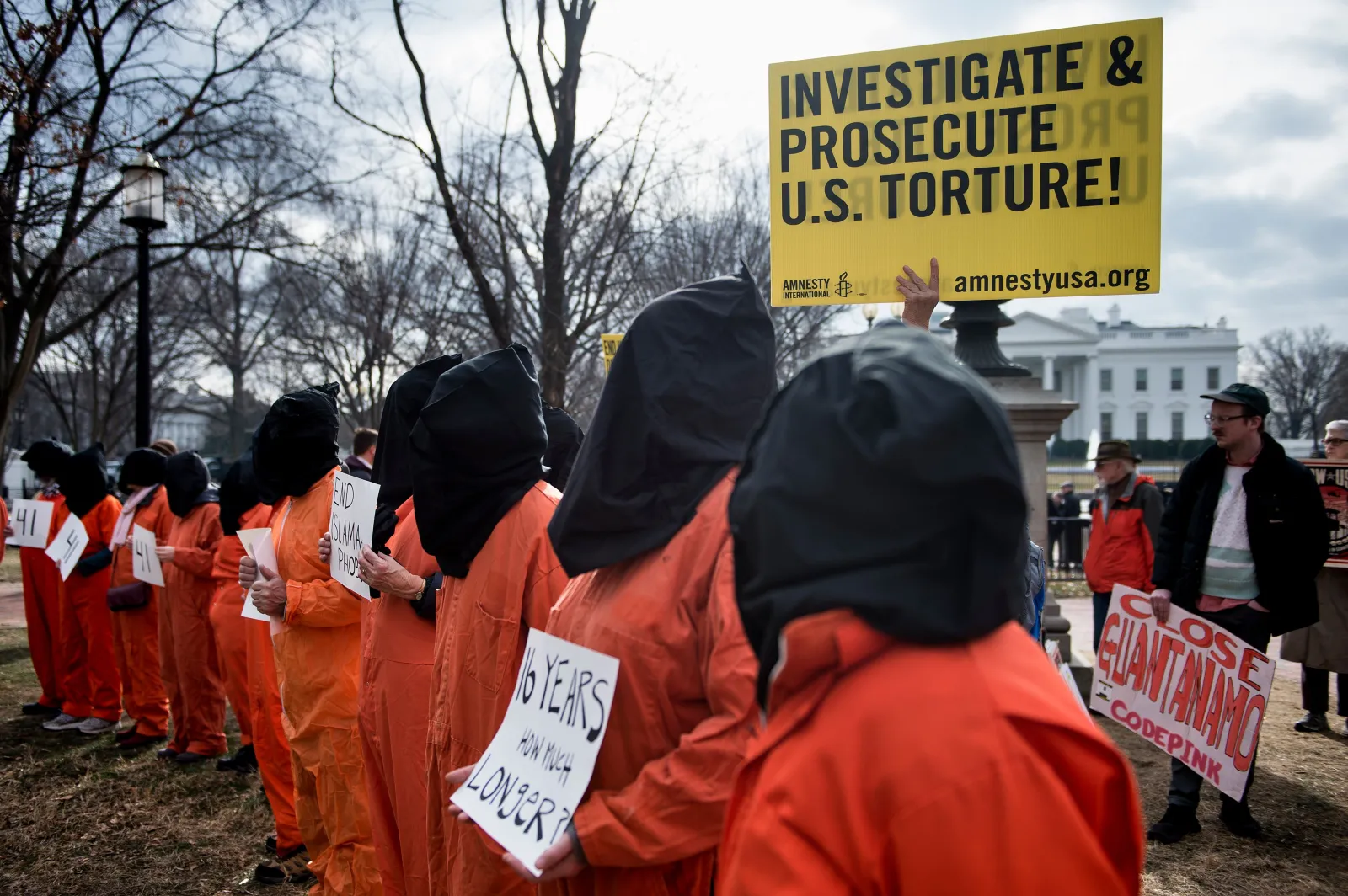
Can US Shed Learned Legal Helplessness of Guantanamo’s Courts?
CITF and the Office of Military Commissions at that time declined to prosecute cases built on coerced statements, and Mohamedou’s was among them. That was not leniency. It was investigative and prosecutorial discipline: a statement produced by abuse is not evidence. It contaminates the truth it claims to reveal. The system had no answer for a man it could not charge. A federal judge granted his habeas petition in 2010, yet he was not released until 2016, after nearly 15 years in custody without a single charge.
On January 11, 2027, Guantánamo turns 25. Nine days after the 9/11 attacks, President George W. Bush told a joint session of Congress: “Whether we bring our enemies to justice, or bring justice to our enemies, justice will be done.” The military commissions for those accused of the USS Cole (DDG-67) attack have begun, more than 26 years after that deadly attack.
In June, I asked here whether the commissions themselves had “learned helplessness,” with the 9/11 trial then proposed for January 2027. That trial is now not scheduled to begin until June 5, 2028—17 days before the United Nations’ International Day in Support of Victims of Torture. I would like to say the jury is still out on President Bush’s promise; however, the juries have yet to be selected. Justice delayed has been justice denied for the families and loved ones of those who perished.
Fifteen men remain at Guantánamo, and the military commissions are still trying to deliver justice on a foundation compromised by torture. On November 18, Senator Dick Durbin took to the Senate floor to call once again for closing Guantánamo, warning that “this betrayal of our values weakened America, rather than making it safer.” He has been making that case for more than a decade. The path out remains open, but untaken.
On January 3, 2027, a new Congress will be sworn in, just eight days before the anniversary of a prison built for “forever prisoners”—men the government claims it can continue to hold whether juries render guilty verdicts or not. The new Congress will have an opportunity to lead by example. To restore hope. To restore justice. To restore the rule of law.
The film’s title borrows from the Eagles song about a place you can check out of but never truly leave. Mohamedou and I have left Guantánamo, but Guantánamo is not finished with us. If a former detainee and the investigator once tasked with building cases against men like him can sit down together, our country can face what was done in its name. The jury is still out on whether we are truly honor bound to defend freedom, and whether, as Mohamedou believes, we are “honor bound to remain human.”
Mark Fallon is a former NCIS deputy assistant director and served as deputy commander of the Pentagon’s Criminal Investigation Task Force. He is the author of Unjustifiable Means: The Inside Story of How the CIA, Pentagon, and U.S. Government Conspired to Torture and director of ClubFed LLC.
The author’s writings are subject to pre-publication review by the U.S. government. The views expressed are the author’s and do not reflect the official policy or position of the Department of Defense or the U.S. government.
View 0 Comments
Submit Correction
View Editorial & AI Guidelines