...


By Dan Gooding and Gabe Whisnant
0
Share
Newsweek is a Trust Project member
See more of our trusted coverage when you search.Prefer Newsweek on Googleto see more of our trusted coverage when you search.
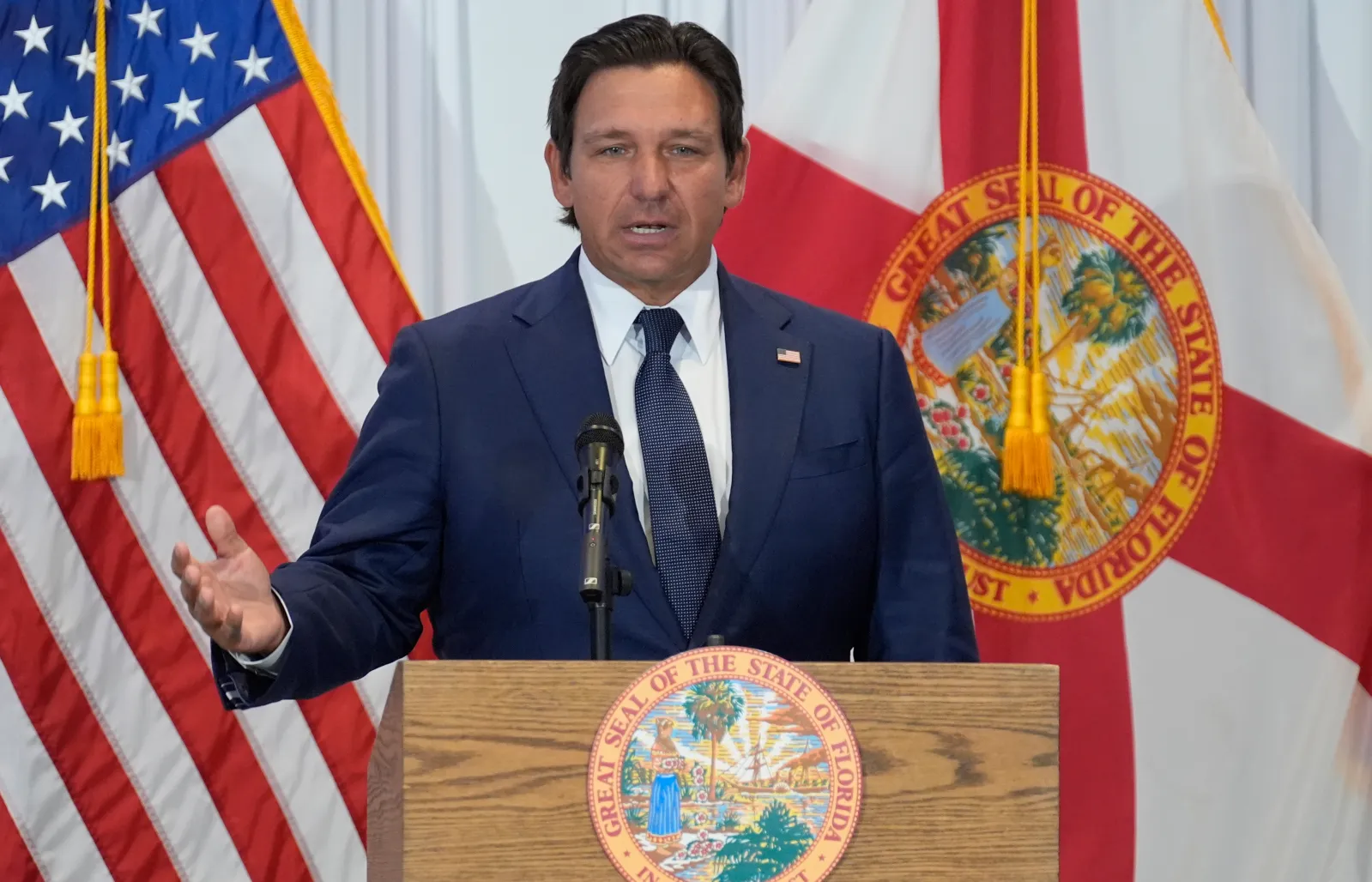
Florida Governor Ron DeSantis on Tuesday directed the state’s Board of Governors to end the use of H-1B visas at public universities, accusing schools of hiring foreign workers instead of qualified Americans.
DeSantis, a Republican, said Florida would not “tolerate H-1B abuse,” arguing that universities should be producing enough skilled graduates to fill those positions.
Overall, Florida has had roughly 7,250 H-1B approvals and renewals, thus far, in 2025.
Read More on Politics
Why It Matters
The H-1B visa has become a target for those opposed to parts of the legal immigration system—namely, work-based visas. The program has long been viewed as one abused by Big Tech, but it is also used by colleges across the United States and the health care industry. The Trump administration has been looking to make changes to the program, including a new $100,000 fee.
...
H-1B Visa Update: Major Change to Impact Workers
DeSantis said Tuesday that he was looking to crack down on H-1B visa abuse in higher education across Florida, accusing them of importing foreign workers instead of hiring Americans, echoing similar sentiments from opponents of the visa program.
The governor said state universities would now be required to put American graduates first, arguing that they are often overlooked in favor of cheaper foreign workers. On X, DeSantis said institutions had used the H-1B to hire assistant athletic coaches and media relations specialists, rather than "elite positions."
U.S. Citizenship and Immigration Services (USCIS) data for 2025 showed that the University of Florida had 156 H-1B approvals and renewals. The University of South Florida had 68, and the Florida State University had 67.
Seeking to end the state system's use of H-1Bs may affect hundreds, if not thousands, of workers legally present in the U.S. with visas tied to the institutions that hired them.
Florida is not the largest state for H-1B use, with California, New York, Texas, and New Jersey among those far outpacing it.
How Many Years Does an H-1B Visa Last?
Ending Florida state colleges' use of the H-1B may take some time, as visas last an initial three years with an option for a three-year extension.
While headline numbers can make it seem as if thousands of new immigrants are coming to the U.S. each year on H-1B visas, a large share of the figure is usually made up of extension approvals.
Under the Trump administration, which has taken a hardline approach to immigration and sought to tighten vetting and approval rules, the H-1B has continued, with applications for 2026 still flowing into USCIS.
Can an H-1B Visa Holder Marry a US Citizen?
An H-1B holder could marry a U.S. citizen, but they would remain on their current visa. It would be down to them to apply for an adjustment of status to obtain a green card, meaning permanent residency.
Some H-1B holders also look to become green card holders at the end of their six years by moving through the PERM process, in which their employer essentially advocates for permanent residency on their behalf and must prove that the individual is the only one suitable to fill the role they are in.
What People Are Saying
Florida Governor Ron DeSantis, in a press release issued Wednesday: “Universities across the country are importing foreign workers on H-1B visas instead of hiring Americans who are qualified and available to do the job. We will not tolerate H-1B abuse in Florida institutions. That’s why I have directed the Florida Board of Governors to end this practice.”
James Fishback, CEO of investment firm Azoria and frequent critic of the H-1B, on X: "Incredible. God Bless @RonDeSantis for standing up for American workers against the H-1B scam."
What Happens Next
It remains to be seen how Florida's colleges and universities will react to the move, and how this will impact immigrant workers.
Update 10/29/25, 1:42 p.m. ET: This article was updated with additional information.
View 0 Comments
Submit Correction
View Editorial & AI Guidelines