Newsweek/Getty

By Newsweek Editors
0
Share
Newsweek is a Trust Project member
See more of our trusted coverage when you search.Prefer Newsweek on Googleto see more of our trusted coverage when you search.
The debate over expiring Affordable Care Act subsidies may look like the last budget fight of 2025, but it's really the endgame of a 15-year Republican quest to repeal Obamacare. At issue this week are the enhanced subsidies enacted in 2021 during the pandemic which are set to expire on December 31, resulting in dramatically higher health insurance premiums for 22 million Americans who buy their health insurance on ACA marketplaces. Most of them live in states that voted for Donald Trump.
The GOP may see it as finally getting their chance to gut the law that has galvanized the conservative movement going back to the Tea Party, but they’re still facing the same problem that’s haunted them since Joe Biden called the law’s passage a "big f—ing deal": they have nothing better than a "concept of a plan" to replace it and a mortal fear of the political price of looking like they’ve taken away people's health care. The subsidies look doomed, premiums will make millions of health care policies unaffordable heading into the midterms, and Republicans settling on a path of YOLO inaction and discovering the political consequences later.
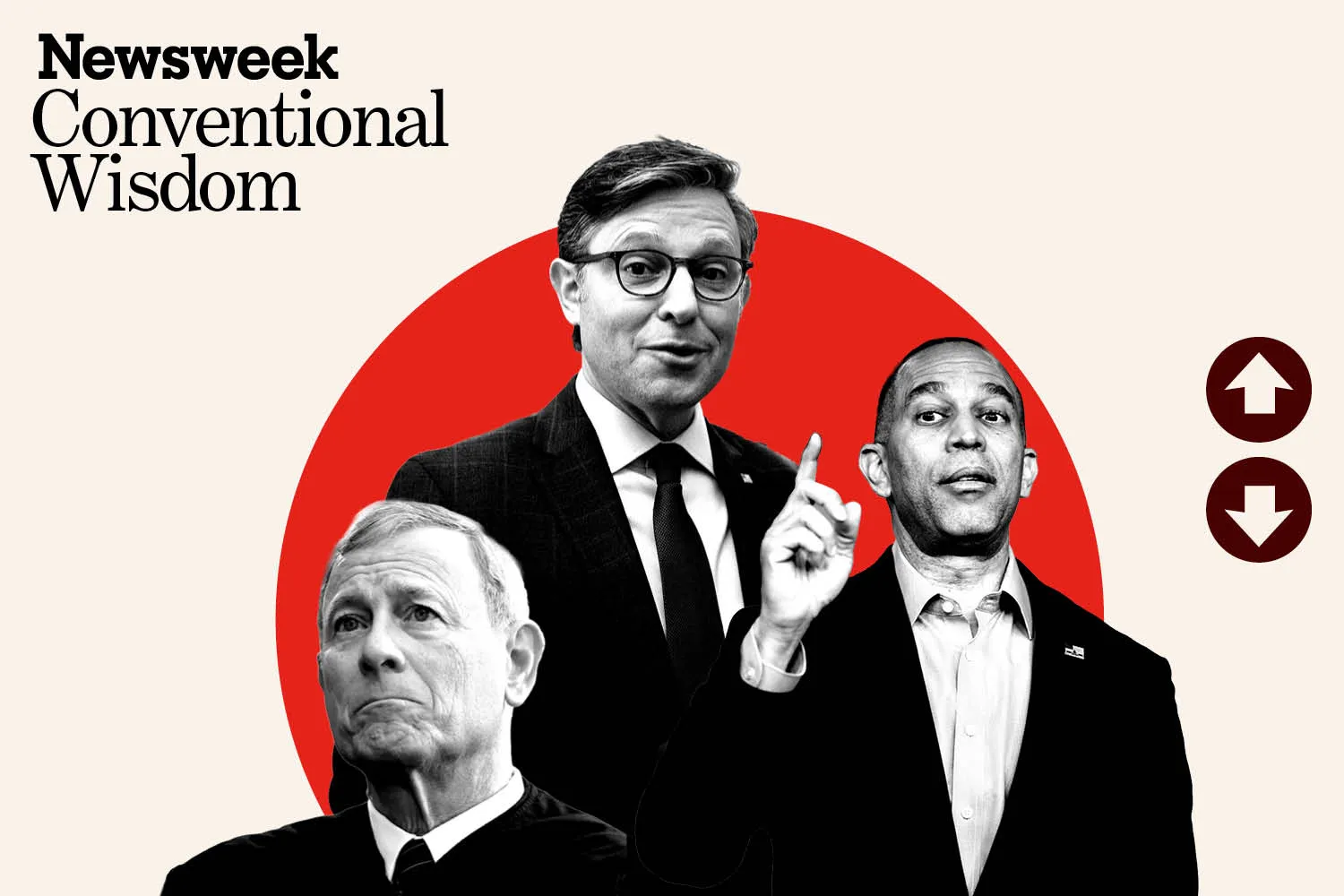
Mike Johnson ⬇
Last Friday, the Speaker promised: "You're going to see a package come together that will be on the floor next week that will actually reduce premiums for 100 percent of Americans who are on health insurance." Instead, he's caught between moderate Republicans from swing districts terrified of premium spikes and conservatives ready to spike the football over the subsidy expiration. After 15 years of "repeal and replace," all Johnson can deliver is a premium cliff driven over by a dog that never wanted to catch the car.
Read More on Opinion
Hakeem Jeffries ⬆
Reopened the government after a record 43-day shutdown in exchange for an ACA subsidy extension vote that he’s not getting and yet still looks like the winner. Republicans now own the premium crisis heading into the 2026 midterms while Democrats are positioned to hit the campaign trail as health care defenders. When your opponents volunteer to give millions of people health insurance sticker shock right before an election, getting nothing counts as a clean sweep.
John Roberts ⬇
The Chief Justice could have done the GOP a favor by doing their repeal dirty work for them in 2012 when the Supreme Court was deciding the constitutionality of the ACA. But he switched his vote at the last minute, reportedly uneasy about using a 5-4 partisan split to strike down major legislation. A dozen years later, his Court issues 6-3 ideological splits on everything from abortion to presidential immunity to gerrymandering with absolutely zero compunction about appearing partisan.
John McCain’s thumb ⬇
His dramatic vote killing a "skinny repeal" in 2017 came with a demand that the Senate "return to the correct way of legislating" with bipartisan committee process instead of 2 a.m. ambushes. Now Republicans are achieving what he blocked—partisan ACA demolition—they're just doing it through inaction instead of a vote.
Bipartisanship ⬇
The current subsidies crisis has spawned exactly what McCain wanted: a host of bipartisan legislative proposals like the Fitzpatrick-Golden's two-year extension and Kiggans-Gottheimer's one-year version. But they're all going nowhere, because it turns out neither party cares about compromise—Republicans want expiration and Democrats want an election cudgel. The ghost of institutionalists past can't save institutions the living have abandoned.
Barack Obama ⬆
Pitching for Hillary Clinton in 2016, he warned that Republicans would "take away health care from 20 million people" and mocked the idea that they would say: "No, no, no, no, we'll keep those parts of Obamacare that are popular; we'll just repeal everything else." Nine years later, subsidies are expiring, 22 million face unaffordable policies, and Republicans have run out of unpopular parts to repeal. Obama understood that once you give people health care, there's no process of taking it back that isn’t politically toxic.
Originally a staple of Newsweek's print edition, Conventional Wisdom used arrows to track whose stock was rising or falling in the political circus. We're reviving it in the digital age because the problem it lampooned—hyperbole and partisan certainty masquerading as insight—has only intensified.
CW assigns arrows—up, down, or sideways—to the figures and forces shaping current events. The arrows don't predict the future or claim special insight. They capture the prevailing winds of the moment, uncluttered by tribal howling. In an era when partisan media reinforces rather than questions assumptions, CW operates from the center—skeptical of left and right alike, committed to puncturing inflated reputations and recognizing overlooked truths.
View 0 Comments
Submit Correction
View Editorial & AI Guidelines