...

By Tom O'Connor
Deputy Editor, National Security and Foreign Policy
0
Share
Newsweek is a Trust Project member
See more of our trusted coverage when you search.Prefer Newsweek on Googleto see more of our trusted coverage when you search.
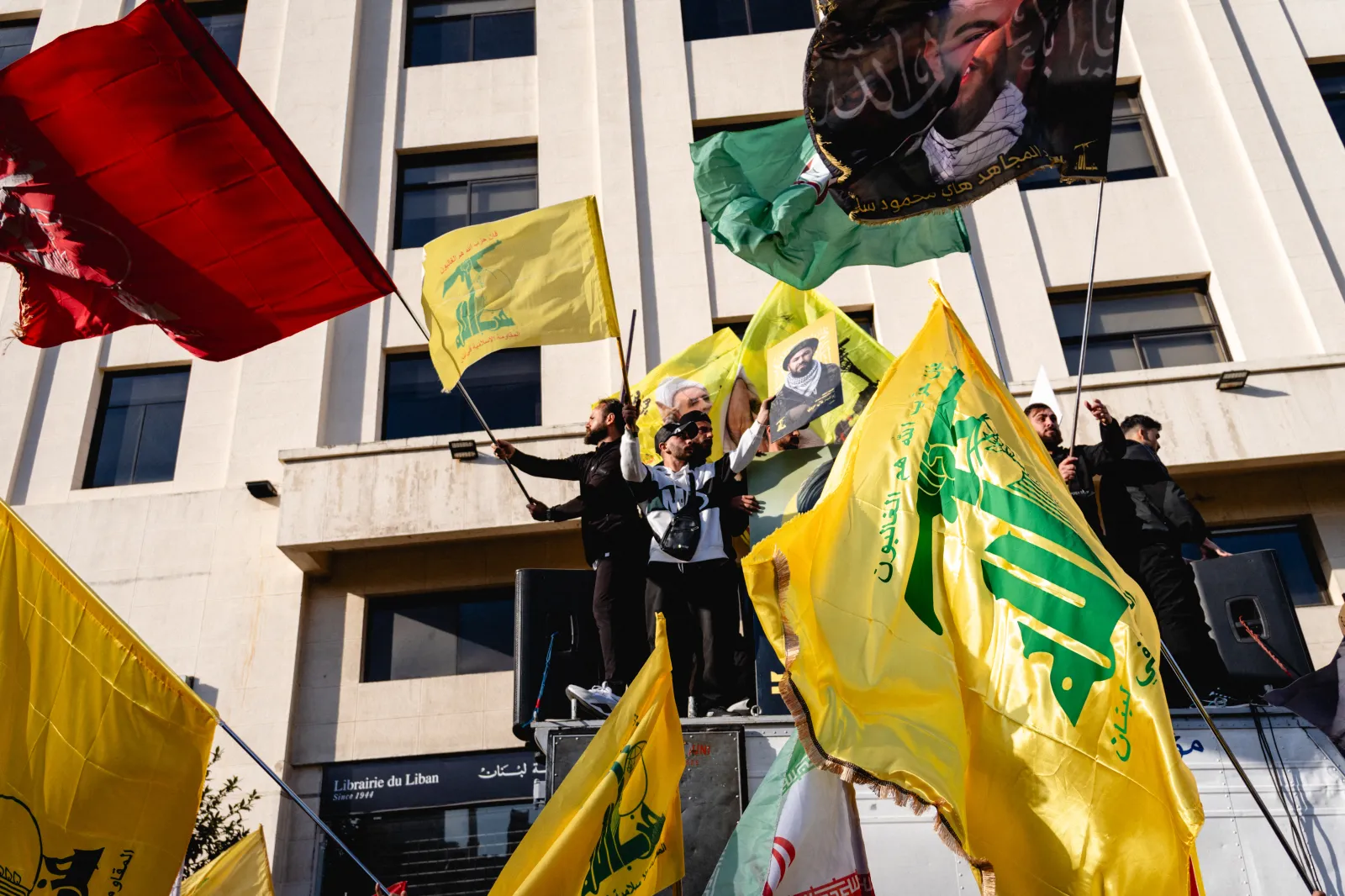
In exclusive comments shared with Newsweek, a Hezbollah spokesperson stated that "the enemy must adhere to the ceasefire, unlike what occurred previously, when Hezbollah observed the truce while the enemy targeted Lebanese civilians on public roads, in front of their homes and before the eyes of their children."
President Donald Trump's surprise announcement of a 10-day ceasefire between Israel and Hezbollah on Thursday marks the latest sign of diplomatic progress since the U.S. leader called for a truce in the ongoing war with Iran last week.
But for Hezbollah, a key ally of Tehran, the situation remains precarious as the Lebanese Shiite Muslim movement seeks to regroup on the battlefield while simultaneously managing pressure exerted by the U.S. and Israel on the Lebanese government to pursue the group's disarmament.
Read More on World
The degree to which Israel maintains the cessation of hostilities also remains to be seen.
After a previous ceasefire struck in November 2024, the Israel Defense Forces (IDF) continued striking suspected Hezbollah targets across Lebanon, with the group resuming cross-border attacks last month in response to the U.S.-Israeli killing of Iranian Supreme Leader Ayatollah Ali Khamenei.
"In 2024, the Zionist enemy reneged on its commitment to the ceasefire," the Hezbollah spokesperson told Newsweek. "It is now absolutely unacceptable for a cessation of hostilities to be observed unilaterally."
Reached for comment, the IDF referred Newsweek to Israel's political echelon. Newsweek has also contacted the Israeli Consulate General in New York for comment.
...
The Fate of the Resistance
Shortly after declaring the ceasefire on social media Thursday, Trump announced that he would invite Israeli Prime Minister Benjamin Netanyahu and Lebanese President Joseph Aoun to the White House for talks.
"Both sides want to see PEACE, and I believe that will happen, quickly!" Trump wrote on Truth Social.
The statement came amid reports that the U.S. was pushing for Netanyahu and Aoun to hold what would be the first direct conversations between the leaders of the two countries since 1983. Those reports, however, were followed by a Reuters article citing unnamed Lebanese officials denying that Aoun had any plans to meet Netanyahu.
"The announced ceasefire—facilitated by the Trump administration—increases the pressure on the Lebanese president regarding direct talks with PM Netanyahu," Mona Yacoubian, director and senior adviser of the Middle East Program at the Center for Strategic and International Studies, told Newsweek.
"However," she said, "as long as Israel continues to occupy a significant swath of southern Lebanon and in the absence of greater progress on the talks, a direct meeting between the two leaders is difficult to imagine—it is something that comes toward the end of successful negotiations rather than at their tentative beginning."
Meanwhile, any attempt to break the ceasefire on the part of Hezbollah "will undermine Hezbollah's position politically, including within its Shia base which has borne enormous costs as a result of Israel's offensive," while also testing the broader Lebanese population's tolerance of the group's unique military position and political influence in the country.
Both Aoun and Lebanese Prime Minister Nawaf Salam have called for Hezbollah to surrender an arsenal amassed over decades since the group was established with Iranian backing in response to Israel's 1982 invasion. When Lebanon's 15-year civil war ended in 1990, Hezbollah was informally allowed to retain its weaponry, given Israel's ongoing occupation that lasted until 2000.
Lebanese officials, however, have also criticized Israeli military operations on Lebanese territory and have rejected the notion of seizing the powerful group's arms by force.
Israel and Hezbollah have long accused one another of violating agreements, including a U.N. Security Council resolution that put an end to a month-long war in 2006. Conflict returned when Hezbollah intervened in support of the Palestinian Hamas movement's October 2023 attack against Israel, sparking a regional confrontation between Israel and Iran's broader Axis of Resistance coalition that also includes factions in Iraq and Yemen.
With Israel now seeking to enforce a more permanent arrangement to neutralize the threat posed by Hezbollah, the group has maintained the necessity of its military strength as a means of resisting Israeli attacks.
"As long as occupation persists, resistance will endure," the Hezbollah spokesperson said. "Resistance, which constitutes a legitimate right for all peoples, cannot cease; it is a reaction to occupation, rather than an action in and of itself."
"If we look back at history, resistance emerged only after the enemy occupied Lebanon, not the other way around," the Hezbollah spokesperson continued. "It is a natural human need to defend one’s homeland, country, land and people. The occupation must withdraw from all territories it has occupied."
The Iran Connection
Also central to diplomatic efforts to ease tensions across the Middle East is the fact that Iranian officials have demanded Lebanon be included in any deal to end the U.S.-Israeli war launched against Iran in late February.
Thus, Tehran appears to have played a role of its own in putting a halt to the conflict.
"What we need to understand is that both President Trump and the Iranians have been in a race against time to take credit for this ceasefire," Fawaz Gerges, professor of international relations at the London School of Economics and Political Science, told Newsweek.
Gerges noted that prior to Trump's announcement, Iranian Parliament Speaker Mohammad Bagher Ghalibaf—a lead negotiator in the recent U.S.-Iran talks that failed to produce a deal in Pakistan over the weekend—emphasized in a call with his Lebanese counterpart, Nabih Berri, that a ceasefire in Lebanon was necessary to achieve lasting peace with the U.S., which ultimately complied.
And just before Trump revealed the truce, Iranian Ambassador Mohammad Reza Sheibani told a Hezbollah member of parliament that a ceasefire would go into effect imminently, Gerges pointed out.
"So, this tells you a great deal about the political positioning by both the United States and Iran and Hezbollah," Gerges said. "You will see tonight that Hezbollah will make it very clear that they thank Iran for exerting pressure on the United States in order to bring about the ceasefire."
"Hezbollah will celebrate the ceasefire as part of its heroic resistance to the Israeli military invasion of Lebanon," he added. "Neither Hezbollah nor Iran nor their supporters in Lebanon will see this ceasefire as a separate track from the U.S.-Iran negotiations."
Iranian media outlets quickly began portraying the Lebanon ceasefire as a victory for Iran and its commitment to the Axis of Resistance as Tehran faced a U.S. naval blockade imposed by Trump after the latest talks in Islamabad.
In remarks issued Thursday, Netanyahu said that Trump had conveyed that "he is tremendously determined to continue the naval blockade and to bring about the dismantling of Iran's nuclear capability, what remains of it."
"He is not giving up on this," Netanyahu said. "He is certain he can eliminate this threat once and for all, continuing the great things we have done together. Of course, we will also handle the missile threat and the enrichment capability. I will not elaborate."
Iran has always denied seeking a nuclear weapon, though eliminating its advanced enrichment capabilities has been a core aim of the U.S.-Israeli campaign, as has degrading the Islamic Republic's sizeable missile arsenal and ties to Axis of Resistance allies like Hezbollah.
As for a potential deal with Lebanon, the Israeli premier named two conditions, "the disarmament of Hezbollah" and "a sustainable peace agreement, peace through strength." In doing so, he rejected Hezbollah demands he described as being an Israeli withdrawal from Lebanese territory and a return to a "quiet for quiet" model.
"We are remaining in Lebanon in a reinforced security buffer zone," Netanyahu said.

...
Will the Ceasefire Last?
While Gerges said any pause on military operations would come as relief to the Lebanese public, of whom more than one million have been displaced in the latest round of fighting, he also cautioned that far more work needs to be done to achieve any lasting agreement.
"We have been there before," Gerges said. "Israel now occupies eight miles of Lebanon's territories. Israeli Prime Minister Benjamin Netanyahu has repeatedly said he wants to establish a big buffer zone, a security zone, in Lebanon. I doubted very much whether Israel will basically pull out their forces from Lebanon.
"And without Israel's withdrawal from Lebanon, the ceasefire could easily collapse. Hezbollah will never accept any kind of Israeli military presence or political presence in the south," he added. "So, even though President Trump celebrates this as one of his nice peace deals, I think we are far, far off from any kind of a peace agreement between Lebanon and Israel."
Nicholas Blanford, senior fellow with the Atlantic Council's Middle East Programs, also argued that the outcome may depend on Israel's next steps.
"It depends on whether Israel observes the ceasefire completely or treats it like the last one where it struck Hezbollah targets on a near daily basis," Blanford told Newsweek. "If Israel really ceases fire, I think Hezbollah would honor it. But if Israel continues hitting Hezbollah, then the group will strike back. There's no going back to its policy of 'strategic patience.'"
"A ceasefire answers the Lebanese demand that one must come in place before talks can begin," he said. "I think the Lebanese are looking for a new security paradigm to bring stability to the Lebanon-Israel border. The Israelis want Hezbollah disarmed and full peace."
But here too Iran gets a vote, as does a Lebanese public still deeply divided over the prospect of normalizing ties with Israel.
"So long as the Iranians continue to back Hezbollah as a military force, it will be very difficult to have to group disarmed," Blanford said. "Also, Lebanon is not ready for a full peace with Israel. It would be enormously divisive domestically."
3:24 p.m. ET: This article has been updated to include additional comments, context and graphics.
View 0 Comments
Submit Correction
View Editorial & AI Guidelines