...

By Giulia Carbonaro
Senior Reporter
0
Share
Newsweek is a Trust Project member
See more of our trusted coverage when you search.Prefer Newsweek on Googleto see more of our trusted coverage when you search.
There is no end in sight to the whirling growth of homeowners insurance costs, with premiums expected to increase by 8 percent in 2026 and another 8 percent in 2027, according to estimates shared by John Rogers, chief data and analytics officer at real estate analytics firm Cotality.
“The hot potato of insurance premiums—these have been rising dramatically over the last few years,” Rogers said during ResiDay, an event organized by ResiClub in New York City on November 7, while pointing at a map of recent home insurance premiums increases by state.
“You can see...there are some states that have seen high double-digit growth in terms of insurance premiums,” he added, pointing at states like Arizona, Michigan, Nebraska, North Dakota, South Dakota, Utah, Washington, and Wyoming, which have all seen increases between 40 percent and 70 percent over the last few years.
Read More on U.S.
Home insurance premiums now account for 9 percent of the typical U.S. homeowner’s payment—“the highest average on record of a person’s outlay in terms of principal, interest, property tax, and insurance premiums,” according to Rogers.
But owning a home, especially in disaster-prone areas, is likely to get even more expensive, according to Cotality.
What Is Driving Up Home Insurance Premiums?
According to Rogers, there are three main reasons homeowners insurance premiums will continue to climb over the next couple of years.
One is rising construction and material costs. Cotality estimates the cost to reconstruct every building in the United States, whether commercial or residential—“every nail and two-by-four,” as Rogers said on Friday.
“You can see the supply chain is causing some pressures, aluminum being the top one,” he said. “So that’s risen 10 percent just year-on-year—most of it coming from Canada and China, and there’s an amplification effect with some of the tariffs happening between countries right now,” he added.
...
Another reason is the residential housing stock. According to Rogers, 12 percent of the U.S. residential housing stock is at high risk of a hazard or peril.
“Think about wildfires, winter storms, hail—that’s equivalent to $4.3 trillion worth of reconstruction costs,” Rogers said. “If we do nothing and we fast forward to 2050, it’s about 20 percent of the residential housing stock, and that’s equivalent to $7.2 trillion.”
A third reason is migration into high-risk areas.
“As a society we just like to live in high-risk areas,” Rogers said. “One in six of us live in a high-wildfire risk area. In Florida and Georgia, over the last two decades, the increase in population is through the roof,” he added.
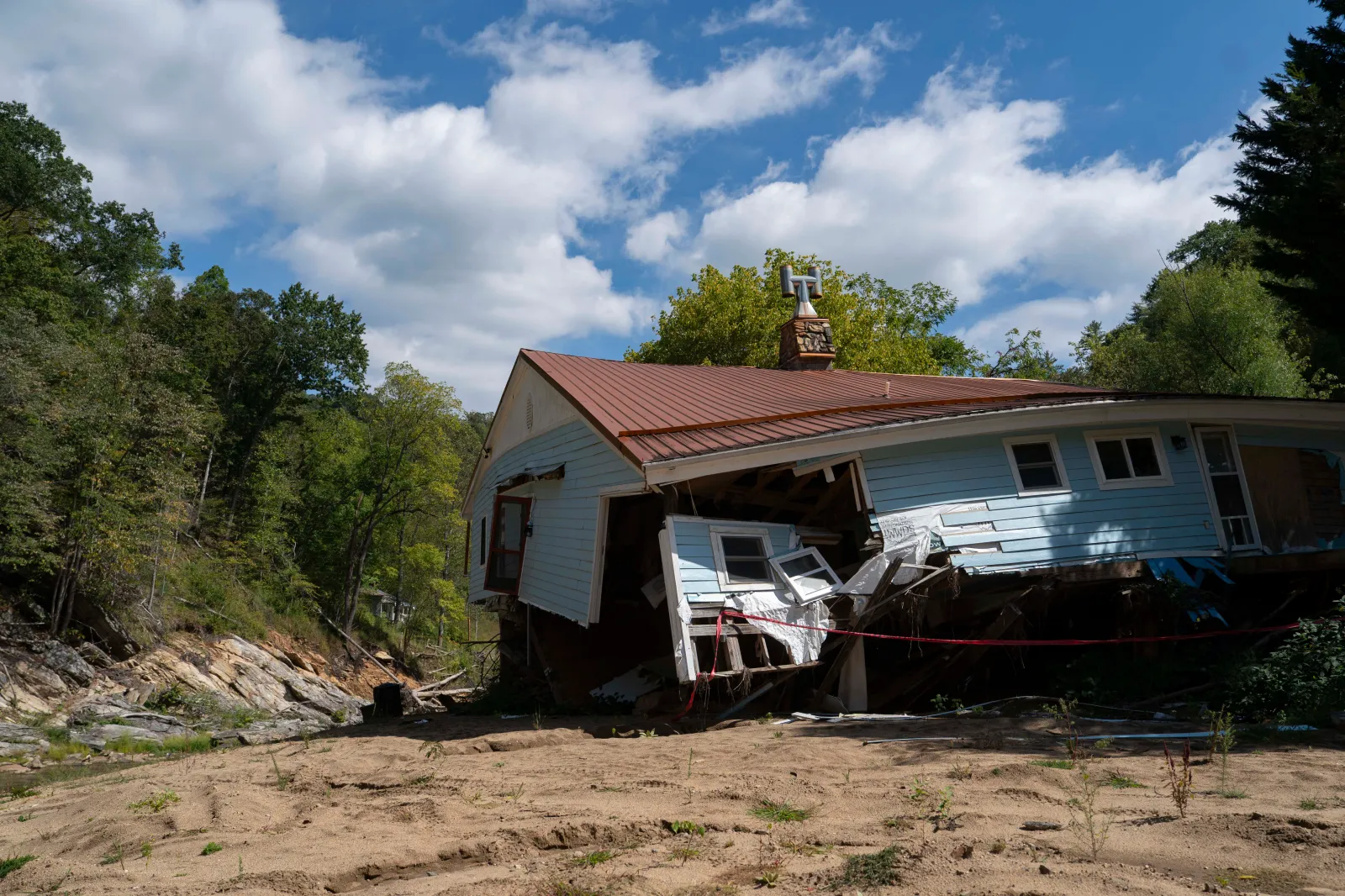
You add this migration factor with higher construction costs and higher risk to natural disasters, made more frequent and more severe by climate change, and “that’s the challenge we face,” Rogers said.
What Is the Impact Of Higher Home Insurance Premiums?
According to Hannah Jones, senior economic research analyst at Realtor.com, higher home insurance premiums will further diminish Americans’ purchasing power, already challenged by elevated borrowing costs, higher home prices, rising homeowners association (HOA) fees and property taxes.
This, in turn, could exacerbate the slump the U.S. housing market has entered this year, as buyers keep to the sidelines.
“An unexpected increase in the cost of homeowners insurance can catch existing homeowners off guard and can also discourage potential buyers who are trying to estimate their monthly housing expenses,” Jones said in a comment shared by the company.
“In both cases, climbing insurance costs can contribute to weaker buyer demand and more fragile housing stability in already vulnerable markets.”
View 0 Comments
Submit Correction
View Editorial & AI Guidelines