...

By Hugh Cameron
Reporter
0
Share
Newsweek is a Trust Project member
See more of our trusted coverage when you search.Prefer Newsweek on Googleto see more of our trusted coverage when you search.
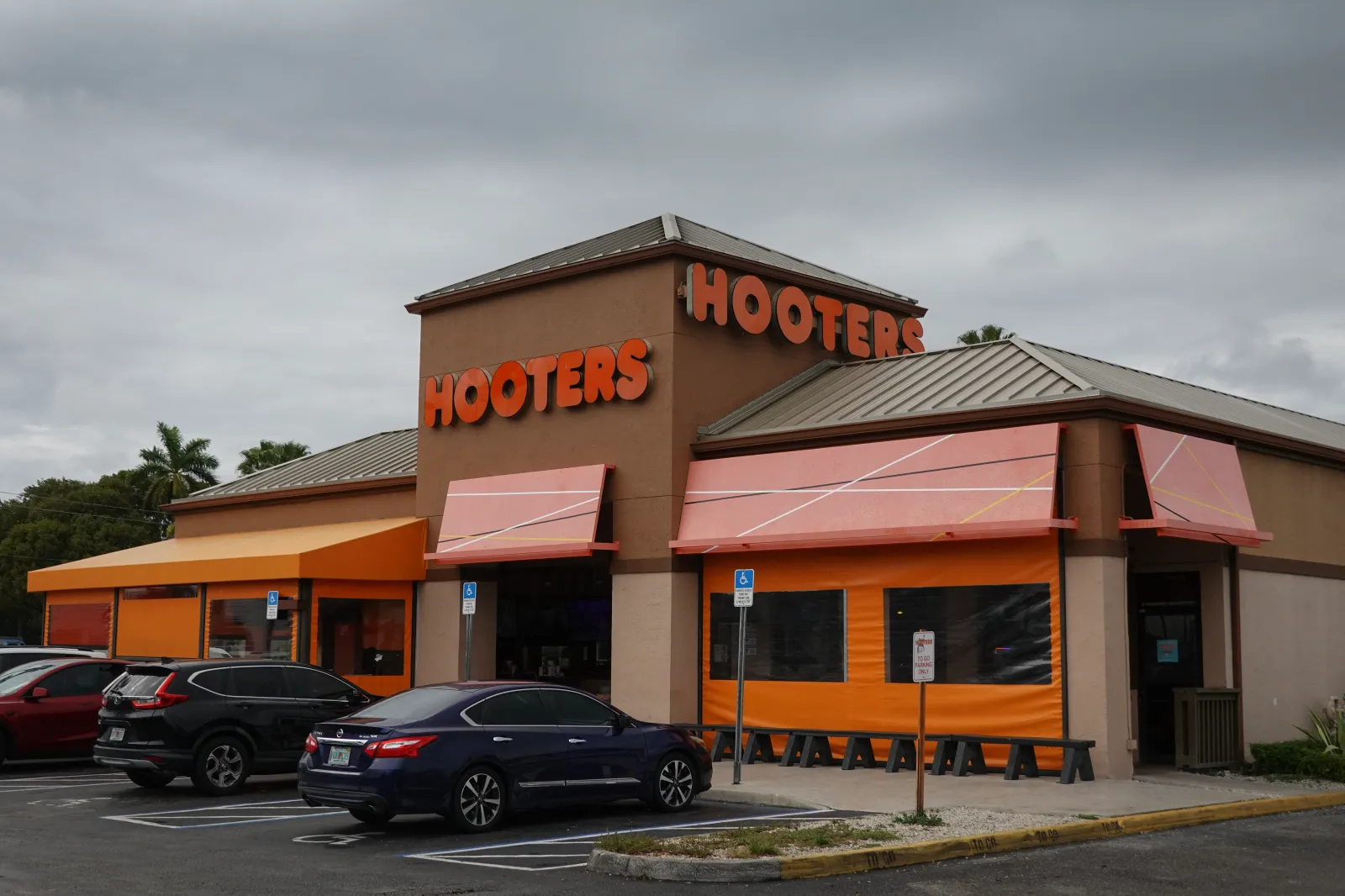
The original founders of Hooters have taken back control of the restaurant chain and now aim to restore it to one of America's family-friendly dining staples after years of financial mismanagement and what they deem an “oversexualization” of the brand.
Last week, Hooters Inc. finalized the “historic” acquisition of Hooters of America (HOA), the company that till now owned and operated the majority of its domestic restaurants. Alongside its partner Hoot Owl Restaurants LLC, Hooters Inc. will own 140 of the 198 U.S. locations, which together with 60 international locations represent “approximately $700 million in systemwide sales.”
In an interview with Newsweek, Hooters Inc. CEO Neil Kiefer—who cofounded the original restaurant in Clearwater, Florida, in 1983—said the group was now focused on “reHooterizing” the locations that suffered under HOA's management.
Read More on U.S.
The deal comes at the end of a drawn-out and “very complicated” process, Kiefer tells Newsweek, one which began with HOA filing for bankruptcy earlier this year to address its $376 million debt, after a sustained period of difficulty that saw it close over 40 restaurants in summer 2024. At the time, it announced plans to sell its roughly 150 company-owned restaurants to a group of existing franchisees led by Hooters Inc., and said the deal would close in a matter of months.
“The business became overleveraged,” Kiefer says of the HOA-run restaurants. “I think more money was taken out of the business than reinvested in the business. I think the brand changed its identity and morphed into something that we really weren’t."
...
And while the founders named the chain with a dose of double entendre, Kiefer says a central issue has been the “oversexualization” of restaurants under HOA’s control. He points specifically to the undersized “Hooters Girl” uniforms, which have left customers trying to eat with the distraction of “derrières hanging out.”
And beyond violating the founders’ original hope for a “beach theme” aesthetic, Kiefer says this “narrowed the market” and proved a significant economic impediment.
“Females are half the population. If you're going to chase them away and make them uncomfortable and they don't want to come in with their family or their friends, that's a problem,” he tells Newsweek.
“It's a neighborhood hangout with a beach theme. It's not a sex place where someone says, ‘my wife won't let me go there.’ If that's the image in that community, that's the wrong image.”
Kiefer says the focus on the uniforms and shifting away from what has been dubbed the “breastaurant” style is not a case of Hooters responding to contemporary cultural pressures, but rather returning to its roots.
“We've always been true to what we are here at the original Hooters, and we're going to continue that. It's doing what the brand is and executing it the right way.”
Food has also taken a backseat, according to Kiefer, who believes Hooters' status as first and foremost a restaurant means it should prioritize what is central to the dining experience. In last week's announcement, Hooters Inc. said patrons will notice “immediate” changes including “fresher quality ingredients” and a “streamlined menu” featuring fan favorites like the Hooters chicken wings as well as fresh salads and wild-caught fish.
“We've got to get the food right because you're coming in there to eat. So it better taste good,” Kiefer says.
But taking on the restaurants that have fallen into disrepair and rebuilding a brand that has fallen into disrepute will not be without its challenges, he tells Newsweek, particularly given the current financial strains facing the American consumer. Kiefer believes some of the acquired locations may prove beyond saving and end up on the chopping block.
“There could be more closures. We're not entering this to close stores, but at some point, if we're not getting the economic viability, then we're going to have to move on, and we're looking to open other stores too.”
Kiefer sees revamping the brand in its original image as central to bringing together both families and communities across the country, and says in doing so, Hooters could begin to bridge America’s political and cultural divide.
“We're sort of America's oasis," he tells Newsweek.
"Let's not argue whether [President Donald] Trump's a good guy or a bad guy, or whether men should play in women's sports. You're in here to have a good time, relax, chill out."
View 0 Comments
Submit Correction
View Editorial & AI Guidelines