...

By Lucy Notarantonio
Senior Reporter
0
Share
Newsweek is a Trust Project member
See more of our trusted coverage when you search.Prefer Newsweek on Googleto see more of our trusted coverage when you search.
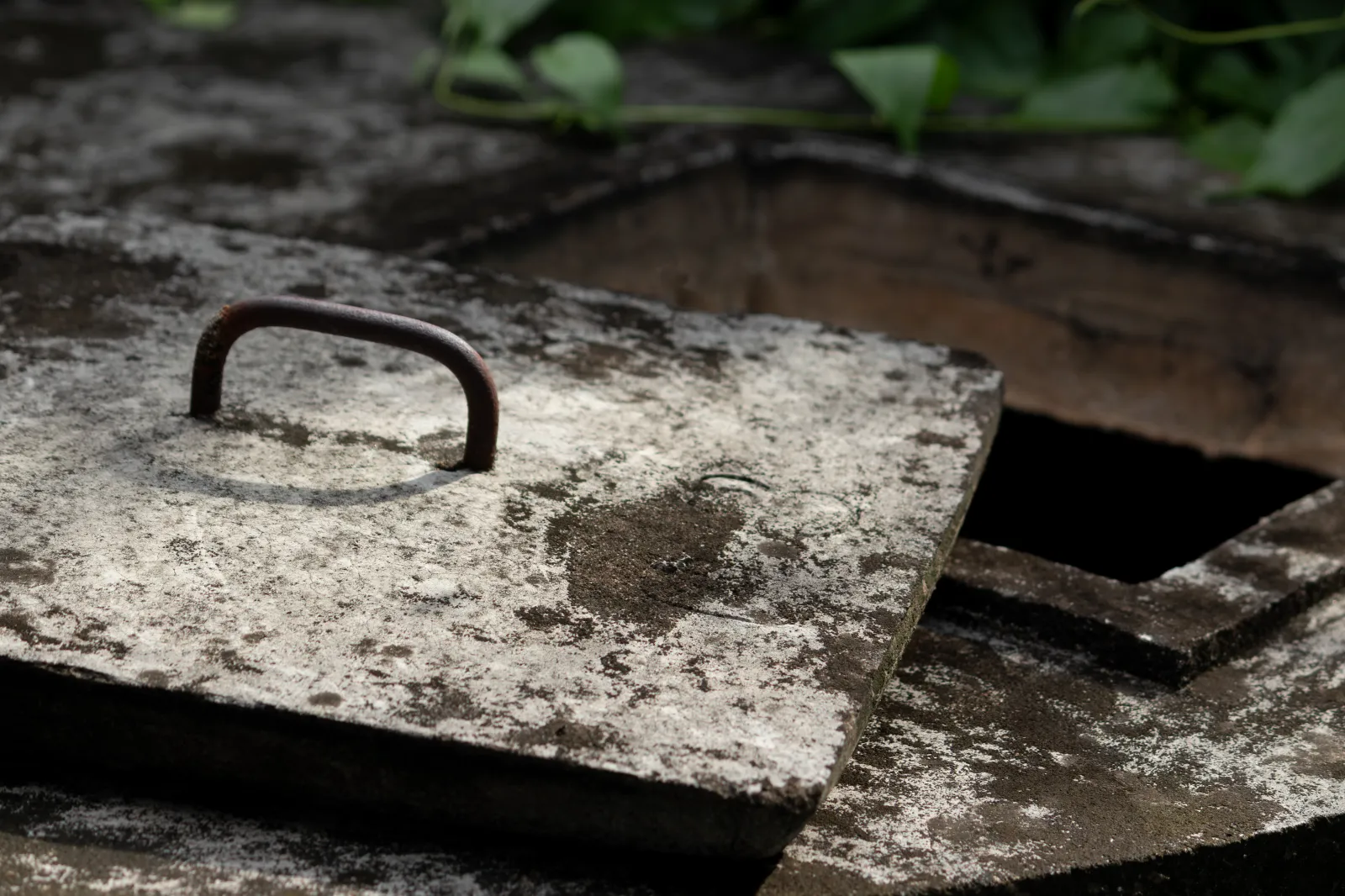
When viewing old properties, it’s wise to expect the unexpected—just like this Reddit user who discovered a trapdoor in the living room of a 1920s house they were touring.
The home, located in North County, California, is described as “an old worn-out mountain cabin.” Reddit user TempusDetective explained that in the middle of the living room floor was a trapdoor.
“We opened it and found a narrow concrete staircase going down into a hidden basement,” they said. “Two of the walls were covered in mirrors, and one wall had a built-in wall fan, an electrical panel, and a heavy metal door. That door led into a small closet, and in the bottom corner of that closet there was a tiny tunnel made of concrete blocks. You’d have to crawl through it. I didn’t go any farther, it felt sketchy as hell.”
Read More on Home & Garden
The photos show concrete stairs, mirrored walls and a crawl tunnel. The viewing was described as a “really strange experience.”
The poster noted they weren’t the potential buyer, but were accompanying a friend who would need help with any repairs.
Describing the basement, the post adds: “The air down there was damp and heavy, and the whole space had this weird vibe, like it hadn’t been opened in decades. It doesn’t show up on any property info or blueprints, and even the realtor had no clue what it was.”
...
Reddit users quickly weighed in on the November 11 post, which has nearly 1,000 comments.
One user said: “1920s you say? could have been a speakeasy at some point. I lived in Hemet as a kid and a lot' of the older houses in downtown had basements.”
Prohibition began in 1920, when legal saloons closed and drinkers turned to bootleggers, “medicinal” alcohol or illicit bars known as speakeasies, according to The Mob Museum, a nonprofit museum in Las Vegas.
These hidden venues—ranging from glamorous jazz clubs to dingy backrooms—mixed men and women together socially in new ways and helped popularize cocktails, Italian food and house parties. Organized crime flourished as gangs like Al Capone’s capitalized on the lucrative bootlegging trade, bribing police and selling dangerous, poor-quality alcohol.
By the early 1930s, widespread crime, tainted liquor and the need for tax revenue fueled public dissatisfaction, ultimately leading to Prohibition’s repeal in 1933 and the return of regulated barrooms.
Other users shared lighthearted ideas about what the space could become. One wrote: “New dance studio unlocked,” while another joked: “Sadly, I was thinking the same thing. ‘That’s not a dungeon, that's a one bedroom [apartment]!"
Newsweek reached out to u/TempusDetective for comment. We could not verify the details of the case.
View 0 Comments
Submit Correction
View Editorial & AI Guidelines