...

By Amira El-Fekki
Middle East News Reporter
0
Share
Newsweek is a Trust Project member
See more of our trusted coverage when you search.Prefer Newsweek on Googleto see more of our trusted coverage when you search.
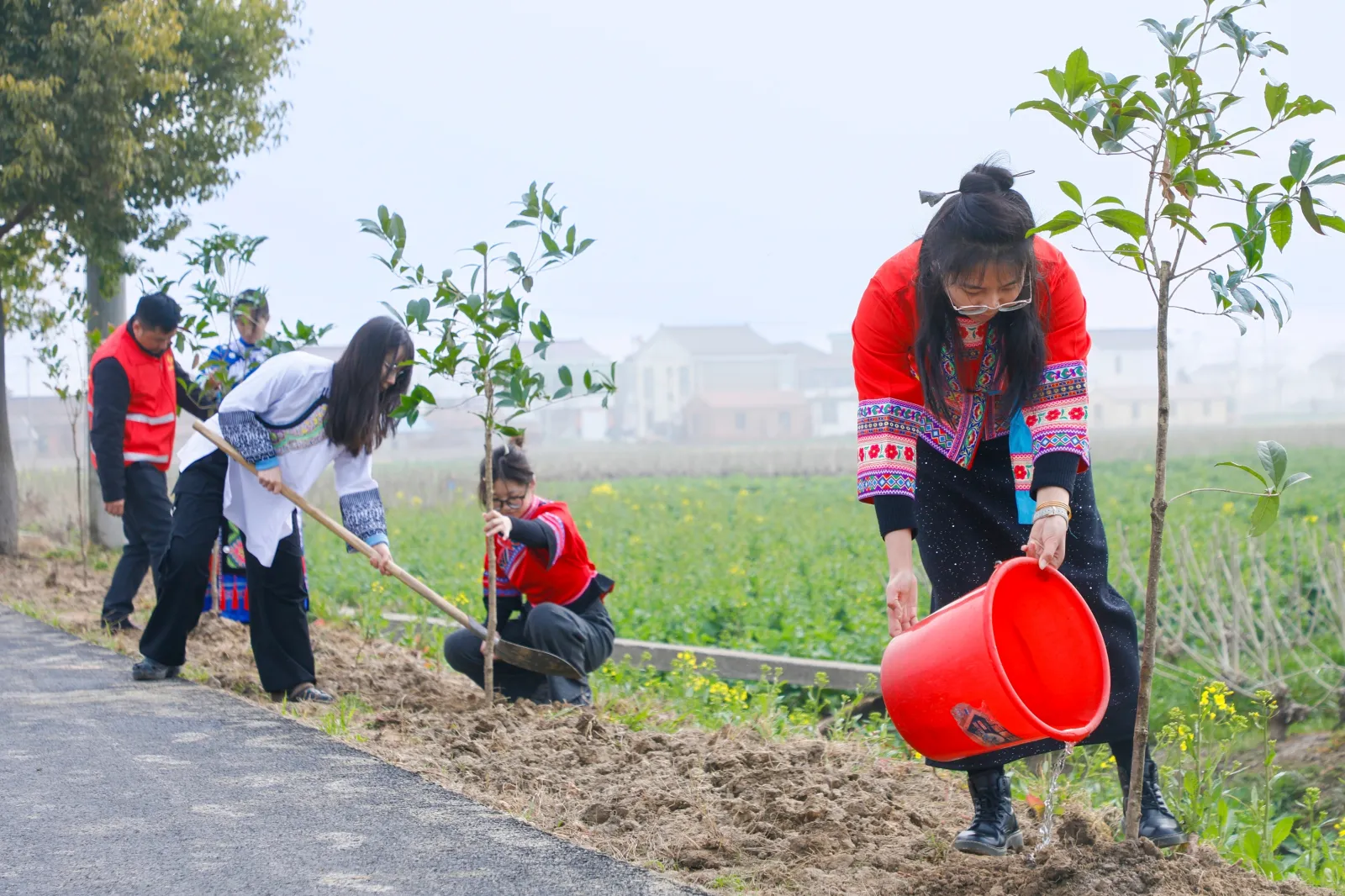
China's active forest expansion has continued at pace amid a long-running push that began half a century ago.
Its Three-North Shelterbelt Program started in 1978 and is now also known as the “Green Great Wall” project—spanning 13 provinces across northern China—to combat desertification and soil erosion in drought-prone areas.
Why It Matters
A year after the initiative was launched, China designated March 12 as its national day of tree planting. The Chinese government says that from 1982-2021, its citizens planted approximately 78 billion trees in the country.
Read More on World
China’s overall forest coverage has risen to nearly 25 percent, according to official statistics, in a demonstration of decades of afforestation and land restoration efforts. The work contributes to carbon uptake as part of Beijing’s broader climate mitigation strategy and supports jobs in forestry‑related sectors, officials say.
What To Know
The Kubuqi Desert, China’s seventh-largest, covers more than 5,400 square miles in the northern region of Inner Mongolia and has long driven desertification in the area, threatening nearby villages and cities with sandstorms, land degradation and economic disruption.
In the 1950s and 1960s, Inner Mongolia, with strong state backing, began building sand-control stations and windbreaks along the northern edge of the desert, marking the start of systematic desert-containment efforts in the region. Today, Kubuqi is being reshaped with the help of vast solar installations—a win-win.


...
Over the past five years, China has greened over 90 million acres of land, including by adding over million acres of new forests—an area similar in size to Fujian province in eastern China—officials said recent.
China’s Saihanba forest, located in northern Hebei province near Inner Mongolia, was historically rich in forests, wildlife and water plants, but was reduced to a barren plateau after deforestation and mountain fires. It, too, has seen a massive transformation under afforestation efforts.
A state-backed project launched in 1962 turned it into a nature reserve that covered nearly 190,000 acres, thanks to the work of three generations of foresters, the Chinese government said in 2022. In 2017, the U.N. Environment Program said the forest provided nearly 5 billion cubic feet of clean water annually to the cities of Beijing and Tianjin, while producing approximately 550,000 metric tons of oxygen in 2017.


...
China’s "three north" regions—north, northwest and northeast—continue to face severe desertification concerns. They cover 45 percent of the country and account for 84 percent of its desertified land.
Over 40 years, afforestation expanded over 120,000 square miles of forest and nearly 330,000 square miles of grassland, reducing degraded grassland from 85 percent to 70 percent, according to government figures reported in January.
What People Are Saying
Liu Guohong, director of China's National Forestry and Grassland Administration, said at a press briefing by central government officials in September: "China has seen the most and fastest increase in greenery in the world."
Guan Zhi'ou, China's natural resources minister, said the same press conference: "China has become one of the few countries in the world to have a net increase in mangrove areas."
What Happens Next
China's government is heavily backing the Three‑North Shelterbelt Forest Program and hopes to complete it by 2050.
View 0 Comments
Submit Correction
View Editorial & AI Guidelines