10
Loading video...

By Mandy Taheri
Reporter
0
Share
Newsweek is a Trust Project member
See more of our trusted coverage when you search.Prefer Newsweek on Googleto see more of our trusted coverage when you search.
Iranian lawmakers have voted to support closing the Strait of Hormuz—a vital route for global oil and gas shipments—in response to U.S. airstrikes on three of the country's nuclear sites on Saturday, a move that if agreed upon by the Supreme Leader, could disrupt energy markets and drive up prices worldwide and stateside.
Why It Matters
Following U.S. strikes on three Iranian nuclear sites, Isfahan, Fordow, and Natanz, the world waits as Iran considers its response.
Read More on News
The Strait of Hormuz is a narrow, yet incredibly strategic waterway connecting the Persian Gulf to the Gulf of Oman and the Arabian Sea. At its narrowest point, the strait is about 21 miles wide, with two shipping lanes that are 2 miles wide in each direction.
Around 20 percent of global oil trade passes through the Strait, with any closure likely to spike global prices.
What To Know
In the first fiscal quarter of 2025, the U.S. Energy Information Agency (EIA) noted that just under 15 million barrels of crude oil and condensate, and about 8 million barrels of petroleum products were transported through the Strait.
There are very few alternative routes for the large volume of oil that passes through the chokepoint. The average 20 million barrels of oil products that pass through make up around 20 percent of the global consumption.
The price of Brent crude oil was already climbing ahead of the U.S. strikes, increasing from $69 per barrel on June 12 to $74 per barrel on June 13.
On Sunday evening, Brent crude rose around 4 percent to $80 a barrel, according to the Financial Times.
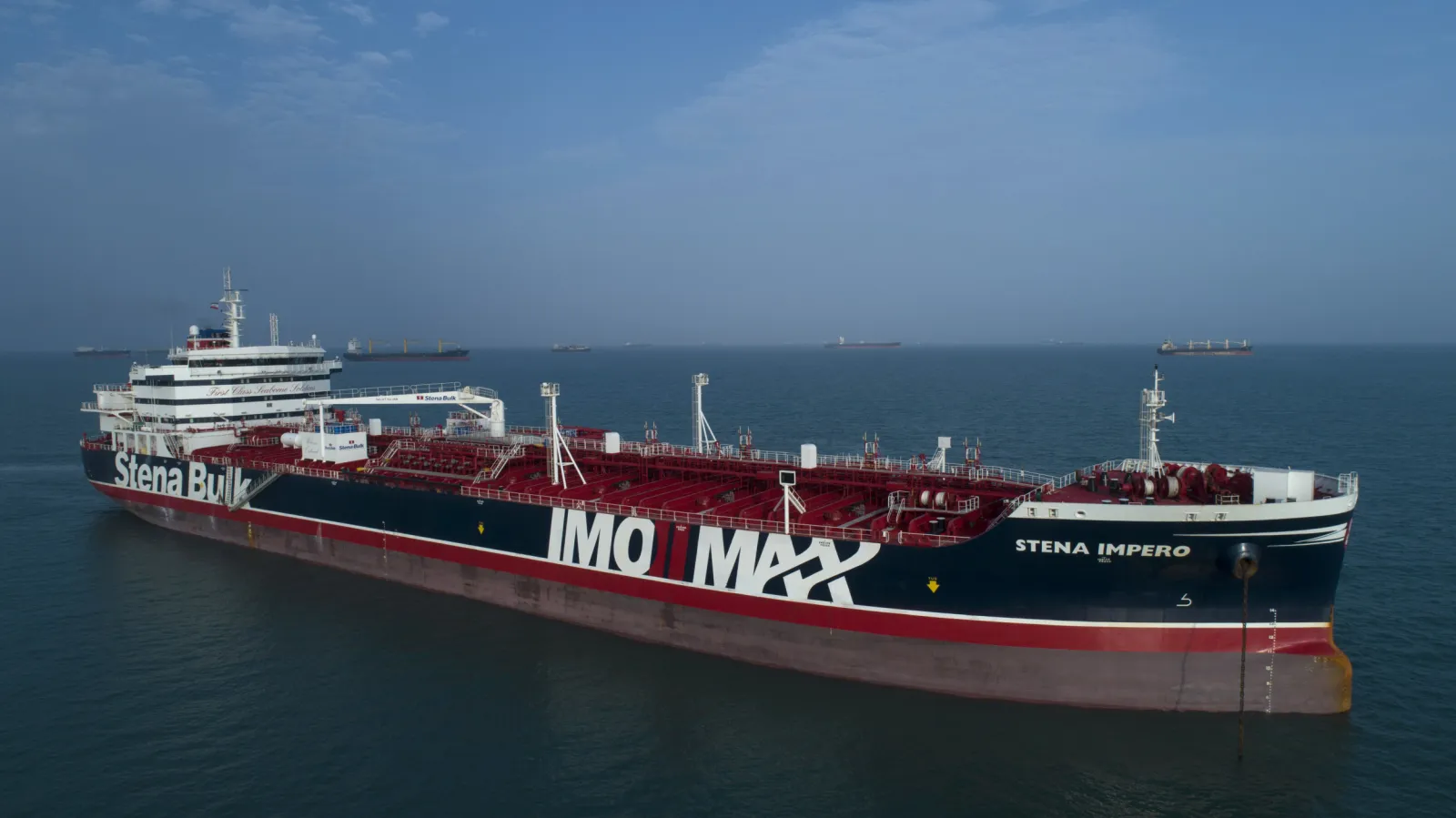
While the EIA estimates that a large majority, around 80 percent, of the oil-based product moving through the Strait go to Asian markets, around 2 million barrels a day end up in the U.S.
...
If the Iranian government following the lead of the parliament, decides to close the Strait, Asian markets are expected to be most hit, but American markets will be too.
Despite influence over the Strait, Iran doesn't supply the most oil that transports through it, Saudi Arabia does.
Some experts have said that if Iran were to cut off access to the Strait, it could spike oil prices by 30 to 50 percent immediately, with gas prices likewise rising.
"Oil prices would likely double, to well above $100. The extent to which that price shock would be sustainable is unclear," Marko Papic, chief strategist at BCA Research, told Newsweek in an email Sunday. He also noted that due to the overwhelming pressure campaign the country would face over its closure "the price shock would be of limited duration."
"However," he continued, "it could impact confidence domestically, impact capex [capital expenditure] intentions by corporates, and thus trickle into the animal spirits [psychological factors that influence economic behavior] that affects not just stocks, but also the labor market."
Fears that Iran could attack U.S. oil infrastructure in the region and levy its power over the Straits of Hormuz could "combine to make prices and speculation rise about the security and dependability of supply," Greg Kennedy, director of the Economic Conflict and Competition Research Group at King's College London, previously told Newsweek.
"Lack of clarity of how long this condition will last will also lead to hoarding or preemptive purchasing by other nations, so there are competition supply fears that will drive up prices," he added.
Iran has been reluctant to close to Strait, even during times of intense conflict during the heat of the Iran-Iraq war.

...
What People Are Saying
Greg Kennedy, director of the Economic Conflict and Competition Research Group at King's College London, told Newsweek: "This is not an act that just stays in the Gulf region, it has wider global strategic ripples."
Jorge León, head of geopolitical analysis at energy consultancy Rystad, told the Financial Times on Sunday: "In an extreme scenario where Iran responds with direct strikes or targets regional oil infrastructure, oil prices will surge sharply. Even in the absence of immediate retaliation, markets are likely to price in a higher geopolitical risk premium."
Spencer Hakimian, founder of Tolou Capital Management, wrote on X, formerly Twitter, on Saturday: "There are close to 50 large oil tankers scrambling to leave the Strait of Hormuz right now. Looks like the oil industry is expecting the Strait to be blockaded in the coming days."
President Donald Trump wrote on Truth Social on Saturday evening: "ANY RETALIATION BY IRAN AGAINST THE UNITED STATES OF AMERICA WILL BE MET WITH FORCE FAR GREATER THAN WHAT WAS WITNESSED TONIGHT. THANK YOU! DONALD J. TRUMP, PRESIDENT OF THE UNITED STATES."
Brian Krassenstein, who has over 900,000 followers on X wrote on Sunday if the Strait is closed, people can expect: "U.S. Gas Prices likely Skyrocket. Potential $5–$7/gallon range depending on duration. Military Escalation Risk. U.S. Navy and allies likely to respond. Tanker delays affect oil, LNG, and related goods."
What Happens Next?
Any final decision on Iran's response, whether negotiation or closing the Strait or other, however, will largely rest with the country's leader Ayatollah Ali Khamenei. The parliament vote to close the Strait merely advises him of the option to pursue.
Update 6/22/25, 6:26 p.m. ET: This article has been updated with additional information.
View 0 Comments
Submit Correction
View Editorial & AI Guidelines