Gregori Saavedra


By Christopher Roberts, Micah McCartney, and Didi Kirsten Tatlow
0
Share
Newsweek is a Trust Project member
See more of our trusted coverage when you search.Prefer Newsweek on Googleto see more of our trusted coverage when you search.
President Donald Trump’s allies once boasted he was the master of 4D chess.
In Washington, Taipei, Tokyo and a constellation of think tanks, military-minded policy wonks keep gathering around maps to play a different game: What happens if China decides to seize Taiwan?
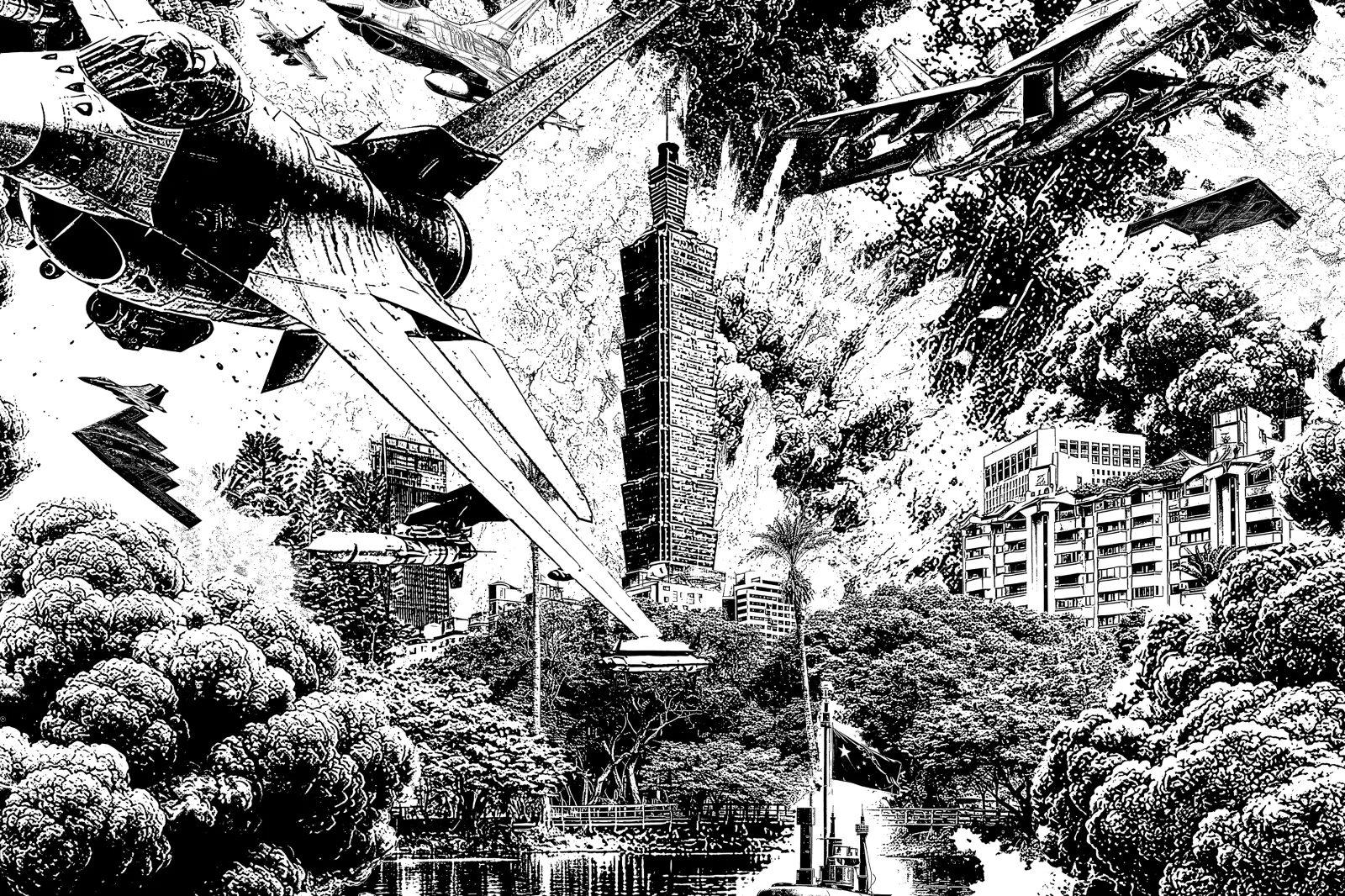
The pace is slower than you might think—more Risk than charades. The war games don’t generally start with Chinese marines clawing their way up a beachhead, Normandy style. They start with something quieter and, in some ways, even more frightening: a Chinese coast guard vessel ordering a merchant ship to submit to inspection, an undersea cable cut, lights going out across the island. The point of the games is to identify the threshold at which coercion becomes crisis.
Read More on World
Many of them share an assumption: that China would tighten the noose gradually and the United States would try to manage the situation, not escalate it. It might escort shipping, redeploy forces and voice public opposition, but it would move carefully because the risks of open war would be too costly unless there were no other option.
Then Trump attacked Iran, and now those assumptions may have changed.
Gregori Saavedra
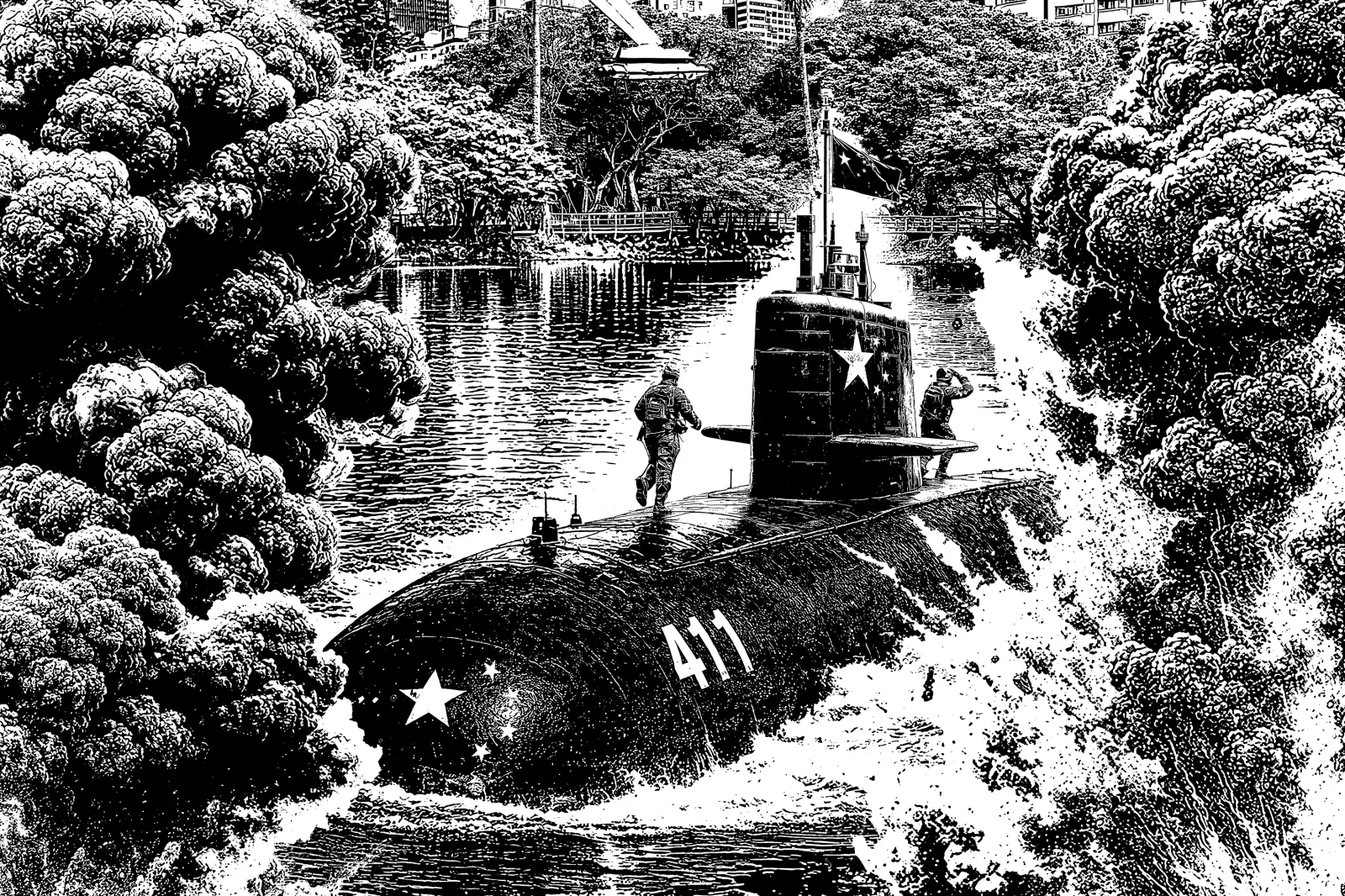
The lesson from Iran is not that China is Iran. It is not that defending Taiwan would be easy. It is about how politics changes the calculus. When the Trump administration decided on war, for reasons that are still publicly opaque, the U.S. did not slowly escalate. It attacked with crippling force at the heart of the enemy.
Operation Epic Fury began at 1:15 a.m. ET on February 28. In the first 24 hours U.S. forces—in concert with Israel—struck more than 1,000 targets, including control centers, air defense, communications and, shockingly for Iranians and the world, the Supreme Leader Ayatollah Ali Khamenei himself. By March 10, they had struck more than 5,000 targets while sharply reducing Iranian missile and drone attacks.
That changes the outlook on Taiwan because the war Beijing is most likely to start is not necessarily the war most people still imagine, in which China fires salvos of missiles, batters Taiwan and U.S. bases, drives U.S. carriers away, then sends the invasion fleet across the Strait under a screen of warplanes and drones. The war games and analytical studies point toward something more incremental and more plausible: quarantine, blockade, cyberattack, then escalation at sea and in the air, and only after that, perhaps, an invasion attempt.
That version of the war may look safer for Beijing at the beginning. It may also be the version most likely to trigger devastating American escalation far sooner than observers had previously thought. Chinese caution is not a superpower against an enemy that throws caution to the wind and doesn’t appear to care what either its allies or critics think.
Why Iran Changed the Taiwan Equation
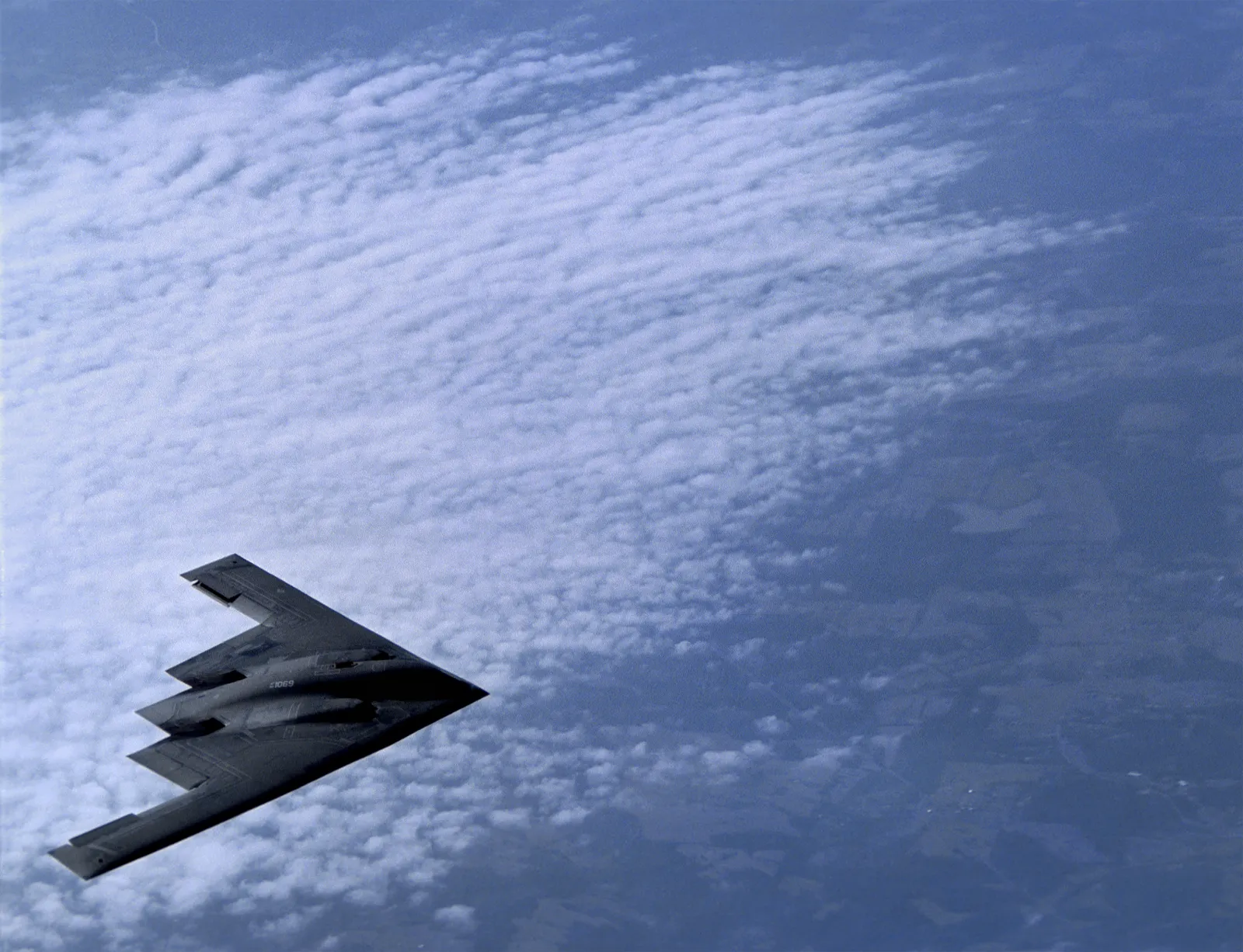
The most important thing Operation Epic Fury demonstrated was not that American air power is invincible (it clearly isn’t); it was that America still remembers how to fight a systems war, and that this White House is capable of choosing it. More than 100 aircraft launched from land and sea in the first day, with cyber and space campaigns degrading Iranian communications and sensors while the air campaign struck command-and-control centers, ballistic-missile sites, naval forces and intelligence infrastructure. B-2 stealth bombers flew a 37-hour round trip from the continental U.S. to drop penetrating munitions.
...
By March 10, General Dan Caine, chairman of the Joint Chiefs of Staff, was saying Iranian ballistic missile attacks had fallen 90 percent from day one and one-way drone attacks 83 percent, while more than 50 Iranian naval vessels had been hit in the opening stage of the war. The old thinking on Taiwan often assumes the U.S. would marshal its forces at the start of a crisis, step up escorts, move carriers and bombers and only attack the Chinese mainland after Beijing had already crossed every obvious red line. Iran showed another possibility. Once the administration decided it was in a real war, it went after the brain, the nervous system and the limbs all at once.
The Center for Strategic and International Studies estimated that U.S. forces fired 786 JASSMs and 319 Tomahawk missiles in the first six days of the Iran war—several years of production in both cases. Missile stocks can be burned down quickly in a high-end campaign, and restoring them remains a significant industrial challenge. However, the lesson is that it can front-load violence on a scale some analysts had stopped imagining—and now Beijing has to plan around that possibility.
Not only that, but Chinese developed air defenses and intelligence have proved to be disappointing for its allies Venezuela and Iran. Its exports, especially the HQ-9B missile system and JY-27A radar, which Beijing has marketed as a long-range shield against advanced aircraft and missiles, comprehensively failed in the face of American assaults.
A U.S. military source who was involved in the Venezuela operation, and who was not authorized to speak publicly, told Newsweek: “I think the narrative we [the U.S.] should be projecting globally is, ‘Be careful depending on China, Russia and Iran for security.’ When the U.S. started pressure in Venezuela, their ‘friends’ weren’t vocal enough diplomatically.
“When the U.S. planned the operation to capture [then-President Nicolás] Maduro…all their intelligence failed miserably and they were completely unaware. Those intelligence agents and techies also failed to identify the U.S. coming in. We made them think what we wanted them to think and do what we wanted them to do. Militarily, all their high-end military equipment that Venezuela had also completely failed. Air defense, radars…garbage.”
Cheng-Yu Wu, policy analyst at the Institute for National Defense and Security Research, a Taiwanese think tank, agreed with that assessment. “Recent real-world failures in conflict zones like Iran and Venezuela reveal a fundamental flaw in China’s defense technology: a lack of ‘systemic resilience,’” he told Newsweek.
“While Chinese-made detection systems look impressive on paper, they often act as ‘fair-weather assets’—they perform well in theory but can collapse when faced with advanced electronic jamming or stealth tactics.
“China’s air defense systems are ‘offensive-heavy but defensively brittle.’ They are designed to see far and hit hard, but they lack the flexible command structures and hardened protection needed to survive a modern digital battlefield. Because these systems rely on a rigid, centralized ‘brain,’ they can quickly become blind targets if their communication links are disrupted or cut.”

...
The War Everyone Imagines
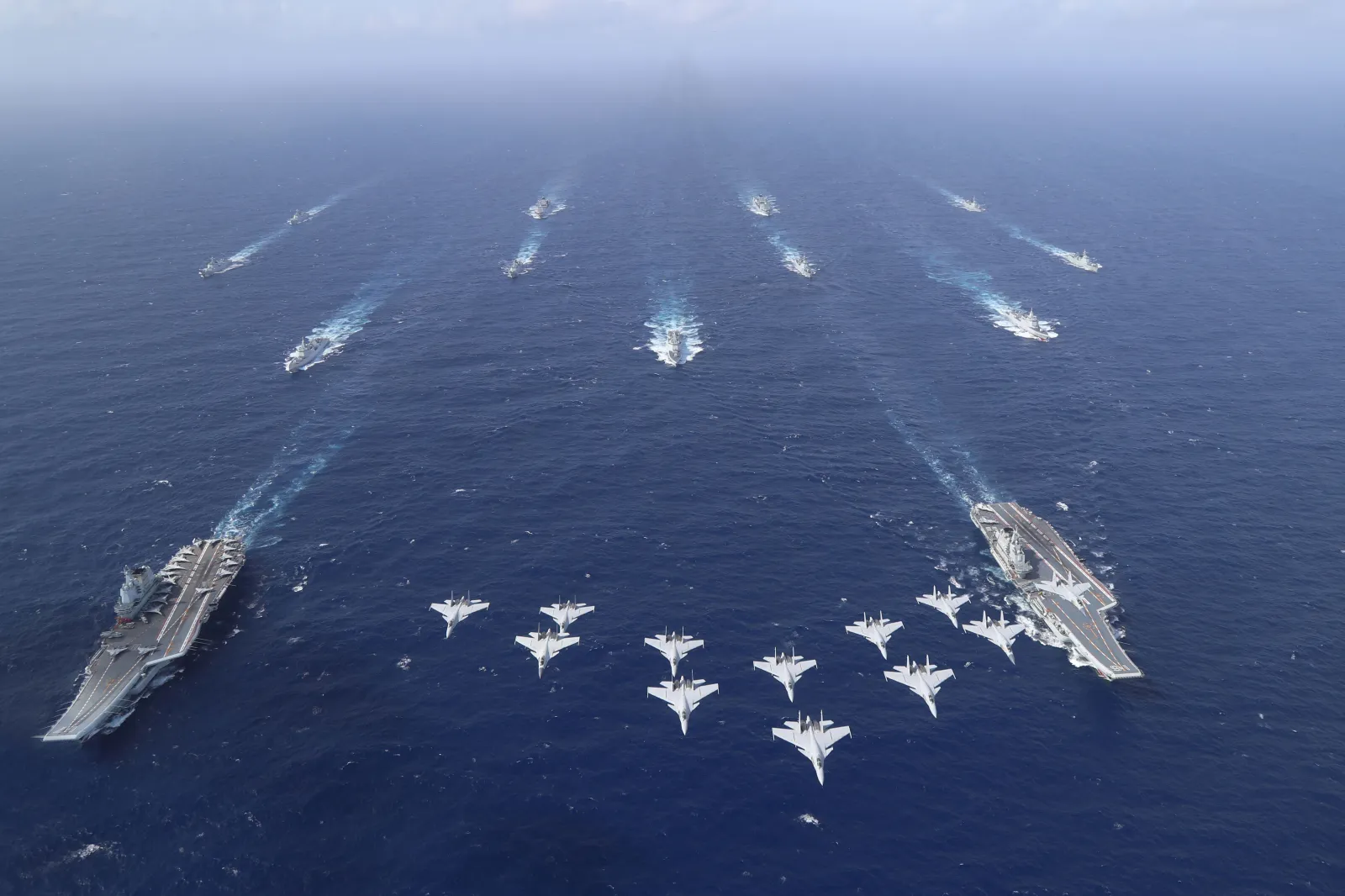
There is a reason the conventional story of a Taiwan war has become something approaching popular orthodoxy: It is built on real Chinese advantages. The Chinese navy is the world’s largest by hull count, with a battle force of more than 370 ships and submarines and more than 140 major surface combatants. China also fields the largest aviation force in the Indo-Pacific and the third largest in the world, with more than 3,000 aircraft overall and roughly 2,400 combat aircraft. Its Rocket Force exists in large part to impose a missile shadow over any Taiwan contingency, and its anti-ship ballistic missiles are designed specifically to threaten U.S. intervention.
Geography is still destiny. China’s coast opposite Taiwan is lined with ports, airfields, missile bases, rail lines, shipyards and factories. On paper, that creates a brutal opening scene: missiles streaking toward Taiwanese air defenses and U.S. facilities at Kadena, Yokosuka, Sasebo, Iwakuni and Misawa in Japan and Andersen Air Force Base on Guam, while carriers are pushed east and the invasion fleet crosses under a protective umbrella of warplanes, drones and long-range fires. The problem with that scenario is not that it is absurd; it is that it hands China all the advantages of its undoubted strength and too few of the constraints. It imagines Beijing choosing the cleanest, most escalatory path immediately, even though Chinese planners know that the first side to hit U.S. forces openly may also be the first side to unify Washington, Tokyo and other allies into a wartime coalition.
That is why a growing body of work now treats blockade, quarantine and graduated coercion not as sideshows to invasion, but as the more plausible opening chapters of the war.
Phase one: Blockade
A blockade is easy to underestimate because it can begin in the language of administration rather than annihilation. A coast guard boarding. A customs inspection. A notice to shipping companies that certain routes are no longer safe without Chinese permission. Why hand the Americans a casus belli if coercion might work first?
That logic now sits beside a fresh U.S. assessment reported by The Wall Street Journal: Beijing is not understood to be working to a fixed 2027 invasion deadline and still appears to prefer nonmilitary pressure if it can move Taiwan politically without taking on the risks of a large amphibious assault.
A blockade also exploits the commercial nervous system of the island. It begins to bite not when dozens of ships have been sunk, but when insurers, shippers and energy traders decide the route is no longer normal business, as has been demonstrated recently in the Strait of Hormuz.

...
Phase Two: Cyberwar and Confidence Collapse
The second phase is not chiefly about stealing secrets; It is about breaking confidence. Taiwan’s National Security Bureau said that in 2025 the island faced an average of 2.63 million cyber intrusion attempts per day across nine critical sectors. It also said cyberattacks rose on 23 occasions during 40 People’s Liberation Army joint combat readiness patrols.
In a blockade scenario, cyberwar is a force multiplier for fear. Hit hospital systems and ordinary life starts to feel brittle. Disrupt shipping platforms and cargo becomes harder to route even when vessels can still reach port. Tamper with power management or telecommunications and every rumor becomes more believable. The point is not espionage as such; it is to make the island feel ungovernable.
In modeling by the Center for Strategic and International Studies in a similar scenario, Taiwan’s natural gas stocks were exhausted in roughly 10 days. Coal lasted about seven weeks. Oil lasted about 20 weeks.
The information war would almost certainly thicken at the same time. Taiwanese authorities have already highlighted Chinese deception activity in the air and at sea, including large military drones transmitting false aircraft identities. Wu, the Taiwanese defense analyst, said this was part of the “complexity race.”
“Victory will not go to the side with the most planes, but to the side that can clear the ‘fog of war’ [the uncertainty or lack of information on the battlefield] and process information the fastest,” he said.
“For regional allies, the smartest counterstrategy is not to match China jet-for-jet, but to build a smarter, more resilient web of sensors that can withstand pressure and keep the picture clear.”
Phase Three: The Hinge Point
This is the phase that matters most, because it is where strangulation starts turning into war. In the CSIS blockade games, Taiwan could withstand a nonmilitary blockade, but the picture worsened sharply when China used submarines, mines and limited military force. Without U.S. intervention, Chinese submarines and mines destroyed 40 percent of inbound ships even when Taiwan exerted maximum effort and partners pursued a kind of Ukraine-style resupply.
...
That finding should change how one thinks about timing. If Washington waits for the most photogenic moment of crisis—the sight of landing craft approaching a beach—it may already be too late.
This is also the point at which the lesson from Iran becomes clearer. The older consensus assumes Washington would still try to stabilize the situation—escort shipping, surge regional forces, send warnings, hold back from hitting the mainland. After Epic Fury, that looks less solid. The threshold for U.S. attacks on Chinese military infrastructure may arrive much earlier, because an attempted strangulation of Taiwan is already an act of war and also because the systems sustaining it are precisely the systems Washington is now more confident it can attack with extraordinary violence.
That does not mean the United States would immediately try to level China’s military. It means the logic of intervention shifts. The target set could be the Chinese operating system: coastal radar, air defense sites, missile support infrastructure, command-and-control centers, naval bases, air bases generating sorties over the Strait and the sensor chains that make anti-ship missiles dangerous.
Iran showed how quickly Washington can move from shock decision to that kind of target list.
The temptation to attack what is known as the kill chain would be especially powerful. China’s so-called “carrier killers,” its hypersonic anti-ship missiles, are real, serious weapons. But each depends on a kill chain: detect, fix, track, decide, transmit, strike. The missile’s speed is not the end of the story. The system needs to survive jamming, deception, cyberattack and physical destruction. Iran offers a concrete example of how fast the character of a campaign can change once air defenses begin to fail.
Epic Fury opened with the most exquisite tools available—stealth bombers, stealth fighters, electronic attack, cyberwar, long-range cruise missiles and penetrating munitions. Once the airspace became more survivable, the war moved on to a broader and cheaper footing. A U.S. campaign in a Taiwan crisis could begin with expensive suppression, but the goal would be to unlock a more sustainable attack on the Chinese system once the first defensive layer had been blinded or broken.
There is, of course, a rejoinder: China is not Iran. It is much more modern, much more heavily armed, far better dispersed and protected, and close to its own industrial base. But it still leaves open the central question: Does Washington have to wait until Beijing has already launched the armada? Or can it try to wreck the architecture of coercion in Phase Three, before a full-scale landing attempt begins?
After Iran, it is much harder to dismiss the second possibility.
Phase Four: The Crossing
If blockade and coercion fail, Beijing still has a military framework for invasion. The Pentagon’s China military report says the PLA fields six amphibious combined-arms brigades, four in the Eastern Theater Command and two in the Southern Theater Command. The PLAN Marine Corps has been expanded for regional amphibious operations.
...
Yet the truly decisive problem is not glamorous. It is freight. Reuters’ August 2025 reporting on Chinese exercises near Jiesheng in Guangdong showed why. Twelve civilian vessels—six roll-on, roll-off ferries and six deck cargo ships—took part in the exercise. Satellite imagery showed cargo ships unloading vehicles directly onto a beach via ramps, with at least 330 vehicles visible on and near the shore. The exercise also highlighted the reappearance of a temporary pier system.
China’s dedicated military amphibious lift is formidable, but it is not enough by itself. Any serious assault depends on a huge conveyor belt of civilian ferries, deck cargo vessels, pier sections, ports, marshaling yards, beaches, fuel points and unloading nodes.
That conveyor belt is where the alleged romance drains out of invasion theory. Analysts told Reuters that dedicated military ships and landing craft can carry only about 20,000 troops and their equipment in the first wave. Estimates of what it might take to subdue Taiwan run from roughly 300,000 to more than a million personnel. Invasion is less a cinematic landing than an industrial process under fire.
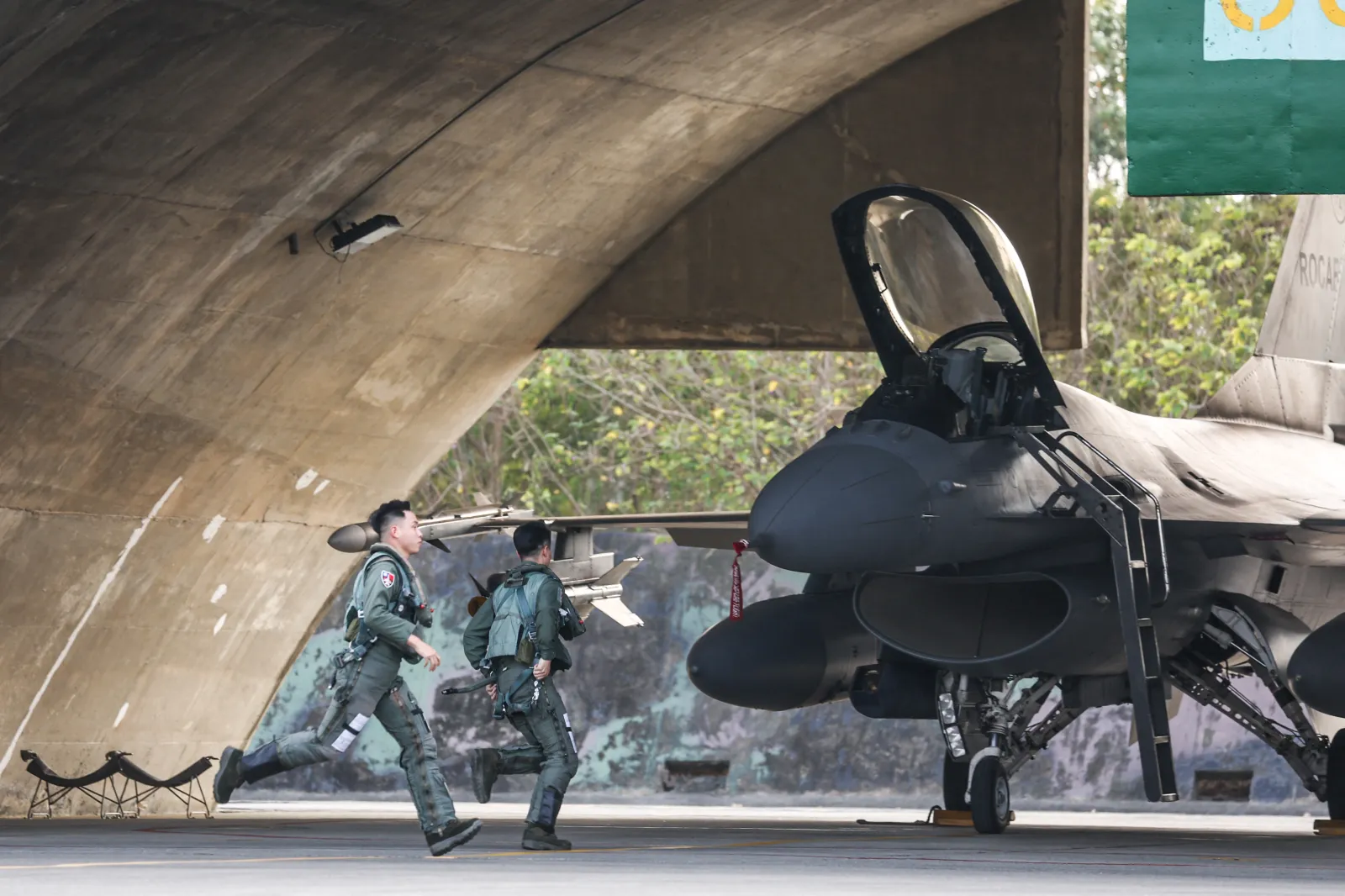
Taiwan’s job, then, is not to emerge from the first blow untouched. It is to emerge alive enough to keep that conveyor belt from running smoothly. Han Kuang 2025, Taiwan’s largest ever exercise, mobilized about 22,000 reservists and for the first time featured the HIMARS and Sky Sword systems prominently. Taiwan has been emphasizing mobility, rapid rearming, dispersal and layered coastal defense. It has completed the upgrade of 141 older F-16 fighters. In drills, Taiwan has rehearsed repelling a seaborne assault with drones, fast patrol craft, mobile Hsiung Feng anti-ship missiles and Marine Corps teams.
The significance of early U.S. escalation is obvious. If Washington waits until the invasion fleet is already assembling for the crossing at full capacity, China begins Phase Four after enjoying every day of unmolested preparation that blockade and coercion bought it.
If Washington has already spent Phase Three attacking key air bases, sensors, logistics nodes and naval infrastructure, then the crossing does not necessarily disappear—but it begins degraded. The conveyor belt stutters.

...
Phase Five: The Long War
This is another place where the popular imagination often compresses the problem. People still talk as if a Taiwan war would be decided in a few cinematic days. Most analysis does not say that. The CSIS major invasion study, ‘The First Battle of the Next War,’ ran 24 iterations and found that a Chinese amphibious invasion was defeated in most scenarios, but only at extraordinary cost.
The German Marshall Fund think tank reached a similarly grim conclusion. In its full-invasion scenario, the war lasted months, not days. Chinese forces got ashore, but reinforcement and resupply across the Strait were mauled by sustained Taiwanese and U.S. attacks. Eventually the PLA withdrew after roughly 100,000 personnel losses. Taiwan suffered around 50,000 military dead and another 50,000 civilian casualties. The United States lost around 5,000 military personnel and 1,000 civilians. Japan lost roughly 1,000 military personnel and 500 civilians.
Chinese Military Weakness Is Not About Hardware Alone
China is not weak. Its best aircraft are serious. Its missile force is formidable. Its navy is vast. Any fight over Taiwan would be ghastly, uncertain and escalation-prone. The mistake is not overestimating Chinese power but instead imagining that power as a pile of platforms, rather than a system that has to survive first contact.
Wu from INDSR agreed: “The operational friction observed in Iranian and Venezuelan theaters exposes a fundamental flaw in Beijing’s defense architecture: a severe lack of systemic resilience.”
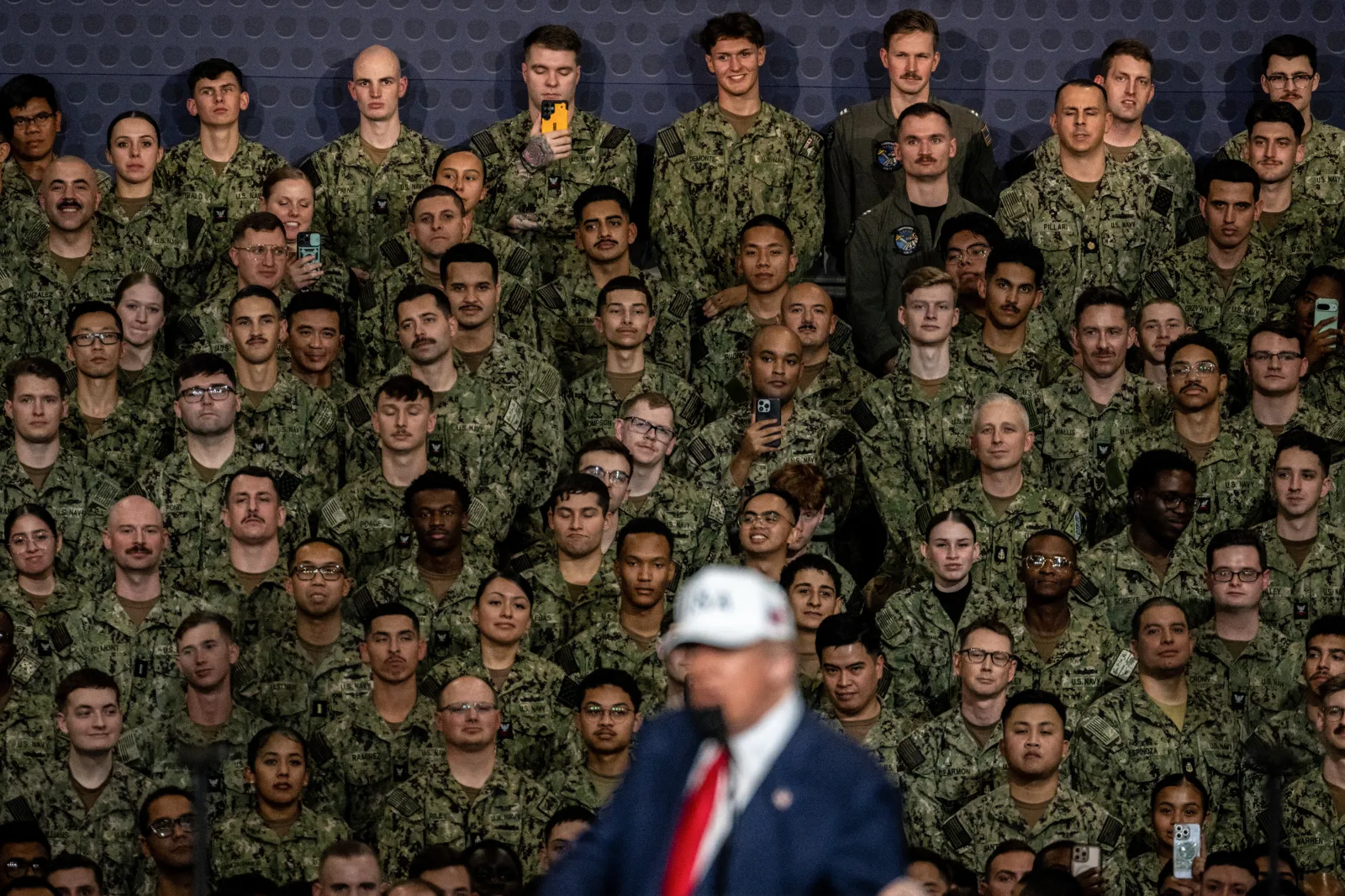
The U.S. has its own vulnerabilities, of course. Kadena can be hit. Andersen can be hit. Yokosuka can be hit. But America’s comparative strength lies precisely in the qualities Wu emphasized: the ability to keep enough of the network alive to continue fighting after the first shock. The forward-deployed aircraft carrier USS George Washington, rotating fighter packages at Kadena, bomber task forces through Andersen and the Marine Corps’ evolving littoral anti-ship capability around Okinawa are all designed for resilience.
The real American objective, if war comes, would not be some glorious dogfight over mainland China. It would be to cut sortie rates, slow the conveyor belt and break the kill chain.
...
After Iran
None of this is a promise of easy victory. A Taiwan war could still kill tens of thousands of people, devastate the island, smash U.S. bases across the region and risk catastrophic escalation. It could also expose painful limits in American industrial capacity if the war became a prolonged exchange of expensive precision weapons.
What it cannot any longer be described as, at least not honestly, is a problem that begins only when Chinese troops start storming ashore.
The implication of Iran is that the U.S. may choose to intervene decisively at an inflection point rather than waiting for the beachhead. If that happens, the war China started as a controlled strangulation could become a violent contest over whether its own military system can survive being hunted.
There is also a deeper historical reason Beijing may have assumed Washington would stop short of striking the Chinese mainland. In the Korean War, as U.S.-led forces pushed north toward the Yalu River in 1950 and the conflict threatened to spill directly into China, President Harry Truman ultimately chose restraint. General Douglas MacArthur, commanding the U.S. forces, wanted a wider war; Truman refused, and later removed him from command. The lesson has resonated for more than 75 years: Even after Chinese intervention, the U.S. still chose to contain the war rather than carry it into China itself.
It helped to codify in Beijing a potentially dangerous assumption about American statecraft: that the U.S. might fight fiercely on China’s periphery, but would hesitate before crossing the threshold into attacks on the mainland. If Trump has now shown a greater willingness to strike at the heart of an enemy early, rather than slowly manage escalation, that changes the political weather.
Trump may soon be carrying these tensions to Beijing, though talks scheduled for the end of March were postponed. Taiwan will overshadow everything when they do start. China’s President Xi Jinping has already warned about U.S. arms sales to the island. The lesson for Xi after Iran, though, is that he has less reason than before to assume there will be multiple warning shots before the real shooting starts.

Illustration by Gregori Saavedra for Newsweek
View 0 Comments
Submit Correction
View Editorial & AI Guidelines