...

By Tom O'Connor
Deputy Editor, National Security and Foreign Policy
0
Share
Newsweek is a Trust Project member
See more of our trusted coverage when you search.Prefer Newsweek on Googleto see more of our trusted coverage when you search.
Joint U.S. and Israeli operations targeting Iran have sparked a new round of regional confrontation, with the Islamic Republic firing missiles and drones at Israel and U.S. bases across the Middle East.
But in addition to maintaining a massive conventional arsenal that includes a number of long-range weapons, Tehran has long sought to project power and deterrence through its coalition of allies, known as the Axis of Resistance. While these groups, the primary factions of which are based in Yemen, Lebanon and Iraq, have suffered setbacks since entering into direct conflict with Israel over the war in Gaza that first erupted in October 2023, they retain significant capabilities.
While each group maintains its own individual interests and coordination with Iran remains uncertain in light of U.S. and Israeli claims of mass killings of Iranian political and military leadership, including Supreme Leader Ayatollah Ali Khamenei, their intervention, or lack thereof, may prove decisive in shaping the course of the ongoing escalation.
Read More on World
...
Houthis
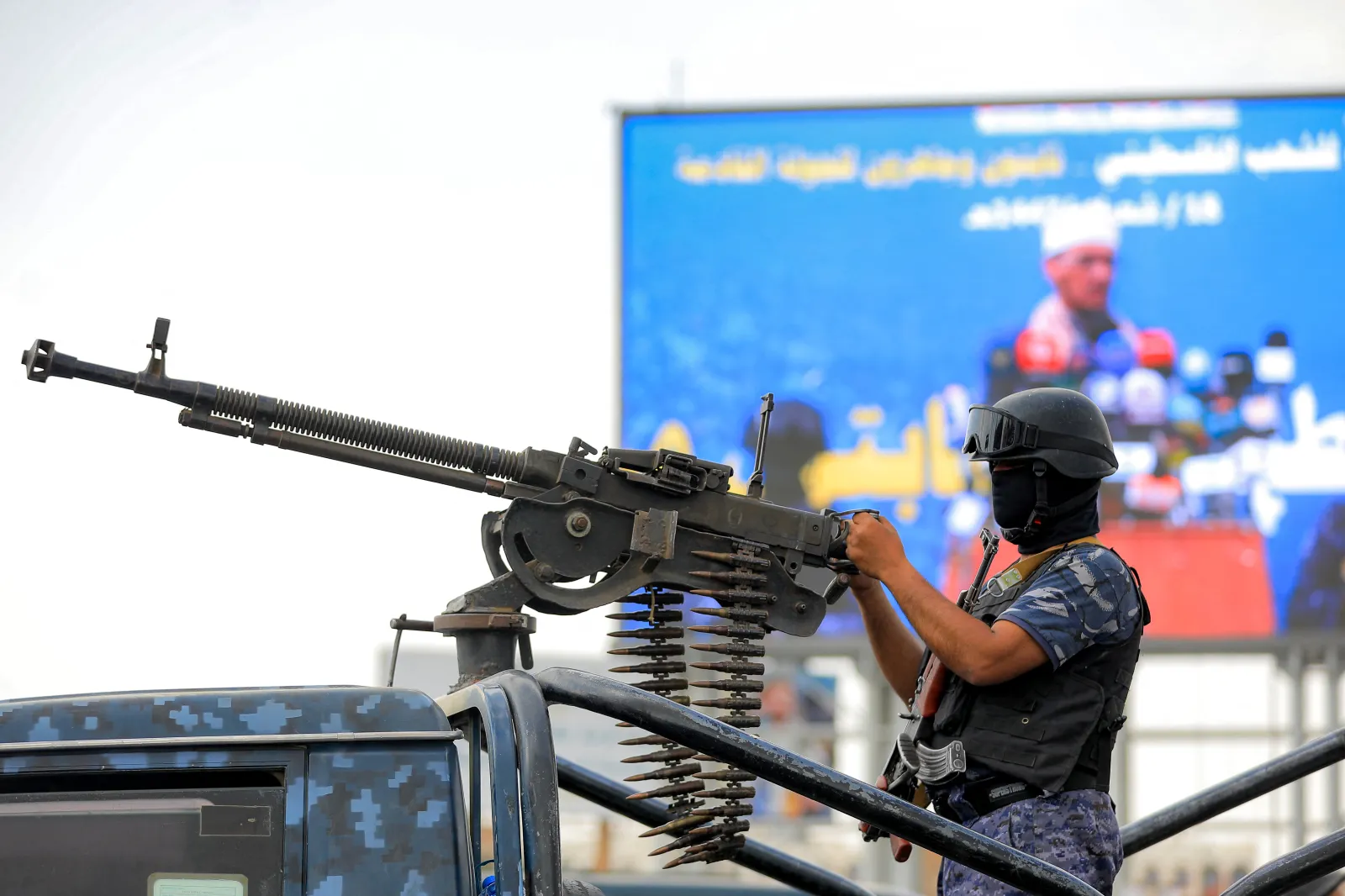
Yemen's Ansar Allah, also known as the Houthi movement, is currently considered to be the most powerful Axis of Resistance faction, boasting hundreds of thousands of fighters and advanced weaponry used to strike Israel and ships attempting to transit nearby crucial trade routes since the outbreak of the war in Gaza.
Ansar Allah has also weathered several rounds of U.S. and Israeli strikes, with the President Donald Trump having reached a ceasefire with the group last May. Ansar Allah has largely paused operations targeting Israel and vessels in the Red Sea and surrounding waters since the Israel-Hamas ceasefire deal reached last October.
But in the leadup to the current U.S. and Israeli strikes, as Trump ordered a massive U.S. military build-up in the region amid nuclear negotiations with Tehran, the group had warned of potential intervention on behalf of its Iranian ally.
Now, in the midst of the ongoing hostilities, a source within Ansar Allah expressed to Newsweek condemnation of the U.S. and Israeli operations but also noted the group had yet to play any direct role in the response.
"Firstly, this barbaric American-Zionist aggression against a sovereign state, the Islamic Republic of Iran, is condemned and rejected," the Ansar Allah source said. "It has no legitimacy or justification whatsoever. It targets our region in general, tampering with its security and stability, and ultimately aims to impose a new reality against the will of the region's people. This is completely unacceptable."
"Our people, and most of the region's peoples, stand with the Iranian people in confronting this aggression, which targets them all," the source continued. "Regarding any military action by our country, this will be officially announced through the appropriate and known channels."
The security situation on the Arabian Peninsula, where Yemen remains divided between Ansar Allah and an internationally government backed by Saudi Arabia, is further complicated by Iranian missile strikes impacting Saudi Arabia, the United Arab Emirates, Qatar and Kuwait, all nations hosting U.S. bases. Iranian officials have said any military installation deemed to be supportive the U.S.-Israeli operation would be a legitimate target.
At the height of Ansar Allah's campaign against regional trade, international maritime traffic through the Suez Canal that connects the Mediterranean Sea and Red Sea fell by some two thirds, with most vessels forced to circumnavigate the entirety of the African continent. Now, amid the current conflict, Iran's Islamic Revolutionary Guard Corps has sought to close the Strait of Hormuz, another critical chokepoint for regional and global trade.

...
Hezbollah
The Hezbollah movement has long been considered to be one of the world's most capable paramilitary groups, commanding a sizeable standing army, substantial firepower and a strategic presence right across Israel's northern border with Lebanon.
After its early intervention in support of the Hamas-led attack that sparked the war in Gaza, Hezbollah was subject to some of the most intensive Israeli operations of the conflict, targeting weapons stockpiles and senior commanders. The group's longtime Secretary-General Hassan Nasrallah was slain in a September 2024 strike in southern Beirut, and a ceasefire was signed with Israel that November.
Yet Israel has continued to conduct routine strikes against stated Hezbollah positions across Lebanon, including an operation announced just minutes before reports emerged of the U.S.-Israeli attack on Iran early Saturday morning. Israel has accused Hezbollah of refusing to disarm and withdraw from positions south of the Litani River, while Hezbollah has accused Israel of keeping troops at several positions in southern Lebanon despite a pledge to withdraw.
In comments shared with Newsweek on Saturday amid the U.S.-Israeli strikes against Iran, a Hezbollah spokesperson said that "Iran doesn't need anyone to defend it," but "if Israel attacks Lebanon, it's only natural that free people will defend Lebanese territory by all means."
In a statement issued publicly earlier in the day, Hezbollah condemned what it referred to as "the treacherous American-Israeli aggression targeting the Islamic Republic of Iran after months of Zionist and American threats aimed at subjugating the Islamic Republic, forcing it into submission, and depriving it of its natural and legitimate right to possess peaceful nuclear capabilities and develop its defensive missile capabilities, like all other countries in the world."
The group went on to commend "the strength, resilience, and steadfastness of the Islamic Republic of Iran and its people" amid the latest round of enemy action did not pledge any direct intervention on the part of Hezbollah.
"Hezbollah, while declaring its full solidarity with the Islamic Republic of Iran, its leadership and people, calls upon the countries and peoples of the region to stand against this aggressive scheme and recognize its danger," the Hezbollah statement said. "Its dire consequences will affect everyone without exception if it is left unchecked. We are confident that the American and Israeli enemy will receive a major blow and will reap nothing but failure from its tyrannical and criminal aggression."

...
Islamic Resistance in Iraq
Sharing a direct border with Iran, Iraq hosts an array of influential militias with strong ties to the Islamic Republic. A number of these groups have organized under the collective banner of the Islamic Resistance in Iraq, having fired rocket and drone strikes against U.S. troops in Iraq and Syria in the early stages of the war in Gaza.
Among the most prominent groups include Kataib Hezbollah, the Nujaba Movement, Asaib Ahl al-Haq and Kataib Sayyed al-Shuhada, though many more names have emerged amid the turmoil, some believed to be cells consisting of existing organizations.
Reports indicate some Iraqi paramilitary units also played a role in Iran's crackdown last month against nationwide protests, the soaring death toll of which first prompted Trump to begin issuing military threats against Tehran. The warnings spurred a mobilization among some Iraqi militias, including Kataib Hezbollah, which began a mass recruitment campaign.
Kataib Hezbollah issued a statement indicating the group could play a role in attempting to drive out U.S. forces based in Iraq, a long-sought objective of Islamic Resistance in Iraq factions.
"In this fateful battle, there is no place for neutrality, and there is no place between the two positions, either you are in the trench of truth and support its people, or you engage in the front of falsehood and you are with the oppressors," Kataib Hezbollah said.
The "enemy," according to the group "must be dragged into a long war of attrition, a war that will make him taste the woes wherever he is and wherever he is," and "we must not leave any American presence in the region in general, and especially in Iraq, for this is the day of reckoning."
Iraq has once again been swept up into region confrontation, with reports of Iranian missile strikes near the airport and U.S. consulate in the northern city of Erbil and the Sabreen News outlet aligned with Iraqi militias reporting strikes against the U.S. military's Camp Victory at Baghdad International Airport.
Update 5:55 p.m. ET: This article has been updated to include additional information and comments.
View 0 Comments
Submit Correction
View Editorial & AI Guidelines