10
Loading video...

By Jasmine Laws
Reporter
0
Share
Newsweek is a Trust Project member
See more of our trusted coverage when you search.Prefer Newsweek on Googleto see more of our trusted coverage when you search.
While GLP-1 receptor agonists, like Ozempic and Wegovy, have been heralded as miracle weight loss drugs, research has shown that as soon as patients stop using the medication, they can quickly regain lost weight. However, experts may now have found a way to reduce that weight regain.
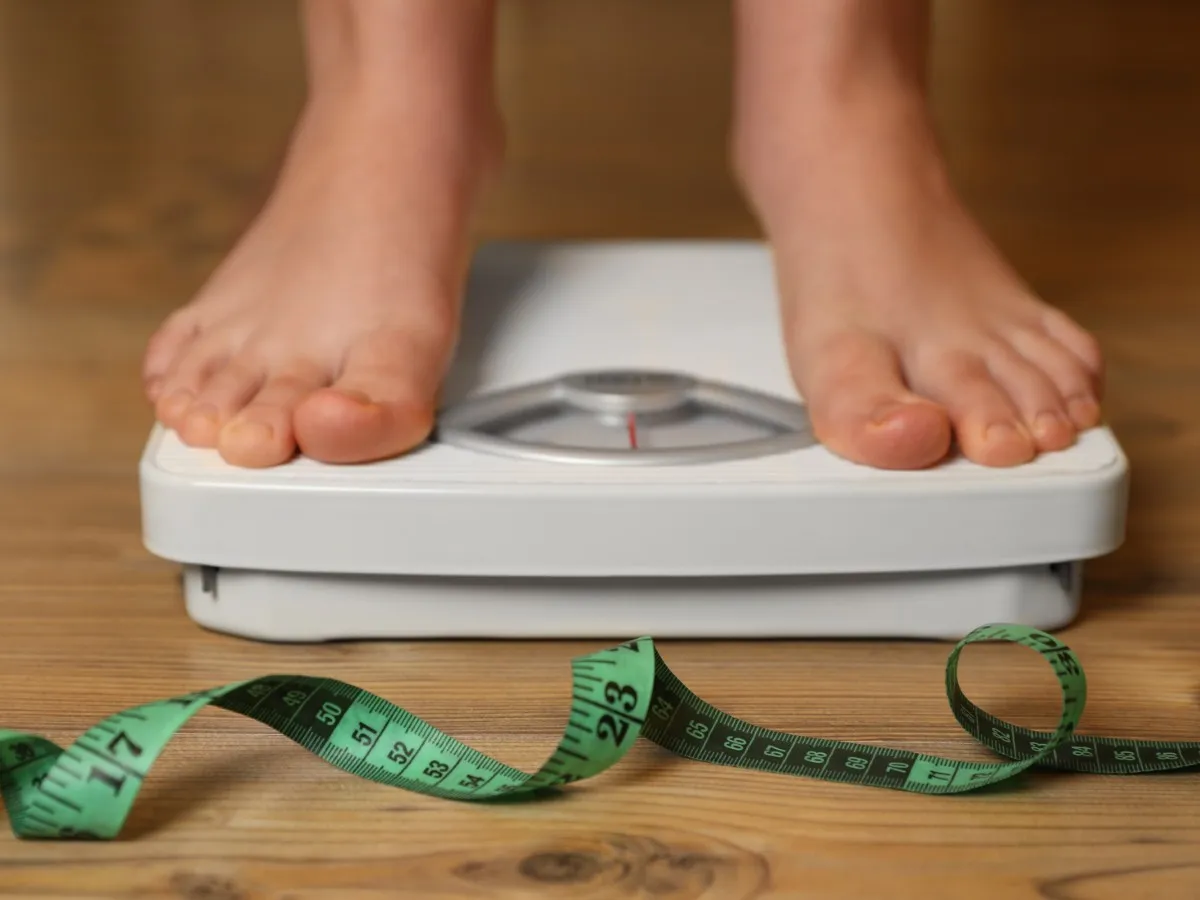
A review of almost 40 studies found that when people stopped taking GLP-1s, they typically regained around a pound a month, and eventually regained all the weight they had lost while taking the medication within about two years. People may decide to stop taking GLP-1s for reasons including cost, insurance coverage issues, side effects and many others.
Hoping to find a solution to this challenge, researchers at Tufts University and the University of Texas Southwestern Medical Center investigated whether structured support - so things like using wellness applications and having tailored meals – could reduce the amount of weight regain patients experience. The results were positive.
Read More on Health
“Many people receive limited lifestyle and behavior-change support while taking GLP-1 medications because the medication itself is so effective at suppressing appetite and reducing food intake,” Kelseanna Hollis-Hansen, one of the study authors and research assistant professor at Tufts University, told Newsweek.
“If the medication is stopped and hunger and appetite cues return, people may not have developed the strategies needed to manage those changes. These structured interventions help fill that gap,” she added.
The findings of the study were published in the journal Obesity Science and Practice on October 7.
...
What the Study Found
The researchers included 39 adults in the trial. Some had the typical care patients receive after coming off GLP-1 medication, others had access to a digital wellness application and others had medically tailored meals. The participants were reviewed for four months.
The digital application enabled participants to self-monitor diet, exercise and weight, and also provided education on physiological, psychological, social, and environmental factors that influence eating behavior and offered tools on how to manage those factors. Participants had to use the app for at least 15 minutes a day.
The medically tailored meals were nutrient dense, dietitian-developed meals, given to participants with diet-related diseases, including uncontrolled type 2 diabetes, chronic kidney disease and others. Selected individuals chose 10 of their preferred meals each week from a list of 70 and the meals were sent to their homes.
The researchers found that those in the control group (who did not have structured support coming off the GLP-1 medication) gained around 10.75 percent of their body weight in the time frame, while those using the wellness application gained 3.6 percent of their body weight, and those having the tailored meals gained 3.58 percent of their body weight.
Hollis-Hansen said that she expected the “most intensive support” was needed during the first year after stopping GLP-1 medication “when the risk of weight regain is greatest,” but that more research was needed to “determine the optimal amount of time.”
Ideally, she said that structured support during that first year could help people build “sustainable habits around eating, physical activity, sleep, and self-monitoring,” and “as those behaviors become more ingrained the level of support could likely be reduced over time, although some people may benefit from ongoing maintenance support.”
Why Do People Regain Weight After Taking GLP-1s?
Dr. Caroline Apovian, the co-director of the Center for Weight Management and Wellness at Brigham and Women’s Hospital and a professor of medicine at Harvard Medical School, told Newsweek that it is "very difficult if not nearly impossible to prevent weight regain after GLP-1 therapy.”
“If patients lose robust weight such as 15 to 22 percent, this is usually maintained with continuation of the therapy because the GLP-1 is reducing the body weight 'set point' in the brain,” she said, explaining that the hypothalamus – “the energy balance control center” in the brain – is programmed to maintain fat stores at a certain ‘set point’ for survival.
That point is malleable, she said, but the GLP-1 therapy “adds to the satiety end of the equation to satisfy the homeostatic control to a lower body fat mass as long as the therapy is given.”
This can mean that when someone comes off the medication, “the body is often working to restore lost weight through increased hunger, reduced feelings of fullness, and other biological adaptations that evolved to protect against periods of food scarcity,” Hollis-Hansen said.
She also added that, at the same time, “we live in environments where highly processed, calorie-dense foods are widely available, affordable, and heavily marketed,” meaning that many people also “face barriers to both healthy food access and physical activity, including limited time, resources, or access to safe spaces for exercise.”
What Can You Do To Prevent Weight Regain After Stopping GLP-1s?
Apovian said that the findings suggested a structured intervention can “help by intensifying lifestyle activities such as healthy eating behavioral cues and exercise to prevent some of the hormonal cues to gain weight from exerting overwhelming influence.”
However, she added that this may be “a short-term solution as there is no hormonal intervention to tip the balance to restore a lower body weight set point.” She said that building muscle mass with resistance exercise training could help to balance the hormones and burn more energy.
Ultimately, she said that “behavioral interventions and structured eating patterns like prepared health meals and exercise should be combined indefinitely.”
The next step is to do “long term studies of GLP-1s combinations and lifestyle to see what kind of weight loss maintenance can be achieved with all hands-on deck against the environment of ultra processed foods, endocrine disrupters and other purported factors like temperature, global warming and pollution thought to be behind the increasing prevalence of obesity and now extreme obesity in western environments,” she added.
Reference
Kelseanna Hollis-Hansen et al (2026) Preventing Weight Regain After Glucagon‐Like Peptide‑1 Therapy Discontinuation: A Pilot Randomized Controlled Trial Obesity Science & Practice https://onlinelibrary.wiley.com/doi/10.1002/osp4.70194
Contact Newsweek editors on this story: Marc Vargas and Paul Donnelley.
View 0 Comments
Submit Correction
View Editorial & AI Guidelines