10
Loading video...

By Alice Gibbs
Senior Reporter
0
Share
Newsweek is a Trust Project member
See more of our trusted coverage when you search.Prefer Newsweek on Googleto see more of our trusted coverage when you search.
For years, New York lawmakers have debated legislation that would change how the law treats intoxicated sexual assault victims, with the Senate repeatedly approving reforms only for the measure to stall in the Assembly.
Now, as an alleged gang rape at Cornell University in 2024 has thrust the issue back into the spotlight, legal experts argue that the controversy illustrates broader questions about consent, incapacity and whether existing laws reflect modern understandings of sexual assault.
“It should perhaps not take an event of this magnitude to get the legislature to act,” Chinmoy Gulrajani, a University of Minnesota Medical School professor who has researched intoxication and consent laws across the U.S., told Newsweek.
Read More on News
Calls For Change Repeatedly Fail
Under current New York law, questions of consent can be treated differently depending on whether a person's intoxication was voluntary or involuntary, a distinction critics say creates a gap in the state's sexual-assault laws.
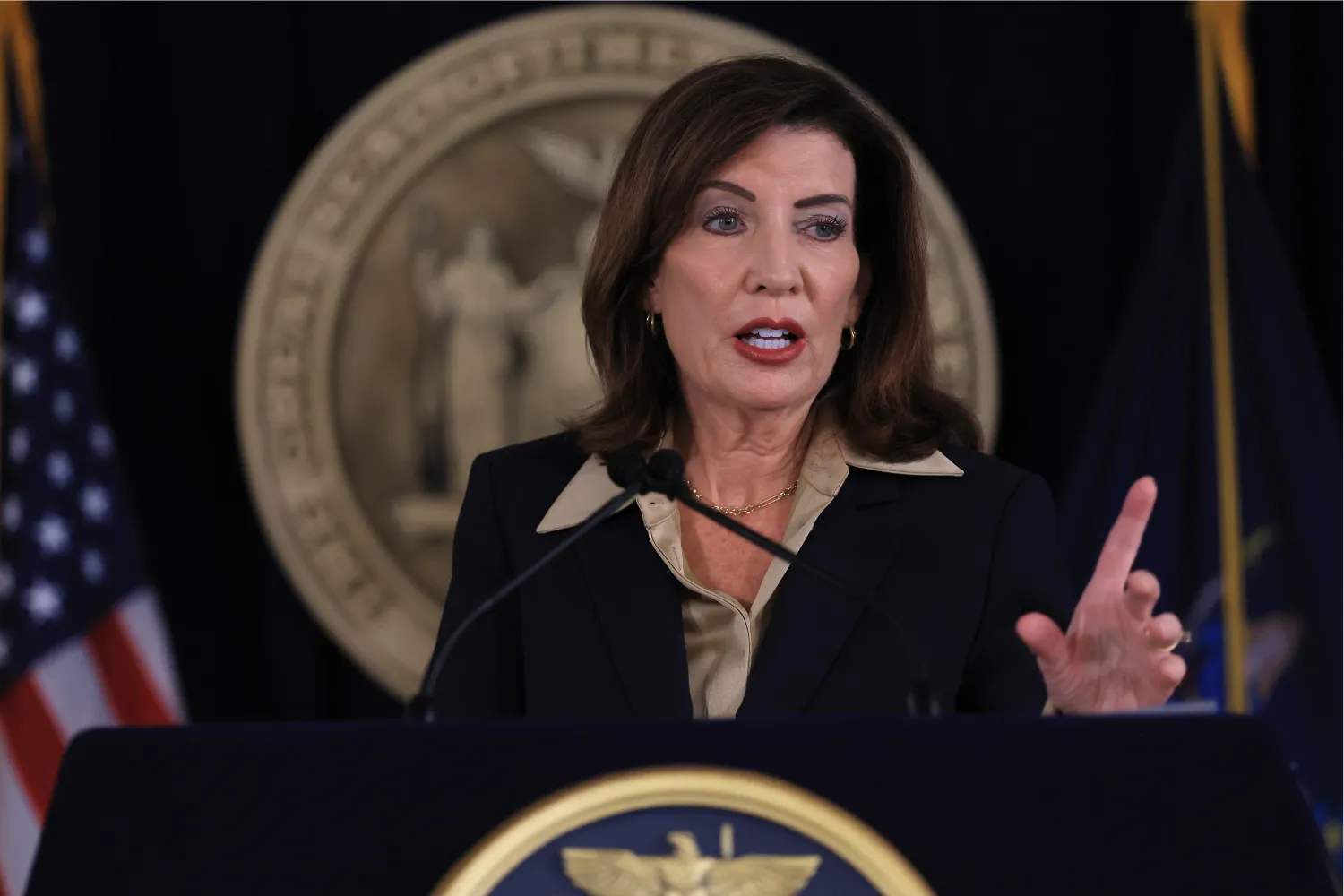
New York Governor Kathy Hochul said last week that "voluntary intoxication is not a license for sexual assault or gang rape,” vowing to address what she called a "gap in state law."
...
Efforts to change the law date back to at least 2019, when former Democratic state Senator Alessandra Biaggi introduced legislation aimed at eliminating what supporters describe as a voluntary intoxication loophole. That proposal later became Assembly Bill A101.
The measure went on to pass the state Senate multiple times, but never reached the Assembly floor.
Gulrajani said the Cornell controversy has focused renewed attention on a debate that has lingered in Albany for years. He added that the case "should serve as a cautionary tale for other states where such reform has not occurred already but is being contemplated."
Assembly Speaker Carl Heastie said last week that there were not enough votes within the Democratic majority conference to advance it and later convened a working group to examine concerns about the proposal and broader sexual-assault law reforms.

...
Newsweek reached out to Heastie via email for comment.
The New York State Association of Criminal Defense Lawyers (NYSACDL), which represents criminal defense attorneys across the state, disputes the idea that New York has a “voluntary intoxication loophole.”
"New York law does not contain a loophole that allows a person accused of rape or sexual assault to avoid accountability because a victim was voluntarily intoxicated," NYSACDL said in a statement. "Intoxication is not a defense to sexual assault, and people have been convicted of rape in cases involving voluntarily intoxicated victims."
State Laws And Voluntary Intoxication
Nineteen states have rape or sexual assault laws that differentiate between “voluntary” and “involuntary” intoxication when it comes to consent. There has been movement in intoxication and consent laws in recent years. Michigan and Texas amended their laws in 2023 and 2025, respectively, removing distinctions between voluntary and involuntary intoxication.
"The way the law is written, it says that if you are temporarily incapable of appraising or controlling your conduct, you are deemed unable to consent. But the loophole comes in because if you consent to the drugs or alcohol, then you don't satisfy that definition," Deborah Tuerkheimer, author of Credible: Why We Doubt Accusers and Protect Abusers, told Newsweek.
Tuerkheimer called the law “victim-blaming” and said: "Many states have rape laws on the books that are woefully out of step with our times and with modern understandings of consent."
The debate over the law has intensified following the reopening of the Cornell investigation because critics argue the case demonstrates the practical consequences of the state's current treatment of intoxication and consent.
"One of the benefits of the public seeing how these cases actually work and how the system can fail is that there can be change and there can be momentum for reform," Tuerkheimer said.
Newsweek’s reporters and editors used Martyn, our AI assistant, to produce this story. Learn more about Martyn here.
Contact Newsweek editors on this story: Rebecca Flood and Gray R. Thomas
View 0 Comments
Submit Correction
View Editorial & AI Guidelines