
...


By Brendan Cole and Hannah Parry
0
Share
Newsweek is a Trust Project member
See more of our trusted coverage when you search.Prefer Newsweek on Googleto see more of our trusted coverage when you search.
President Donald Trump said Iran is not demanding tolls to pass through the Strait of Hormuz amid concerns that Tehran wants to exert control of the waterway despite ending its three-month blockade.
His comments come as Iran’s Islamic Revolutionary Guard Corps warn that it would be “dangerous and prohibited" for ships to try and pass through the Strait of Hormuz outside its own designated route. Any vessels traveling outside Iran's permitted route would be "dealt with accordingly.”
Despite the threat, dozens of ships began transiting the strait along the southern route, though Omani territorial waters, on Thursday morning, although at least three ships exiting through that route have since turned back. The United Kingdom Maritime Trade Operations Centre, which helps protect commercial shipping said Thursday that at least one cargo ship had been hit by an “unknown projectile" while traversing the route. No casualties were reported.
Read More
Donald Trump to Newsweek on Hormuz Opening: ‘Working Out Very Well’5 min read

Maritime traffic has started moving through the critical waterway after the U.S. and Iran signed a memorandum of understanding (MOU) to end the Iran war aimed to reopen the strait. It includes a 60-day toll-free window guaranteeing free passage for commercial vessels through mid-August.
Trump had earlier declared the strait open, but maritime traffic has not yet returned to pre-war levels amid caution from shipowners and insurers.
The president has dismissed reports that Iran is continuing to charge vessels as coming from the “troublemaking fake news," posting on Truth Social: “NO TOLLS, NO INSURANCE COSTS, & NO OTHER CHARGES OF ANY KIND BEING SOUGHT OR RECEIVED BY IRAN ON SHIPS TRAVELING THE STRAIT OF HORMUZ.”
He went on to suggest that this was a deal breaker and that “if this is false information, negotiations would end, immediately! Additionally, no money has been given to Iran, or released from their money to them, by the U.S.” This refers to the easing of sanctions and the unfreezing of funds for Iran.
Meanwhile, the United Nations' International Maritime Organization (IMO) has created a rescue plans to help the thousands of sailors left stranded because of the war.

...
Iran Seeks To Control Strait
Iran has been charging vessels transiting the Strait of Hormuz, although these fees have been temporarily waived under the terms of the framework deal. However, uncertainty remains about what level of control Iran will seek to exert over the waterway.
Talks on Tuesday between Iran and Oman, which also borders the waterway, yielded a joint statement that the countries would work to “define the future administration and maritime services in the Strait of Hormuz.”
Oman said it backed “toll-free safe passage," but Tehran has differentiated between “tolls” and other charges, such as “service fees” and “insurance” to protect vessels against attacks, suggesting it wants to charge for passage through the waterway.
As the strait is an international waterway rather than territorial waters, this would breach the UN Convention on the Law of the Sea, potentially placing the onus on the U.S. and other countries to respond.
“If the Iranians are reasonable and would like a deal to settle the matter once and for all, this would be the time for them to do it,” said Thomas O’Donnell, a Berlin-based energy industry expert.
“If they continue to harass shipping through the Straits of Hormuz, which they can and seem intended on doing, at a certain point, the U.S. will flip and say, ‘forget the talks, we're going to enforce this,’ which would be devastating for the regime.
“So this is a game of cat and mouse,” he added.

...
During a tour of the Gulf, U.S. Secretary of State Marco Rubio warned no country can impose tolls on the Strait of Hormuz, and that’s “existing international law.”
The Institute for the Study of War (ISW) said Tuesday that if Iran can manage traffic through the strait and collect fees, this would deliver “a significant strategic victory” for Tehran and give it substantial leverage over global commerce.
The maritime industry is so far not reacting to this prospect because the first goal for companies and the ship owners “is to take their vessels out of there,” maritime expert Yörük Işık, from the Istanbul-based Bosphorus Observer, told Newsweek.
He said countries like China, India and Russia were staying quiet because they believe they will be exempt from such fees, which would be applied only to U.S.-connected vessels.
“Such a fee will turn how shipping is conducted on this planet in the last 300 years, upside down and will destroy world trade,” said Işık.
...
Evacuation Plans for 11,000 Sailors
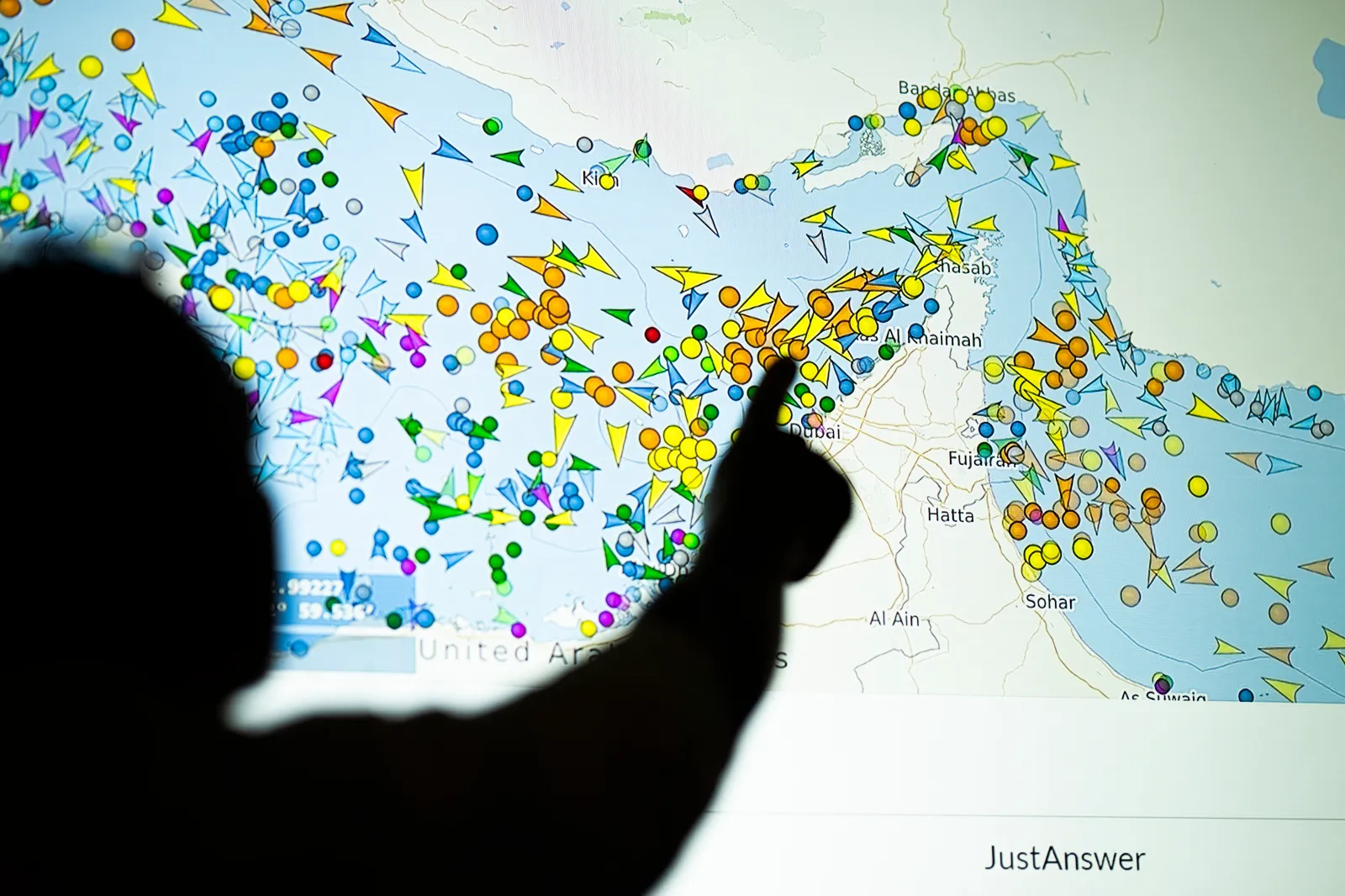
The closure of the Strait of Hormuz has stranded vessels and sailors, tying up more than 1,200 cargo vessels carrying goods worth an estimated $125 billion, according to data released by insurance firm Allianz.
The IMO has announced an operation to evacuate 11,000 sailors stranded in the Strait of Hormuz, which will involve setting up temporary routes through the critical waterway.
The fate of thousands of sailors has been a mounting concern for the IMO, which raised the alarm about these individuals being stuck at sea with dwindling food and fuel aboard vessels unable to sail safely through the narrow waterway.
The IMO said on April 26 that due to U.S. and Israeli bombing on Iran, up to 20,000 seafarers had been stranded on some 2,000 vessels in the Persian Gulf. IMO Secretary-General Arsenio Dominguez said at the time that “ships and crews are highly exposed in conflict zones, often becoming leverage in geopolitical disputes.”
In a statement Tuesday, Dominguez said the operation to evacuate the remaining 11,000 sailors would involve coordination with Iran, Oman, other regional states, as well as the U.S. and the maritime industry.
Iran has mined large parts of the Strait, and as such, shipping lanes under the prewar Traffic Separation Scheme, or TSS, are not safe, according to Oman's notice to mariners, provided by the IMO, which outlines how the vessels will exit.
The Omani notice said two temporary routes through the strait could be used, one south of the existing TSS and one to the north. Vessels would then be contacted individually for further instructions and then proceed to a waiting area in international waters. Vessels would then have to contact the relevant coastal state of their route to confirm that traffic conditions can permit them to proceed, the notice added.
Dominguez said that it had secured safety guarantees and had “thoroughly verified the conditions for safe navigation to support these operations.”
For the sailors, “conditions vary greatly,” said Işık, from the Bosphorus Observer, adding that the evacuation’s logistics would be difficult.
Crew members currently stranded range from being “really bored but waiting rather comfortably, to facing real human misery,” Işık said. Many had to deal with “no more diesel thus no more electricity, no more refrigeration, to literally no more food.”
Maritime Traffic Resumes
Tuesday saw a significant shift in the resumption of maritime traffic through the Strait of Hormuz, according to Windward Maritime Intelligence. On that day, there were 21 Automatic Identification System (AIS) visible transits—seven inbound and 14 outbound.
This was a signal that market confidence in the passage's viability is beginning to return, Windward said in a statement to Newsweek.
However, the strait is not considered fully open due to ongoing operational restrictions and threats. Full normalization would require sustained center corridor dominance, north corridor transit without IRGCN (Islamic Revolutionary Guard) permit requirements, and dispersal of the sanctioned fleet in the southeastern cluster, none of which is met today.
Contact Newsweek editors on this story: Frances Mao, Edward Pearcey and Sam Wilson.
View 0 Comments
Submit Correction
View Editorial & AI Guidelines