...

By Hollie Silverman
News Editor
0
Share
Newsweek is a Trust Project member
See more of our trusted coverage when you search.Prefer Newsweek on Googleto see more of our trusted coverage when you search.
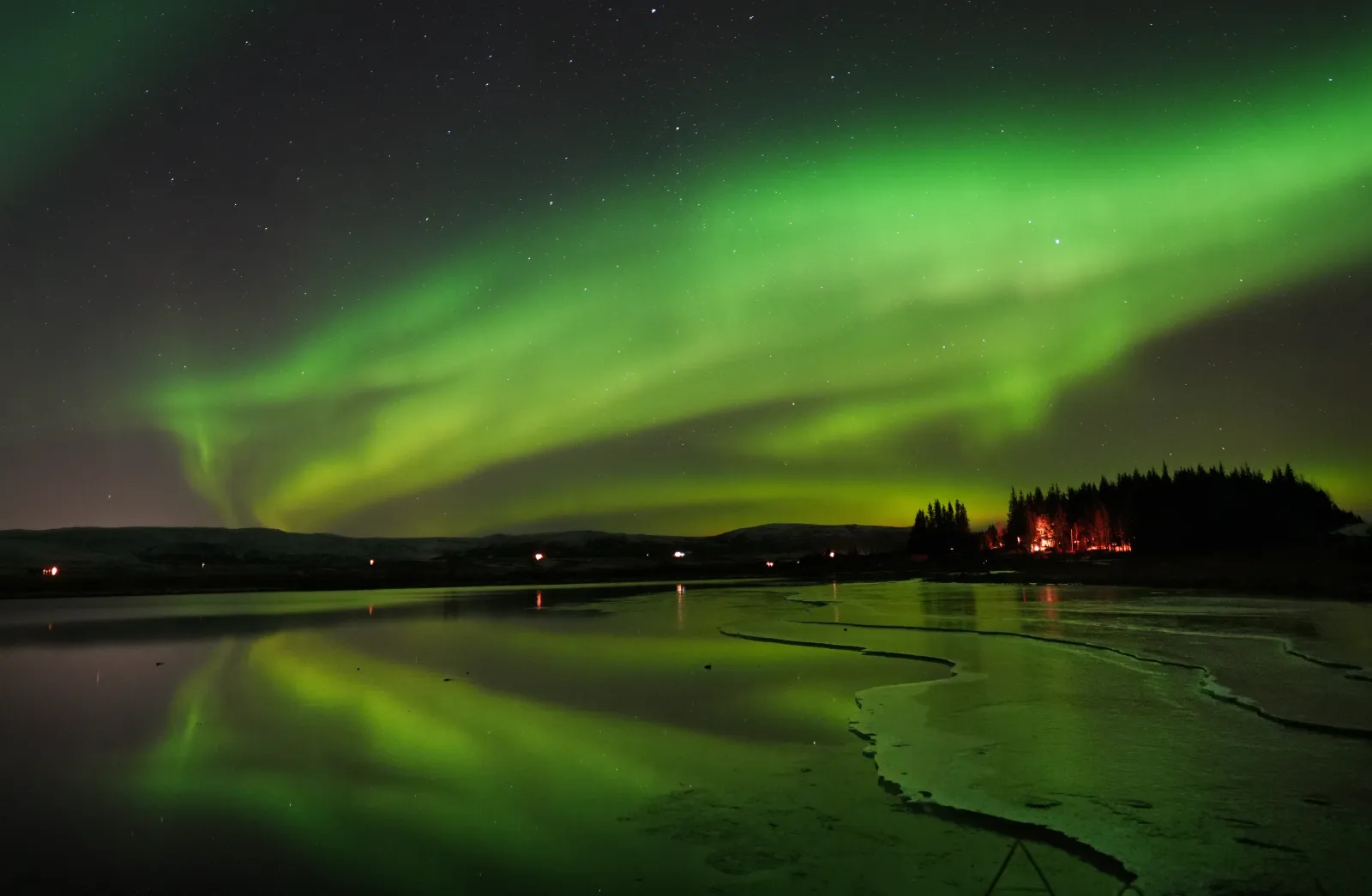
A severe geomagnetic storm forecast for January 2026 could disrupt electric grids across 11 northern U.S. states and provide a rare opportunity to see the northern lights as far south as Alabama, according to the National Oceanic and Atmospheric Administration's (NOAA) Space Weather Prediction Center (SWPC),
The ongoing solar storm is predicted to impact electrical infrastructure and communications nationwide, as Americans prepare to witness dazzling auroral displays in unexpected locations.
Why It Matters
A forecast severe geomagnetic storm not only offers rare opportunities for Americans to view the aurora borealis further south than usual, but also raises significant concerns about large-scale power and communications outages.
Read More on News
According to the SWPC, such space weather can overwhelm electrical systems, particularly as grid demand hits new highs and infrastructure faces increased stress from climate and technological expansion.
...
What To Know
The NOAA SWPC reported R1 (Minor) Radio Blackout Impacts Sunday night, including "weak or minor degradation of HF radio communication on the sunlit side, [and] occasional loss of radio contact."
In November, the NOAA issued a similar warning for a G4 (Severe) geomagnetic storm with the potential to disrupt power grids, especially in states north of the 45th parallel.
What Is a Geomagnetic Storm?
A geomagnetic storm occurs when high-energy plasma and magnetic fields ejected from the sun interact with Earth's magnetic field, transferring energy into our planet's near-space environment.
These events, driven by coronal mass ejections, can distort Earth's magnetic shield, resulting in both beautiful auroras and damaging currents that threaten electrical and communication systems.
The infamous Carrington Event of 1859, the strongest recorded geomagnetic storm, caused telegraph systems to fail and create sparks. More recently, a 1989 storm in Quebec led to nine-hour blackouts affecting millions.
Grid and Technology Risks
Geomagnetic storms generate currents that can flow into power grid infrastructure, damaging transformers and relays, potentially causing widespread outages.
Communications systems, including GPS, high-frequency radio, internet data cables, and satellites, are vulnerable to disruption. Satellite drag may increase as the atmosphere heats and density changes, risking orbital shifts or satellite loss,
Where to See the Northern Lights
During severe geomagnetic storms, auroras may be visible much farther south than usual. On recent occasions, people as far south as Alabama and Florida have witnessed the northern lights, as dual coronal mass ejections collided near Earth and intensified auroral displays.
This weeks event is supposed to be visible in the area primarily poleward of 45 degrees geomagnetic latitude, including Oregon, Idaho, Montana, South Dakota, Minnesota, Wisconsin, Michigan, New York, Vermont, New Hampshire, and Maine.
Sky-watchers are advised to seek locations far from city lights, with a clear northern horizon and minimal cloud cover for the best chance of witnessing the aurora.
Rural and open areas north of the 45th parallel are typically favored, but under extreme conditions, auroras may be visible anywhere in the contiguous United States.
What People Are Saying
The NOAA Space Weather Prediction Center: “During storms, the currents in the ionosphere, as well as the energetic particles that precipitate into the ionosphere, add energy in the form of heat that can increase the density and distribution of density in the upper atmosphere, causing extra drag on satellites in low-earth orbit.
"The local heating also creates strong horizontal variations in the ionospheric density that can modify the path of radio signals and create errors in the positioning information provided by GPS.
"While the storms create beautiful aurora, they also can disrupt navigation systems such as the Global Navigation Satellite System and create harmful geomagnetic induced currents in the power grid and pipelines”
**Shawn Dahl, a SWPC forecaster told CNN following another geomagnetic storm in November: “**One of them packed a much stronger punch than we would have imagined originally…If it turns opposite Earth, then activity really quickly escalates, and those storm levels can dramatically increase very quickly. That’s what happened last night”
What Happens Next
The SWPC will continue to monitor solar activity, issuing ongoing alerts, watches, and warnings on possible impacts to power grids, satellites, and communications systems.
Americans in affected areas are encouraged to prepare for potential disruptions and monitor official updates for best viewing opportunities and safety advisories.
Further strong solar flares are possible as the current sunspot region rotates out of Earth's view, with new assessments expected in coming days.
View 0 Comments
Submit Correction
View Editorial & AI Guidelines